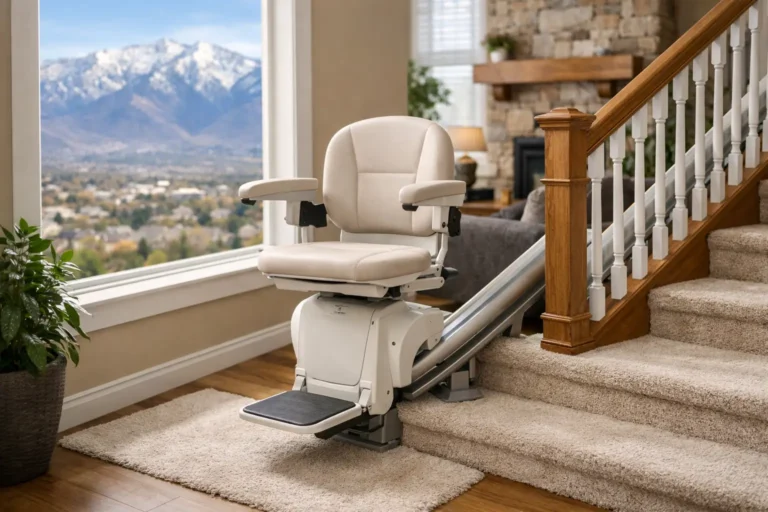
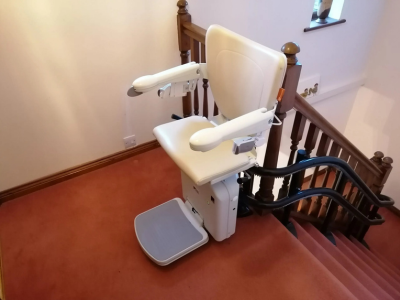
Reconditioned Stair Lifts in Utah: What to Check Before Buying
A reconditioned stair lift can be a practical option for Utah homeowners who want dependable access between floors without automatically buying brand-new equipment. The key is knowing what “reconditioned” actually means, what documentation to ask for, and whether the lift is truly compatible with your staircase and service needs.
Olympus Stairlifts works with homeowners and families across Northern Utah, including Ogden and Weber County, Davis County, Morgan, Brigham City and Perry, North Salt Lake, and the Park City and Heber areas. If you are considering a reconditioned stair lift, a professional evaluation can help you compare the equipment, staircase fit, and long-term serviceability before you make a decision.
What Makes a Stair Lift “Reconditioned”?
A reconditioned stair lift is previously owned equipment that has been inspected and prepared for another installation. That is different from simply buying a used lift from a private seller and moving it from one home to another.
There is no single universal refurbishment process that applies to every brand, dealer, or model. That is why buyers should ask exactly what was inspected, what was replaced, and what service documentation is available. A trustworthy seller should be able to explain the condition of the carriage, rail, charging system, controls, seat, safety features, and other important components without relying on vague terms such as “fully rebuilt” or “like new.”
If you are also considering an ordinary used lift, our guide on what to check when buying a used stairlift explains the additional questions that matter when the equipment is being sold as-is.
What Should You Ask for Before Buying?
Before committing to a reconditioned stair lift, ask for clear information in writing whenever possible. This helps you understand what you are actually buying and what support may be available after installation.
- Model and serial information: Confirm the exact make and model so future parts and service can be researched.
- Inspection history: Ask what was inspected and whether any worn or damaged parts were replaced.
- Battery and charging condition: Ask whether the batteries and charging system were checked and what condition they are in.
- Safety-feature inspection: Ask whether the lift’s normal safety features were inspected according to the manufacturer’s guidance.
- Warranty or service terms: Find out exactly what is covered, for how long, and whether labor or service calls are included.
- Parts availability: Make sure the model can still be reasonably serviced and that replacement parts are obtainable.
Written details are more useful than verbal promises, especially with older equipment. If warranty or service terms are important to your decision, ask for them before installation.
Staircase Fit Matters as Much as Equipment Condition
Even a well-maintained stair lift is only useful if it is appropriate for the staircase where it will be installed. Straight stair lifts are often easier to evaluate for reuse because the rail is designed for a straight run, but the staircase still needs to be measured carefully for length, angle, landing space, and clearances.
Curved stair lifts are different. Their rails are normally designed around the shape of a specific staircase, including turns, landings, and changes in angle. A used curved carriage may sometimes be serviceable, but the original curved rail should not be assumed to fit a different home.
A professional site evaluation can also identify practical issues such as doorway clearance, top and bottom landing space, seat orientation, and whether other family members can still comfortably use the stairs.
If you are still deciding what type of system makes sense, the Olympus Stairlift Buying Guide covers the main differences between straight, curved, and other mobility options.
Reconditioned vs. Private-Sale Used Stair Lifts
A privately sold used stair lift may be less expensive upfront, but it can also leave the buyer responsible for removal, transport, compatibility, missing hardware, installation, and future service. A professionally reconditioned unit should come with clearer information about its condition and what has been checked, although buyers should still verify those details.
| What to Compare | Reconditioned Unit | Private-Sale Used Unit |
|---|---|---|
| Inspection history | Should be available from the seller or service provider | May be limited or unavailable |
| Staircase compatibility | Can be evaluated before installation | Buyer may need to arrange evaluation separately |
| Warranty or service terms | May be available; verify in writing | Often depends entirely on the private sale |
| Future service | Ask whether the seller can service the specific model | Buyer may need to locate a service provider afterward |
When Is a Reconditioned Stair Lift a Good Fit?
A reconditioned lift may be worth considering when the equipment is compatible with the home, its condition is documented, the model can still be serviced, and the warranty or service terms are clear. It can also make sense for homeowners who want to compare more than one option rather than automatically choosing new equipment.
It may be less attractive when the model is difficult to service, important documentation is missing, the staircase requires a custom curved rail, or the seller cannot clearly explain what was inspected.
The goal is not simply to find a used lift. The goal is to find a lift that can be installed correctly, maintained over time, and safely support the person who will use it.
A Simple Buyer Checklist
Before purchasing a reconditioned stair lift, confirm these points:
- The make and model are clearly identified.
- The equipment has been inspected and the seller can explain what was checked.
- The staircase has been measured for proper fit.
- The charging system and battery condition have been discussed.
- Safety features have been inspected by a qualified technician.
- Replacement parts and future service are reasonably available.
- Warranty and service terms are provided in writing.
- Installation will be handled by someone familiar with that model.
Once installed, regular inspection and maintenance still matter. Our guide on how often stair lifts need maintenance explains what homeowners should expect over time.
Frequently Asked Questions
Is a reconditioned stair lift the same as a used stair lift?
Not necessarily. “Used” simply means the equipment had a previous owner. “Reconditioned” should mean the lift has been inspected and prepared for reuse, but the exact process varies, so ask what work was actually performed.
Can a reconditioned stair lift fit any staircase?
No. Straight lifts still need correct measurements and clearances, and curved staircases generally require a rail designed specifically for that stairway.
Should I buy a lift before having my staircase measured?
It is usually better to have the staircase evaluated first. That reduces the risk of buying equipment that cannot be installed properly in the home.
Can I install a reconditioned stair lift myself?
Because stair lifts involve mounting, electrical systems, charging, controls, and safety features, professional installation is the safer approach. Avoid modifying rails, wiring, sensors, or mounting hardware yourself.
Get Help Evaluating a Reconditioned Stair Lift in Utah
If you are considering a reconditioned stair lift in Northern Utah, Olympus Stairlifts can help you evaluate the staircase, compare equipment options, and determine whether a reconditioned unit makes sense for your home. Our goal is simple: helping you stay independent longer.
Contact Olympus Stairlifts for a free consultation or evaluation before you purchase or install a stair lift.