The price tag gets attention first, but with used stairlifts for sale, safety and fit matter more than the initial number. A stairlift is not a plug-in appliance you can pick up secondhand and hope works out. It has to match the staircase, support the user comfortably, and be installed correctly so the ride feels secure every time.
For many families, a used or reconditioned stairlift can be a very good option. It may lower the upfront cost and shorten the path to making a home safer. But there is a difference between a professionally reconditioned unit and a stairlift with an unknown history. That difference affects reliability, service options, and peace of mind.
When used stairlifts for sale make sense
A used stairlift often makes the most sense when the need is clear and the budget is tight. This is common after a hospitalization, during recovery from surgery, or when a parent wants to remain at home without the strain and risk of stairs. In those situations, families usually want a practical answer quickly.
A reconditioned stairlift can also be the right fit for a short-to-medium-term need. If mobility has changed recently and the household is still deciding on larger home modifications, buying used may offer flexibility. It can solve the immediate safety issue without requiring the same investment as a brand-new unit.
That said, used is not always the better value. If the staircase is curved, unusually narrow, or likely to serve a long-term need for many years, a new system may be the smarter choice. The right answer depends on the layout of the home, how often the lift will be used, and whether service support is available after installation.
The biggest difference: used vs. reconditioned
People often use these terms as if they mean the same thing, but they do not.
A used stairlift may simply be a previously owned unit that has been removed from another home and offered for resale. Sometimes that equipment is in decent condition. Sometimes there is no clear record of age, maintenance, battery health, or prior repairs.
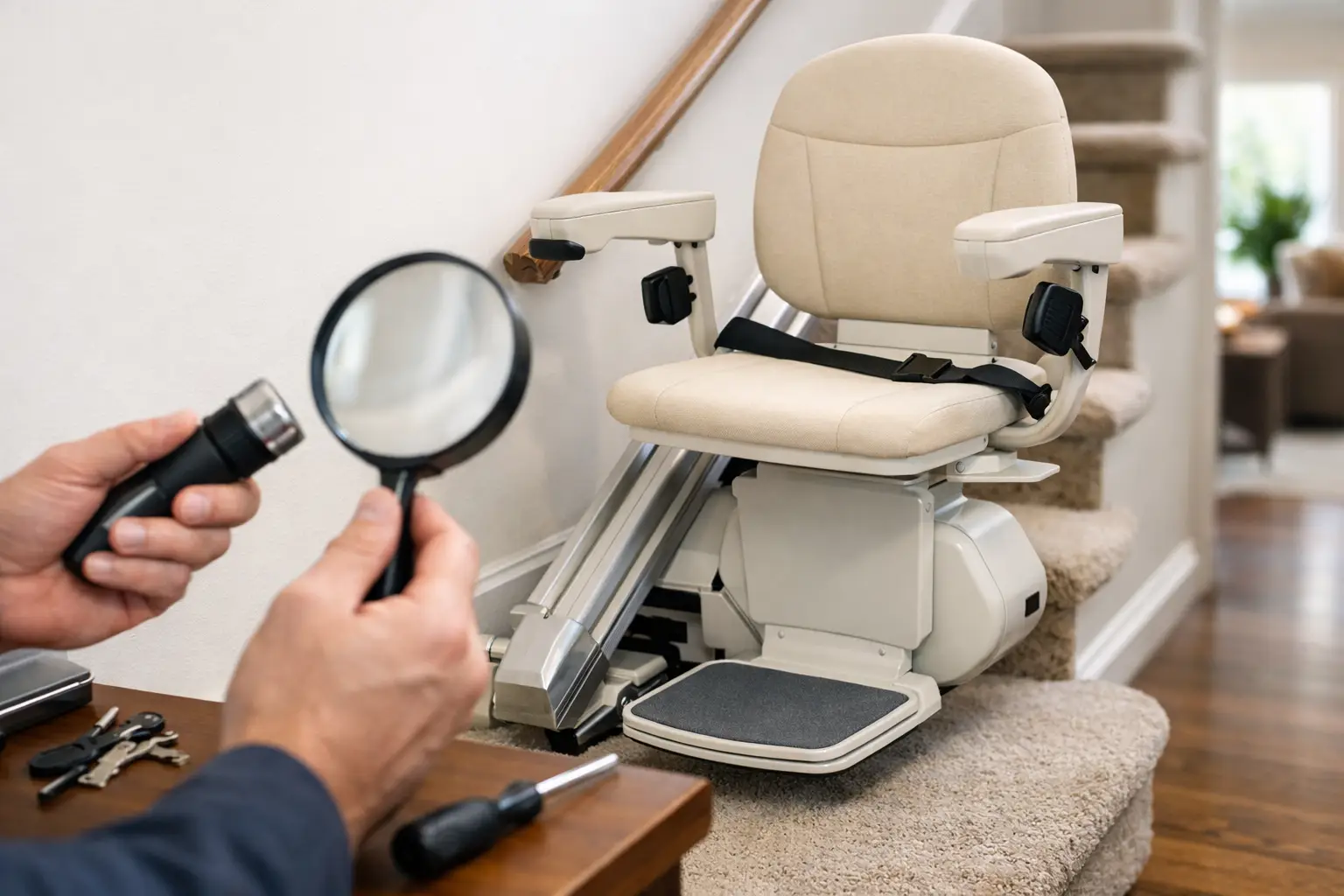
A reconditioned stairlift has usually been inspected, tested, cleaned, and restored by professionals before being installed again. Worn parts may be replaced. Batteries may be updated. Safety features are checked. Just as important, the installer can confirm whether that unit is appropriate for the staircase and the user.
For most homeowners, reconditioned is the safer path. It offers the cost savings people are looking for, while reducing the uncertainty that comes with buying equipment from a private seller or unfamiliar source.
What to check before buying a used stairlift
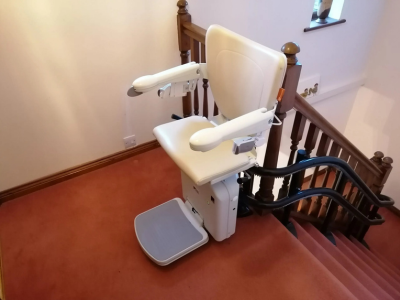
The first question is simple: will it actually fit the staircase? Straight stairlifts and curved stairlifts are very different purchases. A straight stairlift can often be installed on another straight staircase if the measurements and conditions line up. A curved stairlift is usually built around the exact turns, landings, and dimensions of one specific staircase. In many cases, a used curved unit cannot simply be moved from one home to another.
The next question is capacity and comfort. The seat should be easy to get into and out of. The controls should be simple to use. The footrest, arm position, and seat height all matter more than people expect, especially for users with limited balance, arthritis, or recent injuries. A lower-priced unit is not a bargain if it is uncomfortable or difficult to operate.
You also want to know the age of the lift, its maintenance history, and whether replacement parts are still available. Some older units may still run, but that does not mean they are a wise long-term choice. If parts are discontinued or service is limited, a future repair can become frustrating and expensive.
Battery condition deserves special attention. Most stairlifts run on batteries that charge at designated points on the rail. Weak batteries can cause poor performance, slower travel, or unexpected stoppages. During reconditioning, this is one of the first things a qualified provider should evaluate.
Finally, ask about installation and service. Even an excellent used stairlift can become a problem if it is installed poorly. Proper mounting, rail alignment, charging setup, and testing are essential. Ongoing service matters too, because stairlifts are used for safety, not convenience alone.
Red flags to avoid
If a listing gives very little detail, that is a warning sign. Families should be cautious about vague descriptions, missing model information, or claims that a stairlift is in “great shape” without any proof of inspection or service records.
Another concern is a stairlift that has been removed and stored without clear handling procedures. Equipment can be damaged during removal, transport, or storage, even if it looks fine from the outside. Cosmetic appearance tells only part of the story.
Be careful with any purchase that does not include professional evaluation of the staircase. A stairlift that does not match the home properly can create transfer problems at the top or bottom landing, interfere with safe walking space, or fail to provide the smooth ride the user needs.
It is also worth being cautious about deals that seem dramatically cheaper than everything else. Sometimes the low price reflects missing parts, outdated components, no warranty, or no service support after the sale. A stairlift should lower stress in the home, not add more uncertainty.
Why professional installation matters
A stairlift is only as dependable as the installation behind it. This matters with new units, and it matters even more with used stairlifts for sale.
Professional installation starts with the home, not the product. The staircase is measured. Landing space is reviewed. The installer looks at power needs, traffic flow, rail placement, and how the rider will get on and off safely. That is especially important for older adults who may have trouble turning, standing, or balancing at the top step.
A qualified installer also tests the full system after setup. That includes the travel path, seat swivel function, footrest clearance, call-send controls, charging points, and safety sensors. Those details are easy to overlook if someone treats the stairlift like a simple resale item, but they are the details that make the equipment reliable day after day.
Who should consider a used stairlift
Used stairlifts can be a strong option for households that need a straight stairlift, want to control costs, and are working with a provider who offers inspection, installation, and service. They can also be helpful for families responding to a sudden change in mobility who need a faster answer than a major renovation.
They may be less ideal for highly customized staircases or situations where the user has very specific seating, transfer, or weight-capacity needs. In those cases, buying new may provide a better fit and a longer service life.
The best decision usually comes from an in-home assessment rather than online comparison alone. A staircase can look simple until someone measures the landings, checks the wall clearance, and considers how the user will sit, stand, and move around the lift.
A smarter way to shop used
If you are considering a used stairlift, focus less on finding the cheapest unit and more on finding the safest workable solution. Ask whether the lift has been reconditioned, whether it is appropriate for your staircase, what service is included, and who will stand behind the installation if something needs attention later.
That is where working with a local accessibility company can make the process much easier. A provider such as Olympus Stairlifts can evaluate the home, recommend whether a reconditioned stairlift is truly a good fit, and make sure the installation supports long-term safety instead of just short-term savings.
The right stairlift should help a person move through the home with more confidence, less strain, and fewer daily worries. If a used unit can do that safely, it is worth considering. If it cannot, it is better to know that before it reaches the staircase.