Meta description: A homeowner’s guide to buying a stairlift in Utah — what stairlifts cost, how they’re installed, and what to check before you decide. Call (385) 430-7420.
If you’re researching stairlifts for the first time, it can feel like a lot to sort through fast — especially if you’re doing it for a parent who’s had a fall, or after a doctor’s visit that made “stairs are getting harder” feel urgent. This guide breaks down the basics so you can walk into the decision with confidence, whether you’re shopping for yourself or a loved one in the Ogden, Layton, Bountiful, or Salt Lake area.
Straight vs. Curved: The First Fork in the Road
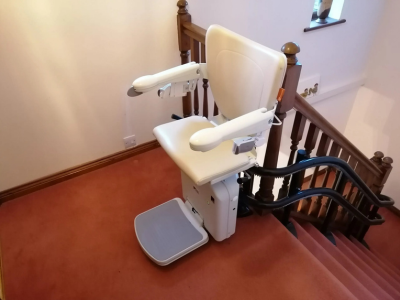
The single biggest factor in price and installation time is your staircase shape. A straight staircase with no landings or turns takes a straight rail, which is simpler to manufacture and typically ships faster. A staircase with a bend, a landing, or a spiral needs a curved rail that’s custom-measured and built specifically for your stairs. If you’re not sure which category your staircase falls into, that’s fine — a quick in-home assessment will tell you, and it’s the first thing any reputable installer will check.
What Actually Affects the Price
Homeowners are often surprised that two stairlifts can look similar but cost very differently. The main drivers are:
Rail type. Straight rails are the most affordable option. Curved rails, because they’re custom-built, cost more.
New vs. reconditioned. A reconditioned stairlift — a used unit that’s been inspected, refurbished, and warrantied — can be a smart way to bring down cost on a straight staircase without giving up reliability.
Weight capacity and seat features. Standard seats accommodate most users, but if you need a heavier weight capacity, a swivel seat for easier entry and exit at the top of the stairs, or a folding rail to keep a stairway clear, those options add to the price.
Battery backup. Nearly all stairlifts today run on rechargeable batteries rather than being hardwired, which means they keep working during a power outage — worth confirming when you compare quotes.
Questions Worth Asking Before You Buy
A few questions separate a good decision from a rushed one:
Does the quote include a full in-home measurement, or is it a phone estimate? Stairs vary enough in width, angle, and railing placement that an accurate quote really needs eyes on the actual staircase.
What’s covered under warranty, and for how long? Ask specifically about the motor, the battery, and labor for future service calls.
How soon can it be installed? Straight-rail installations are often same-day. Curved rails, since they’re custom-built, usually take longer to arrive.
Who do you call if something goes wrong after installation? A local installer who also handles service calls is worth more than the lowest quote from a company that isn’t nearby.
What Installation Day Looks Like
For a straight staircase, installation is usually finished in a matter of hours, without any structural changes to your stairs or walls. The rail is secured directly to the treads of the stairs, not the wall, which is one reason installation tends to be fast and non-invasive. A technician will walk you through the remote controls, the seatbelt and safety sensors, and how to charge and maintain the unit before they leave.
Making the Decision Easier
The most reassuring step in this whole process is usually the simplest one: a free in-home consultation. Seeing the actual product, sitting in it, and getting a firm, accurate quote for your specific staircase takes most of the guesswork out of the decision.
If you’re weighing a stairlift for yourself or a parent in the Weber, Davis, or Salt Lake County area, Olympus Stairlifts offers free, no-pressure in-home assessments and can walk you through straight and curved options, new and reconditioned units, and what fits your staircase and budget. Call (385) 430-7420 to schedule a visit.
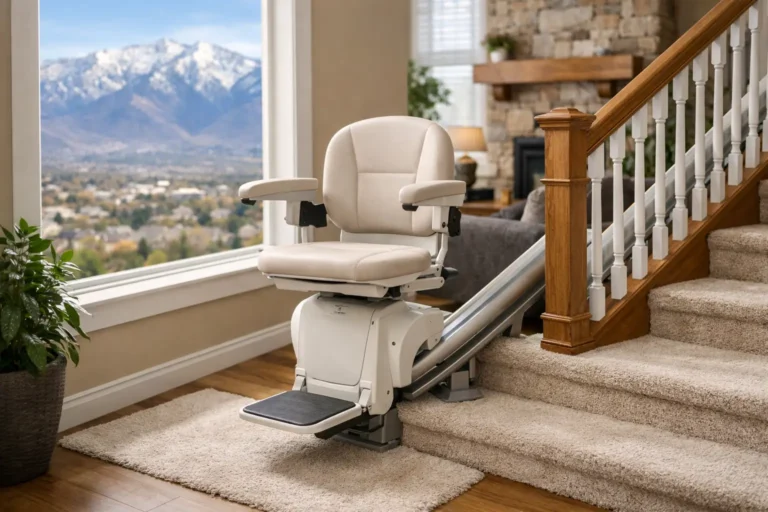
Suggested featured image: A warm, natural-light photo of a stairlift installed on a staircase in a residential home (not a clinical/medical-looking shot), ideally showing an older adult comfortably seated and a family member nearby — conveys independence and safety rather than illness.