In Northern Utah homes, from Ogden and Riverdale to Layton, Farmington, and Morgan, stairs can become difficult for people with limited mobility. The right stair lift depends on the staircase layout and the rider’s needs.
Some staircases have one uninterrupted flight; others have turns, switchbacks, or landings. Olympus Stair Lifts, a Harmar and AmeriGlide dealer, helps families compare straight and curved options through an in-home evaluation.
Understanding Your Staircase Layout: Straight vs. Curved Tracks
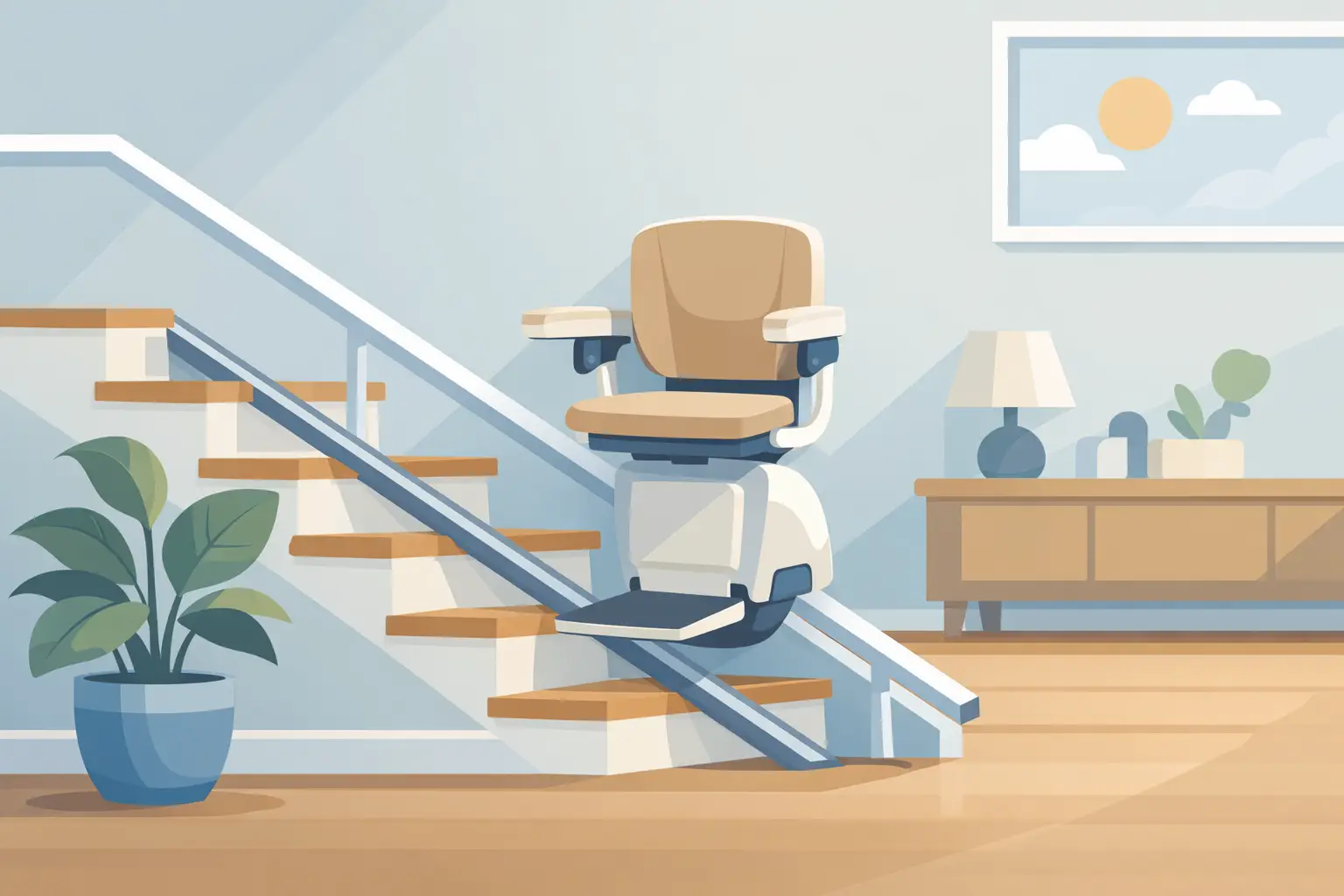
The track must match the staircase’s actual travel path.
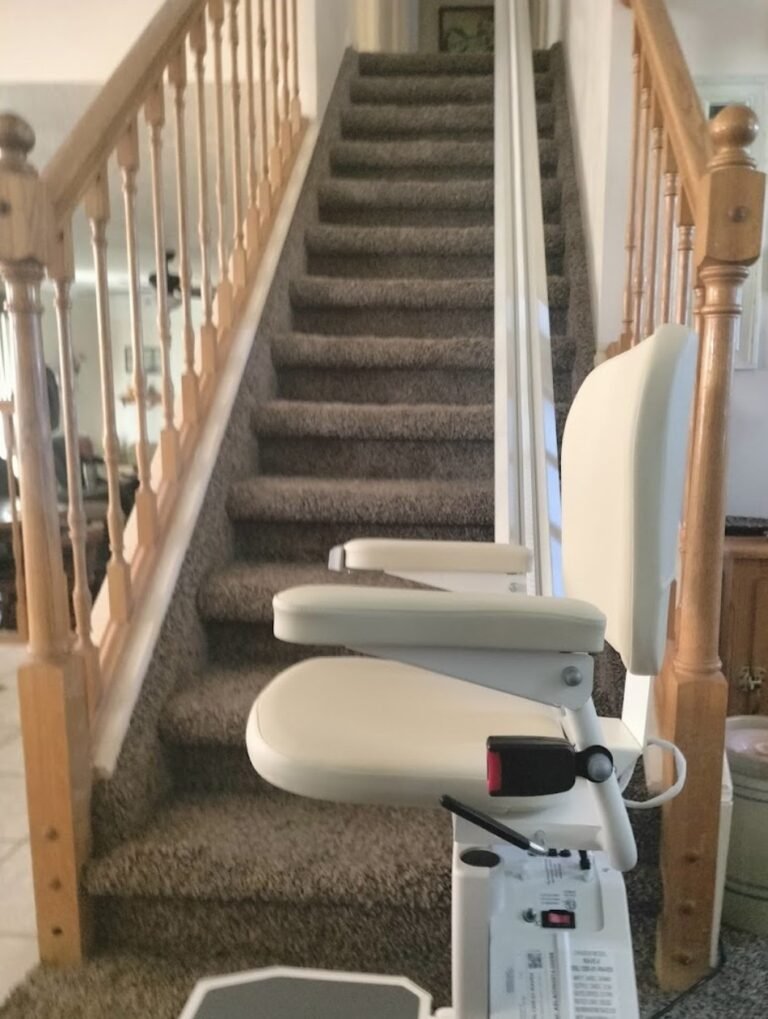
A straight stair lift operates on a single, continuous, rigid aluminum rail that runs from the bottom of the stairs directly to the top landing without any interruptions, bends, or intermediate turns. Because these rails are mass-produced in standard lengths and can be cut to fit on-site, they represent a streamlined option for uncomplicated flights of stairs. If your home in Weber or Davis County features a single, uniform set of steps with no turns, a straight model is almost always the appropriate solution.
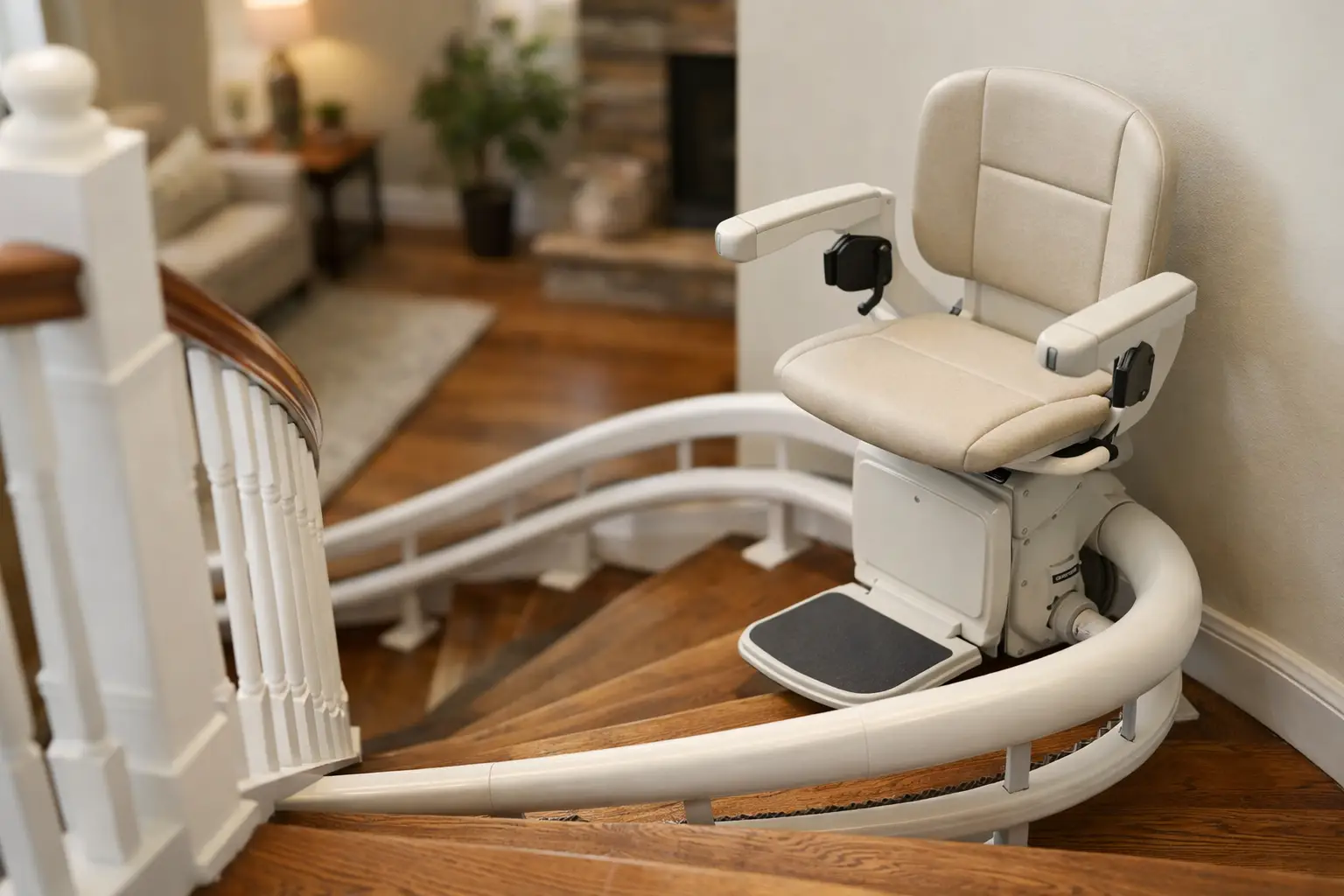
A curved stair lift follows turns, winding steps, or landings where the route changes direction. Its rail is designed around the staircase’s measurements. Learn about staircase clearance and measurements before an assessment.
Evaluating Track Paths, Turns, and Landings
Analyzing how your staircase interacts with hallways, doors, and living spaces is a critical step in the evaluation process. The path the track takes affects not only the user’s journey but also how other members of the household use the surrounding space.
Straight Track Dynamics
Fixed, uniform rail design requiring a clear, unobstructed path from bottom to top landing without intermediate curves.
Curved Track Engineering
Custom-routed modular or welded rail systems designed to follow tight radiuses, intermediate landings, and multi-level turns.
For straight stairs, measure the run, pitch, usable width, and clearances at both landings.
For curved stairs, the assessment also maps each turn, landing, and pitch change. Some models allow parking away from the steps, subject to available space and the chosen configuration.
Clearance, Hallways, and Safety Considerations
Preserving usable stairway clearance for everyone in the home matters.
In narrower hallways or stairwells common in older homes, maintaining walking clearance for other residents is a priority. Both straight and curved models feature foldable seats, footrests, and armrests. When not in use, the user or caregiver can fold these components upward against the rail, significantly reducing the profile of the unit. Furthermore, many modern lifts include powered swivel seats and motorized footrest folding options, minimizing the need for bending or awkward manual adjustments.
Ask which obstruction sensors, seat-belt features, and battery provisions are included with the exact model. Battery-equipped lifts may allow limited travel during an outage, depending on charge and manufacturer guidance.
Safe Measurement and Professional Evaluation
Home measurements help with planning, but final equipment selection requires an on-site assessment. To discuss your particular staircase, request an Olympus stair lift consultation or call (385) 430-7420.
An installer checks tread dimensions, stair angle, mounting conditions, door swings, headroom, and safe entry and exit. Curved rails require additional measurements of turns and landings. See our stair lift installation preparation guide.
Indoor vs. Outdoor Suitability for Utah Climates
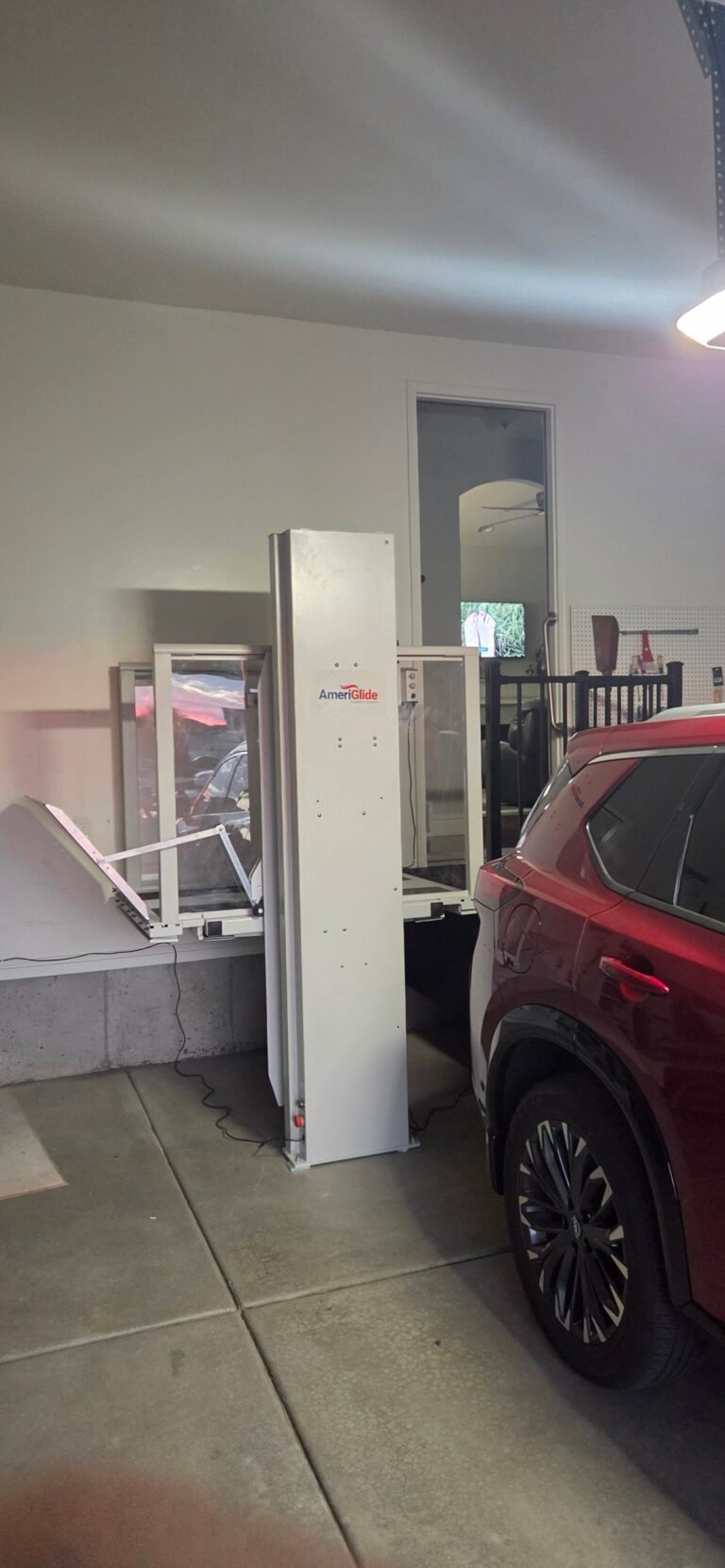
Northern Utah experiences a wide range of weather conditions, from heavy winter snowfalls and freezing temperatures in Weber County to intense summer heat across Davis County. If your mobility needs extend to exterior steps—such as raised porches, backyard deck access, or multi-tier patio landscaping—standard indoor models are not appropriate.
Outdoor-rated models are designed for weather exposure, but their operating temperature limits and maintenance needs vary. Confirm that the selected model suits the stairs and local winter conditions.
Reconditioned Straight vs. Custom Curved Considerations
Budget and timeline considerations often lead homeowners to explore equipment categories. Understanding the distinction between reconditioned straight options and custom curved engineering helps clarify project expectations.
Reconditioned straight lifts may be an option when equipment and rail fit the site. Used curved components sometimes can be reused, but a rail from another home should never be assumed to fit. Read our reconditioned stair lift checklist.
User Comfort, Ergonomics, and Mobility Needs
Physical comfort during operation is just as important as mechanical reliability. Selecting the right stair lift involves evaluating the specific physical needs and posture requirements of the primary user.
Compare seat height, swivel access, footrest space, weight capacity, belt use, and control placement. Features vary by model, so discuss the rider’s balance, posture, hand dexterity, and ability to transfer safely.
The Installation Process Explained
Installation requirements vary by staircase and selected equipment.
Many models mount to stair treads with brackets rather than to the wall. The installer secures the rail and chair, verifies charging and safety functions, tests the route, and demonstrates safe operation. Ask what changes, if any, the installation will leave behind.
Practical Consultation Checklist for Utah Homeowners
Before scheduling an in-home evaluation, reviewing a practical checklist can help you gather the key details needed to make an informed decision:
- Map Your Staircase: Note whether your stairs run straight, include a 90-degree or 180-degree turn, or feature intermediate landings.
- Check Environmental Exposure: Determine if the lift will be installed indoors in a climate-controlled hallway or outdoors on an exposed porch or deck.
- Assess User Requirements: Consider the user’s height, weight capacity needs, posture preferences (sitting vs. perch), and hand dexterity.
- Evaluate Surrounding Space: Look at top and bottom landing areas to ensure doors, hallways, and furniture will not block the parked chair or folded rail.
- Identify Electrical Access: Confirm the presence of a standard wall outlet near the top or bottom of the stairs for the battery charger unit.
- Consider Future Needs: Evaluate whether mobility requirements are likely to change over time, potentially requiring multi-floor travel or swivel functionality.
Frequently Asked Questions
Can a straight stair lift be modified to fit a curved staircase later?
No. Straight rails are rigid and manufactured to a single fixed angle. They cannot be bent or reconfigured to accommodate turns, corners, or landings. If your staircase layout changes or features a turn, a custom curved system is required.
Do stair lifts damage stair treads or structural framing?
Stair lifts attach securely to the structural treads of the staircase rather than the walls. When properly installed by professionals, the mounting points require minimal screw holes that can be easily patched if the equipment is ever removed.
Will a stair lift still work during a power outage?
Many models use rechargeable batteries and can make limited trips during an outage. Charging positions and remaining travel depend on the model and battery condition; follow its manual.
How much space do stair lifts take up when not in use?
Folded dimensions vary considerably by model. An installer should check the actual stair width, rail position, folded chair profile, and any applicable clearance requirements before confirming fit.
Ready to Find the Right Fit for Your Home?
Contact Olympus Stair Lifts today to schedule a no-pressure free consultation for your Northern Utah home.