A staircase can turn into the hardest part of the house long before someone is ready to leave the home they love. That is why stairlift Utah homeowners ask about is rarely just a product search. It is usually tied to a bigger question: how do we make this home safe again without giving up comfort, privacy, or independence?
For some families, the need shows up gradually. A parent starts avoiding the upstairs bedrooms. Laundry gets left on one floor. Trips up and down the stairs become slower and more stressful. For others, the change is sudden after surgery, a fall, or a new diagnosis. In both cases, the goal is the same – make daily life easier while keeping the home workable.
When a stairlift makes sense
A stairlift is often the right answer when the main obstacle is the staircase itself. If someone can still transfer in and out of a seat safely, and the rest of the home layout still works for them, adding a lift can be a practical way to stay in place.
That matters for many Utah households. A lot of homes have split entries, basements, or second-story bedrooms. Even a short flight of stairs can limit access to essential living spaces. A stairlift can restore access without the cost and disruption of a major remodel.
It is also a good option for people whose mobility may improve over time, such as after joint replacement or injury. In those situations, installing a lift can provide support now without forcing a permanent move or a rushed renovation.
Still, a stairlift is not the best fit for every home. If a user relies on a wheelchair full time, or if multiple entry points need accessible travel, another solution such as a vertical platform lift or residential elevator may make more sense. The right answer depends on the person, not just the stairs.
Stairlift Utah homes can actually accommodate
One of the biggest concerns homeowners have is whether a stairlift will fit their staircase without making the home feel cramped. In most cases, the answer is yes, but the details matter.
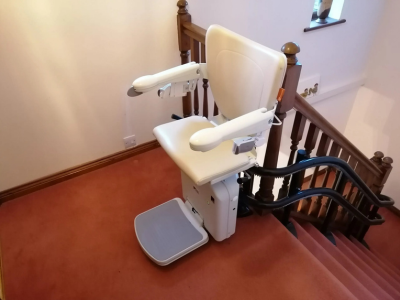
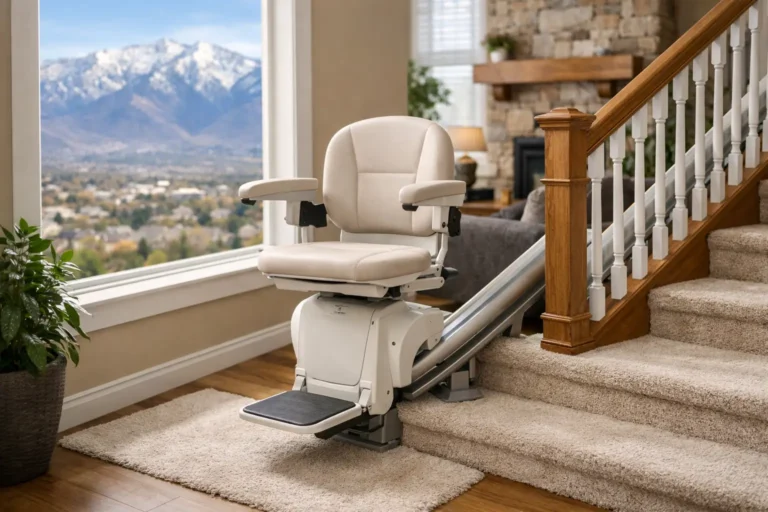
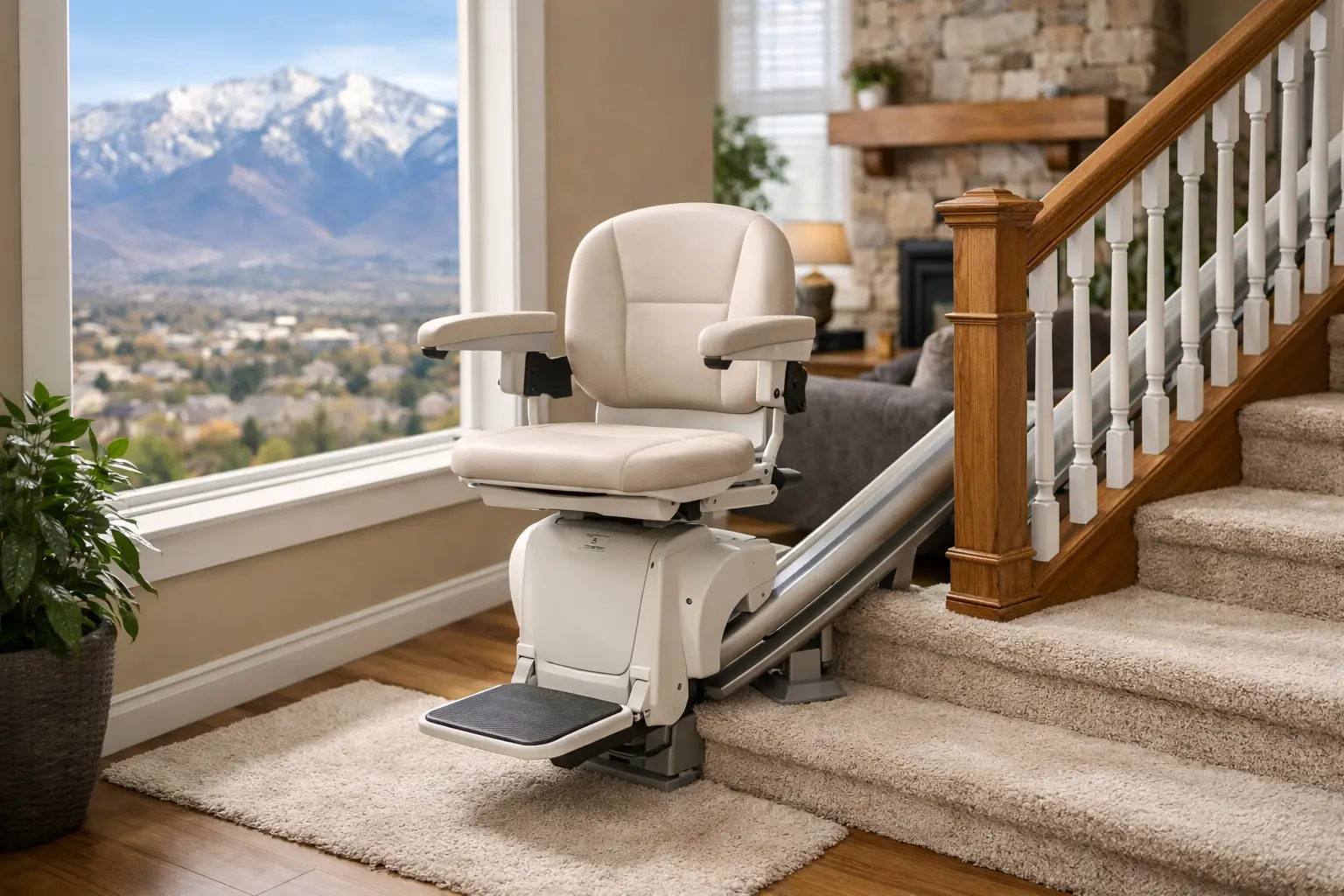
Straight stairlifts are used for staircases that go directly from one level to another with no turns or landings in between. These are typically the simplest and quickest to install. Curved stairlifts are built for stairs with turns, intermediate landings, or unusual layouts. They require a custom rail and a more precise design process, but they can still work beautifully in homes where a straight model would not.
There are also outdoor stairlifts for exterior steps. That can be especially useful for homes with steep front entries, porch access, or backyard stairs. In a place like Utah, weather protection matters. Outdoor units are designed for changing conditions, but it is still important to choose equipment built for real exposure to heat, cold, and precipitation.
The best way to know what will fit is with an in-home assessment. Measurements alone do not tell the whole story. The width of the staircase, the location of doorways, the top and bottom landing clearance, and the user’s comfort getting on and off the seat all affect the recommendation.
What affects stairlift cost
Cost is one of the first questions families ask, and for good reason. A stairlift is a meaningful investment, but it is often far less expensive than moving, remodeling, or dealing with injuries caused by falls.
The largest cost factor is the staircase itself. Straight stairlifts generally cost less than curved models because the rail is standard rather than custom made. Outdoor lifts may also cost more because of weather-resistant materials and components.
Features can affect price as well. Power swivel seats, folding rails, upgraded upholstery, higher weight capacities, and remote controls can all add convenience, but not every home needs every option. A good recommendation should match real daily use, not load the quote with features that sound impressive but do little for the user.
Another factor is whether a new or reconditioned unit is the better fit. For some households, a reconditioned stairlift can be a smart way to lower cost while still getting dependable performance. That depends on availability, the staircase layout, and the level of service support included.
It also helps to think beyond the purchase price. Installation quality, warranty coverage, and ongoing service matter. The lowest upfront number is not always the best value if support is hard to get later.
Safety features that matter most
Families often worry that a stairlift will feel complicated or risky. A well-matched lift should do the opposite. It should reduce stress and make movement through the home feel predictable again.
The most important safety features are usually straightforward. A seat belt keeps the rider secure during travel. Obstruction sensors stop the lift if something is blocking the path. Swiveling seats and stable footrests help users get on and off more safely at the landing. Battery backup is another key feature because it allows the lift to operate during a power outage.
Ease of use matters just as much as the equipment itself. The controls should be simple. The ride should feel steady. The user should be able to sit comfortably and understand how to operate it without feeling rushed or overwhelmed.
Professional installation also plays a major role in safety. Stairlifts are mounted to the stairs, not usually to the wall, and proper fit is essential. A lift that is measured carefully and installed correctly will perform better and inspire more confidence.
The installation process is usually simpler than people expect
Many homeowners assume installing a stairlift means a long, messy construction project. In most cases, it is much more straightforward.
After an in-home evaluation, the equipment is selected based on the user, the staircase, and any space limitations. Straight stairlifts can often be installed relatively quickly once the unit is ready. Curved stairlifts take longer because the rail is custom built, but the process is still far less disruptive than a remodel.
Installation itself generally does not require major structural changes to the home. The rail is attached to the stair treads, and the lift is tested to make sure it operates properly. The user should also receive a clear walkthrough on how to use it, what basic maintenance looks like, and who to call if service is needed.
That service piece matters more than many people realize. Mobility equipment is not something most families want to troubleshoot on their own. Knowing there is local support available for maintenance and repair can make the decision much easier.
How to choose the right provider
Choosing a stairlift is partly about equipment and partly about trust. Families are often making decisions during a stressful time, and they need clear answers, not pressure.
Look for a provider that starts with the home and the person using the lift. A proper recommendation should consider mobility level, height and weight needs, transfer ability, staircase layout, and future plans. If someone may need a wheelchair-accessible solution later, that should be part of the conversation from the beginning.
It also helps to work with a full-service company that can evaluate, install, maintain, and repair the equipment. That creates better continuity and fewer headaches later. If a stairlift is being installed for an aging parent or a spouse recovering from surgery, families want reassurance that help will still be available after installation day.
For Utah homeowners, local experience can be especially valuable. Homes vary widely, from narrow staircases in older properties to larger multi-level layouts with complex turns. A provider familiar with the area can often spot practical issues early and recommend solutions that fit the home more naturally.
Olympus Stairlifts serves families across Utah with that consultative approach, helping homeowners match the right accessibility equipment to the way they actually live.
A stairlift is not giving up
Some people resist the idea of a stairlift because it feels like admitting defeat. In practice, it is usually the opposite. It is a decision to keep using more of the home safely and confidently.
The right lift can reduce the daily strain of stairs, lower the risk of falls, and make the whole household feel calmer. It can also buy time to make thoughtful decisions instead of rushed ones. That is especially important when families are balancing recovery, caregiving, and long-term planning all at once.
If stairs are starting to shape where someone sleeps, what rooms they avoid, or how worried the family feels each day, it may be time to look at solutions. A stairlift should not feel like a last resort. It should feel like a practical step toward staying comfortable, safe, and independent at home for longer.