A curved staircase can be one of the most beautiful features in a home, but it can also become a daily obstacle when climbing stairs no longer feels safe. When you need to choose curved stairlift rail options for your home, the decision is about much more than getting from one floor to another. The right rail should follow your staircase precisely, leave room for others to use the stairs, and provide dependable access every day.
Unlike a straight stairlift, a curved stairlift is designed around the specific turns, landings, and changes in angle in your home. That makes a professional in-home evaluation especially valuable. A properly planned system can help you or someone you love continue using the whole home with greater confidence and less worry about falls.
Why Curved Stairlift Rails Are Different
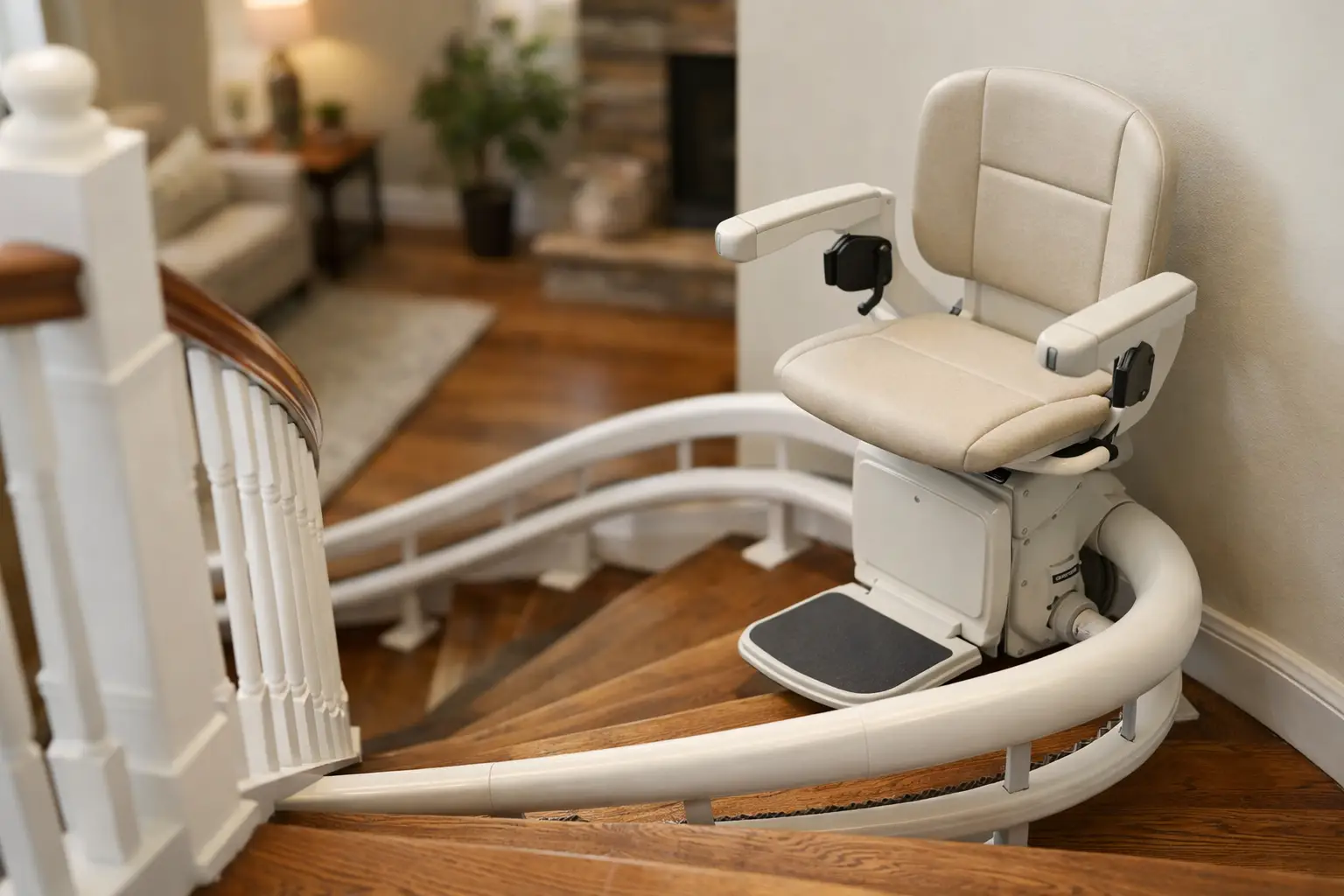
Straight stairlift rails are built in standard lengths and can often be adjusted to fit a typical straight run of stairs. A curved rail is different. It is custom manufactured to match the shape of the staircase, whether it has a gentle bend, a 90-degree turn, multiple landings, or a spiral-like layout.
That custom fit is what makes a curved stairlift possible in homes where a standard rail will not work. It also means the details matter. The rail must account for each curve, the available width of the staircase, the location of doorways, and where the chair will safely start and stop.
Curved systems generally cost more than straight stairlifts because the rail is made for one staircase rather than pulled from standard stock. For many homeowners, though, the value is clear: access to bedrooms, bathrooms, and other essential areas without the disruption of moving or undertaking a major remodel.
Start With the Staircase, Not the Product
The first step is understanding your staircase itself. It may look like a simple curve from the bottom, but measurements and clearances can change at every step. A professional evaluator will look at the stair width, tread depth, handrails, wall features, landings, and the amount of space available at both ends of the staircase.
Identify Every Turn and Landing
A curved stairlift rail may need to travel around one corner, across an intermediate landing, or through several turns before reaching the upper floor. Each section affects the rail design. Even a short landing can require careful planning to ensure the user can get on and off the chair safely.
Do not assume a stairlift cannot work because the staircase has a tight turn or unusual shape. Many curved configurations can be accommodated, but the answer depends on real measurements rather than a photo or rough estimate.
Consider Stair Width and Household Traffic
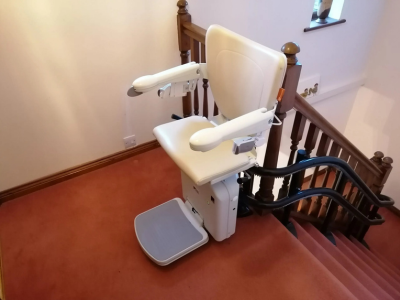
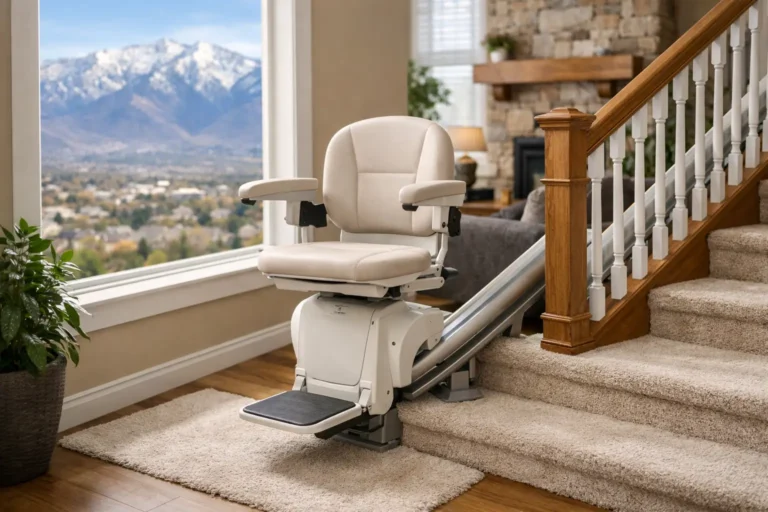
The stairlift chair needs enough room to travel without interfering with walls, railings, or doors. It is also worth considering how the stairs are used by everyone else in the household. Fold-up seats, footrests, and armrests can help keep the staircase clearer when the lift is parked.
A narrow staircase does not automatically rule out a stairlift, but it may affect the model, rail placement, or parking position. An in-home assessment provides a clear answer before you commit to a purchase.
Choose a Curved Stairlift Rail With Safe Entry and Exit Points
Getting on and off the lift safely is just as important as the ride itself. The rail should begin and end in locations that allow the rider to sit down and stand up on level, stable flooring. This is especially important for people who use canes, walkers, or have difficulty turning.
At the top of the stairs, a powered swivel seat can be a helpful feature. It turns the user away from the open staircase so they can exit toward the landing. At the lower level, a rail may be designed to extend beyond the bottom step when space allows. This can move the boarding point away from the staircase and reduce the risk of stepping backward near the first stair.
The best choice depends on the layout. A rail extension can be useful, but it is not always the right fit if a doorway, hallway, or frequently used room is nearby. Your evaluator should explain the options in plain language and show how each one affects daily use.
Look Beyond the Rail to the Whole Stairlift System
The rail is central to a curved stairlift, but it works as part of a complete system. The chair, controls, power supply, safety sensors, and charging points all contribute to a reliable experience.
Most residential stairlifts operate on rechargeable batteries. The lift charges when it is parked at designated points on the rail, helping it continue working during many power interruptions. Ask where those charging points will be located and whether the lift can be parked conveniently without blocking a preferred doorway or walkway.
Safety sensors are also essential. They stop the lift if the footrest or carriage encounters an obstruction on the stairs. A seat belt, secure armrests, and a properly sized footrest help the rider feel stable throughout the trip.
Remote controls can be useful in homes where more than one person uses the stairs. They allow the chair to be called to another floor rather than requiring someone to climb the stairs to retrieve it.
Match the Seat and Weight Capacity to the User
A stairlift should fit the person using it, not simply fit the staircase. Seat width, weight capacity, ease of fastening the belt, and the ability to transfer on and off the chair all deserve attention. A person recovering from surgery may have different needs than someone planning to age in place for years.
During an evaluation, be open about mobility concerns. For example, someone with limited knee flexibility may benefit from a seat height or swivel feature that makes standing easier. A caregiver may need a configuration that leaves enough room to assist at the top or bottom of the stairs.
If the user relies on a wheelchair full time, a stairlift may not be the best solution. A vertical platform lift or residential elevator may offer safer access, depending on the home and the person’s needs. A trustworthy accessibility provider will help you compare the right options instead of trying to force every situation into one product.
Understand the Cost Factors Before You Decide
Every curved stairlift rail is priced according to the staircase and the selected features. The length of the rail, number of turns, landing arrangements, seat options, weight capacity, and installation requirements can all affect the final cost.
It is reasonable to ask for a detailed quote that explains what is included. Confirm whether the estimate covers the custom rail, stairlift unit, installation, warranty coverage, and any future service needs. The lowest initial price is not always the best value if installation, local support, or repair assistance is unclear.
Reconditioned equipment can sometimes be an option, but curved rails are usually custom to a particular staircase. In many cases, a new custom rail is necessary even when other components are available in reconditioned condition. That is why a personal evaluation is more useful than a generic online price range.
Plan for Professional Measurement and Installation
A curved rail is not a do-it-yourself purchase. Accurate measurements are critical because the rail needs to follow the staircase closely while maintaining proper clearance and smooth travel. Professional installers also secure the rail correctly, test every safety feature, and make sure the user understands how to operate the lift.
Before installation day, ask what preparation is needed. In many homes, the work is straightforward and does not require major construction. You may need to move items from the stairs and clear the landings, but the rail is typically installed onto the stair treads rather than the wall. This can help preserve the appearance of the home.
After installation, do not rush the training. Practice using the controls, folding the chair, fastening the seat belt, and responding if the lift stops. The goal is for the rider and family members to feel comfortable from the first day.
Choose Service Support You Can Rely On
A stairlift is an everyday mobility device, so service after installation matters. Ask who will handle maintenance, repairs, and warranty questions if they arise. Local support can be particularly reassuring when a stairlift is essential for reaching a bedroom or bathroom.
Olympus Stairlifts provides in-home evaluations, professional installation, and ongoing service support for Utah homeowners. A hands-on assessment helps ensure the recommended curved rail fits the home, the user, and the family’s long-term plans.
The right curved stairlift rail should make the stairs feel manageable again, not add another source of concern. Begin with an honest look at the staircase and the rider’s needs, then let precise measurement and experienced guidance shape the solution. A well-fitted lift can make it easier to stay comfortable, safe, and independent in the home you already love.