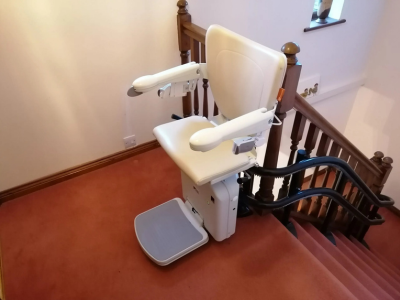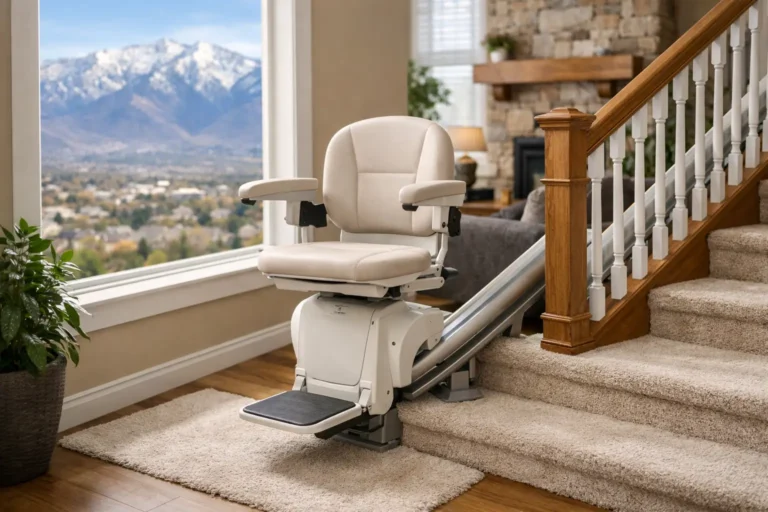
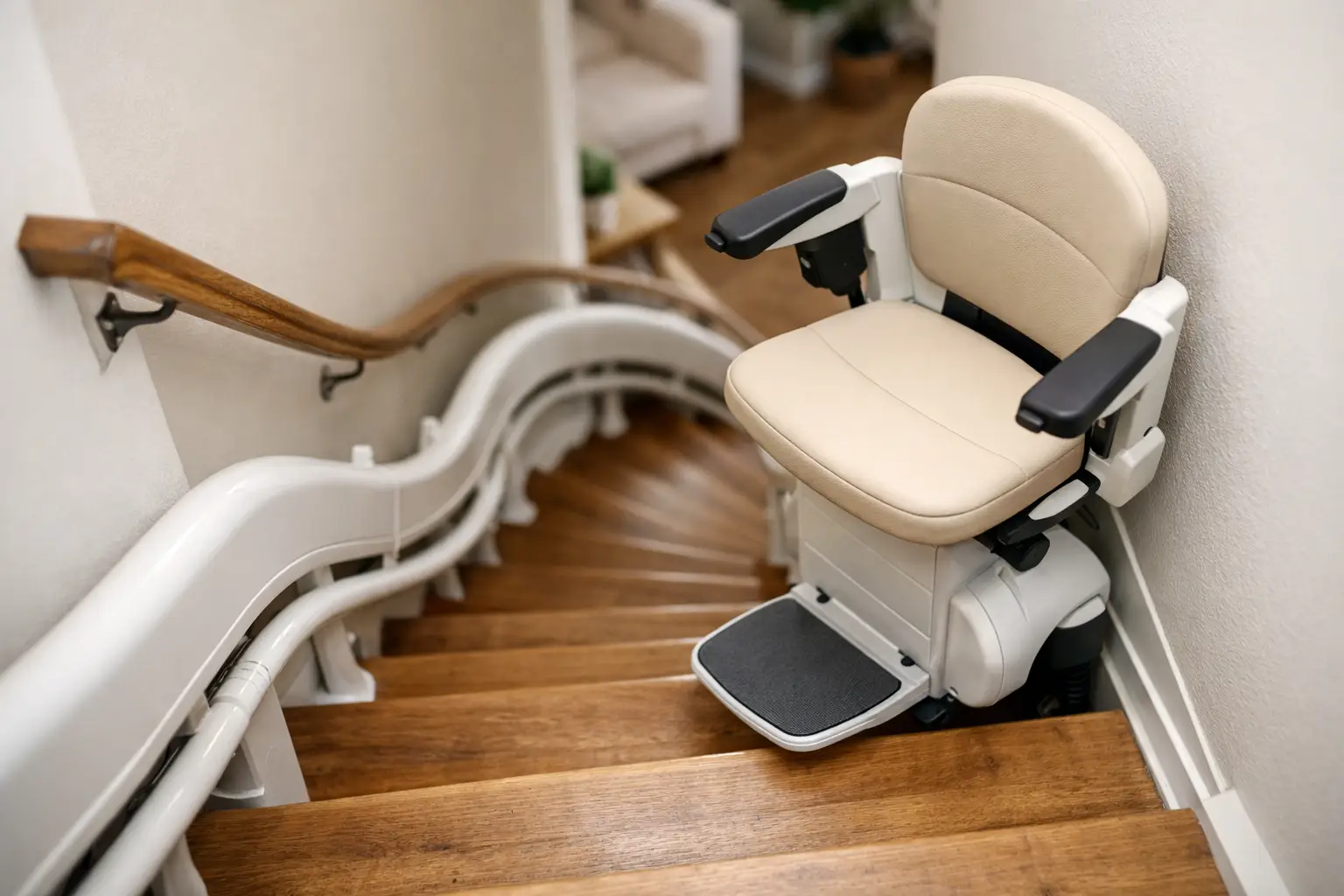
The moment stairs start to feel risky, the house can start feeling smaller. A curved stairlift for narrow stairs is often the option families look at when a straight lift will not follow the shape of the staircase and moving to a different home is not the answer.
Many homeowners assume a narrow staircase automatically rules out a stairlift. In reality, the answer depends on the layout, the turns, the landing space, and who will be using the lift. Some staircases that look too tight at first can still be fitted safely with a custom rail. Others may call for a different accessibility solution. What matters most is getting a clear assessment of the space instead of guessing from photos or measurements taken at a glance.
When a curved stairlift for narrow stairs makes sense
A curved stairlift is built for staircases that change direction. That includes stairs with corners, intermediate landings, spirals, or sweeping curves. In a narrow home stairway, that custom shape is often what makes the lift possible, because the rail can be designed to follow the inside or outside of the staircase as closely as the structure allows.
This is where curved and straight lifts differ in a practical way. A straight lift works on one uninterrupted run. A curved model is made to fit the exact path of your stairs. If your staircase turns even once, a straight unit usually will not solve the problem on its own.
Narrow stairs add another layer to the decision. The lift must leave enough usable space on the staircase, allow safe entry and exit, and fit the rider comfortably. That is why the rail design, chair size, seat position, and folding features matter just as much as the stair width itself.
What determines whether it will fit
The width of the staircase is only one piece of the puzzle. A professional assessment usually looks at several details together.
First is the clear walking space. Even when a stairlift seat, armrests, and footrest fold up, the staircase still needs to remain workable for the household. In some homes, a folded chair leaves adequate room for others to use the stairs. In others, the staircase is simply too tight to be practical.
Second is the location of turns and landings. A narrow stairway with a generous landing can be easier to work with than a slightly wider stairway with an awkward corner. The lift needs enough room to travel smoothly and enough space for the user to get on and off without twisting or balancing in an unsafe position.
Third is the body size and mobility of the person using the lift. One model may fit the staircase, but not offer the seat dimensions or transfer setup that a specific user needs. For someone with limited knee flexibility, reduced balance, or difficulty turning, the right seat height and swivel function can matter as much as the rail itself.
Weight capacity also matters. Some stairlifts are more compact, while heavy-duty options may need more room. If the priority is a higher capacity model, that can affect whether a narrow staircase is still a good candidate.
Why custom rail design matters
A curved stairlift is not an off-the-shelf product in the usual sense. The rail is made for the home. That custom approach is what allows the system to work around tight corners, unusual landings, or narrow interior staircases that would otherwise be difficult to navigate.
In many cases, the rail can be mounted to the stairs rather than the wall. That surprises homeowners who worry their wall shape or handrail placement will prevent installation. Stair-mounted rails often give more flexibility and typically avoid major structural changes.
There are trade-offs, though. Custom rails usually cost more than straight stairlift rails, and manufacturing can take longer because the system is built to match your exact staircase. Families who need a solution immediately sometimes need to weigh that timeline against other temporary mobility plans.
Common features that help in tight spaces
Not every curved stairlift is ideal for a narrow staircase. The most useful features are the ones that reduce the amount of space the lift uses when parked and improve safety during transfer.
A folding seat, footrest, and armrests help keep the staircase more open when the lift is not in use. A swivel seat can make getting off at the top landing safer, since the user can turn away from the stairs before standing. Some models also offer a compact seat design that reduces how far the chair extends into the staircase.
Powered options can help too. For example, a power swivel or power footrest may be helpful for riders who have pain, weakness, or limited range of motion. These features are not necessary for every household, but in the right situation they can make daily use easier and safer.
Parking and charging positions are worth discussing as well. In a narrow stairway, where the chair rests when not in use can make a real difference. Sometimes the best setup is to park the chair away from the main entry point to keep the hallway or landing clear.
What homeowners often worry about
The first concern is usually, Will people still be able to use the stairs? Often, yes, but it depends on the staircase and the lift model. A folded stairlift takes up less room than many people expect, but every home is different. A good installer should be honest if the remaining stair space would feel too restricted.
The second concern is safety. That is a fair question, especially in a tight stairwell. A properly selected and professionally installed stairlift is designed with seat belts, obstruction sensors, secure rail travel, and controlled starts and stops. Safety comes from fit as much as from features. If the user has to struggle to sit down or stand up, the setup is not right.
The third concern is appearance. Some homeowners worry a custom rail will make the staircase feel crowded or overly medical. Modern stairlifts are generally more streamlined than people expect, especially when folded. They are still visible, of course, but for many families that trade-off feels small compared to the relief of knowing a parent or spouse can reach the next floor safely.
The installation process is more straightforward than many expect
For a curved stairlift for narrow stairs, the process usually begins with an in-home evaluation. That visit is essential because narrow staircases leave less margin for error. Precise measurements are taken, the stair layout is reviewed, and the installer considers the user’s mobility needs, not just the staircase dimensions.
After that, the rail is designed to match the staircase. Once the unit is ready, installation itself is often completed without major remodeling. The rail is typically attached to the stair treads, and the work is much cleaner and faster than many homeowners imagine.
This is also where working with a full-service provider matters. If a family is already overwhelmed by safety concerns or a recent change in mobility, they usually do not want to coordinate separate companies for measurement, product selection, installation, and future service. Ongoing support matters just as much as the initial fit.
When a stairlift may not be the best answer
Sometimes the right answer is not a stairlift. If the staircase is extremely tight, if the user cannot safely transfer onto the seat, or if there are broader accessibility concerns in the home, another mobility solution may be a better investment.
That could mean a vertical platform lift, a residential elevator, or a different plan for how the home is used day to day. This is why a consultative approach matters. The goal is not to force a stairlift into every staircase. The goal is to find the safest, most comfortable way to help someone stay independent at home.
Questions worth asking during an in-home assessment
When you meet with a stairlift professional, ask whether the chair will leave enough walking space when folded, where the best parking position would be, and how the user will get on and off at both landings. Ask about seat size, weight capacity, and whether powered features would be helpful.
It also makes sense to ask about service after installation. Stairlifts are long-term mobility equipment, not one-time purchases you want to think about only on installation day. Reliable maintenance and repair support can make a big difference in day-to-day peace of mind.
For Utah families, that local support can be especially valuable when mobility needs change quickly after surgery, a fall, or a new diagnosis. Olympus Stairlifts works with homeowners who need that kind of practical guidance, from the first home assessment through installation and ongoing service.
A narrow staircase does not always mean you are out of options. Sometimes it simply means the solution needs to be more carefully designed, more personalized, and more focused on how the lift will actually be used every day.