A wheelchair should not determine which rooms of your home you can use. When a bedroom is upstairs, a garage entry has steps, or a porch becomes difficult to reach, the right lift can restore access without forcing a move or a major remodel. The best home lifts for wheelchair users are the ones that fit the person, the wheelchair, and the home – not simply the ones with the most features.
For many Utah families, the decision also carries real emotion. A lift can help a parent remain in the home they know, make caregiving less physically demanding, and remove the daily worry that comes with transfers on stairs. Choosing well starts with understanding the main lift types and where each one makes sense.
Best Home Lifts for Wheelchair Users: The Main Options
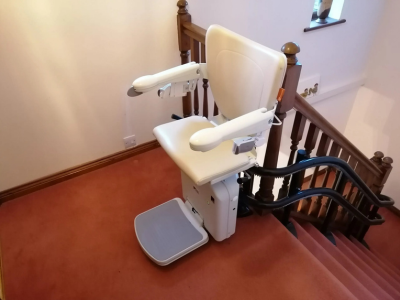
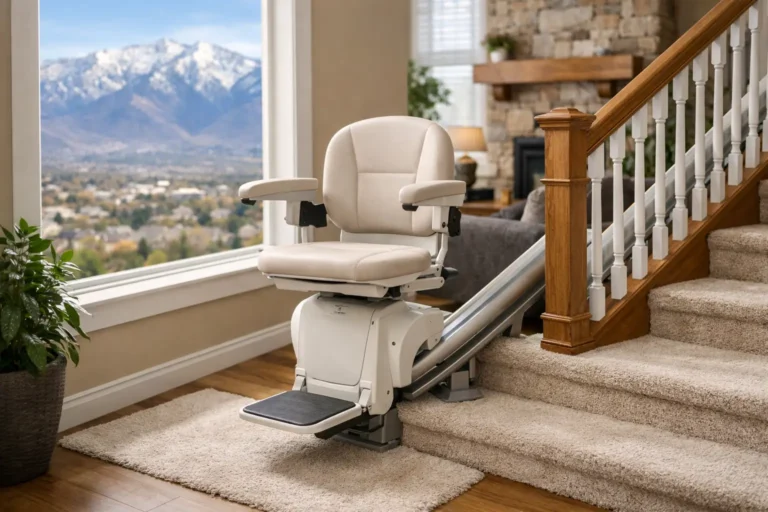
A wheelchair lift needs to carry both the rider and the chair safely between levels. That basic requirement rules out some products that are helpful for walking users but are not designed for wheelchair access. A stairlift, for example, can be an excellent mobility solution, but it generally requires the person to transfer from their wheelchair to a seat. For someone who needs to remain in their chair, a platform lift or residential elevator is usually the more practical choice.
Vertical platform lifts
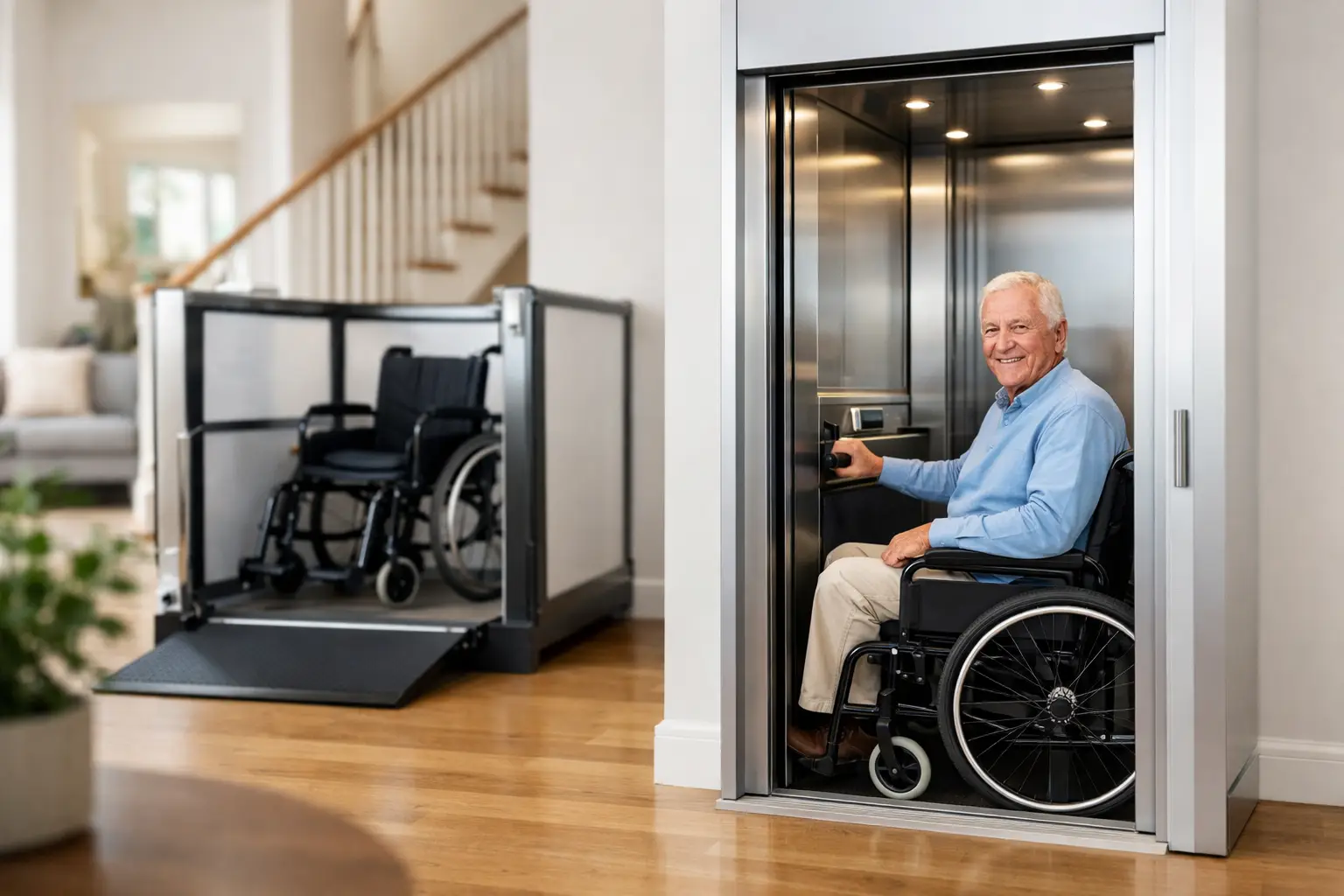
A vertical platform lift, often called a VPL, raises a wheelchair straight up and down between two levels. It is often the best starting point for a short rise, such as a front porch, garage entry, split-level landing, deck, or a few steps inside the home.
The rider rolls onto the platform, positions the wheelchair securely, and uses the controls to travel to the next landing. Safety gates, platform barriers, and emergency features are designed to keep the ride protected. Because the lift moves vertically rather than along a staircase, it can preserve the user’s independence and reduce the need for caregiver assistance.
VPLs are a strong fit when the travel distance is relatively short and there is room for a platform at both landings. They are also commonly installed outdoors. In Utah, an outdoor installation should be selected and finished with snow, moisture, temperature changes, drainage, and reliable access in mind. A lift that works well on a dry summer day must also be dependable when the weather changes.
Enclosed vertical platform lifts
An enclosed VPL performs the same basic job as a standard platform lift but places the lift inside a structure or shaft. The enclosure protects the rider from weather, creates a more finished appearance, and can allow for greater travel distances depending on the system and local requirements.
This option often makes sense for a home with a raised entry or multiple levels that need wheelchair access, particularly when an exterior installation is preferred. The trade-off is that an enclosure involves more planning, construction coordination, and cost than an open platform lift. The result, however, can be a durable accessibility solution that feels integrated with the home.
Residential elevators
A residential elevator is often the best choice when wheelchair access is needed between full floors on a regular basis. Unlike a platform lift intended for a short rise, an elevator can serve multiple levels and may provide a more comfortable experience for a wheelchair user, caregiver, or family member traveling together.
Home elevators work especially well in larger homes, new construction, and planned aging-in-place renovations. They can also add convenience beyond accessibility by moving laundry, groceries, or other household items between floors. Depending on the model and home layout, installation may require a hoistway, machine space, electrical work, and structural modifications.
The primary consideration is scope. A residential elevator is typically a larger investment and a more involved project than a porch lift. For a homeowner who needs dependable access from the main floor to an upstairs bedroom every day, that investment may be worthwhile. For a three-step garage entry, it is usually more lift than the situation requires.
Inclined platform lifts
An inclined platform lift carries a wheelchair along the path of an existing staircase. The platform folds when not in use, helping preserve stair access for other household members. This can be a practical solution when a staircase cannot be replaced by a ramp and there is no suitable location for a vertical lift.
These systems are most often considered for straight staircases, though some configurations can accommodate turns. They require enough stair width and a clear path at the top and bottom landings. Since the platform occupies the stairs during use, this option needs careful planning in busy homes or narrow stairwells.
How to Choose the Right Wheelchair Lift for Your Home
The most helpful way to compare home lifts is to begin with the daily trip that has become difficult. Is the problem a short set of steps at the entrance? Is it access to a second-floor bedroom? Does the wheelchair need to move from a garage into the house? The lift should solve that exact barrier without creating another one.
Wheelchair size and weight matter as much as the home’s dimensions. Measure the wheelchair at its widest point, including footrests and any accessories. Power wheelchairs and scooters can be significantly heavier and larger than manual chairs. The platform must accommodate the equipment comfortably, and the lift’s weight capacity must allow for the rider, wheelchair, and any items that will travel with them.
Landing space deserves equal attention. A rider needs enough level, unobstructed room to enter and exit safely. Doors, railings, uneven concrete, tight turns, and thresholds can affect whether a lift feels easy to use. A good installation is not just about fitting equipment into an available opening. It is about creating a safe route from one part of the home to another.
Safety features that should not be overlooked
Every recommended system should include safety features appropriate to its design, such as non-slip surfaces, gates or doors, obstruction sensors, emergency stop controls, and dependable landing access. For outdoor lifts, weather protection and traction become especially important. For systems that serve multiple floors, emergency lowering procedures and backup options should be discussed during the evaluation.
Just as important, ask who will install and service the lift. Home accessibility equipment is a long-term part of the home. Professional installation, clear operating instruction, routine maintenance, and access to repair support can make a major difference in reliability and peace of mind.
Budget, construction, and long-term value
The cost of a wheelchair lift depends on more than the equipment itself. Travel height, platform size, indoor or outdoor placement, electrical needs, permits, gates, enclosure requirements, and site preparation all affect the final project. A low initial equipment price may not reflect the construction work needed to make the lift safe and code-compliant.
It is reasonable to ask for a clear quote that separates the lift, installation, and any required site work. It is also wise to consider future needs. A lift that fits a current manual wheelchair may not be the right choice if a power wheelchair, caregiver assistance, or changing mobility needs are likely later. Planning for enough capacity and space can prevent an expensive replacement down the road.
Why an In-Home Evaluation Matters
Photos and rough measurements can start the conversation, but they rarely reveal every practical issue. An in-home evaluation allows an accessibility professional to measure travel distance, review landing space, check electrical considerations, identify structural needs, and discuss how the household actually uses the area.
This is also the time to talk honestly about trade-offs. A ramp may be less expensive for a very short rise, but it can require considerable length and outdoor space. An inclined platform lift may preserve the existing staircase, but it may not suit a narrow stairway. A vertical lift may be ideal at the entry, while an elevator makes more sense for daily travel between floors.
For Utah homeowners, a local team can also account for regional conditions, from winter exposure at an entryway to the layout of common split-level homes. Olympus Stairlifts provides in-home evaluations to help families compare options based on real measurements and real routines, rather than guesswork.
The right lift should feel like a practical part of the home: easy to operate, properly sized, professionally installed, and ready when it is needed. When access is planned around the wheelchair user rather than around the stairs, home can remain a place of comfort, safety, and independence.