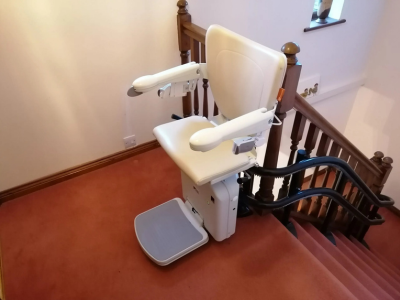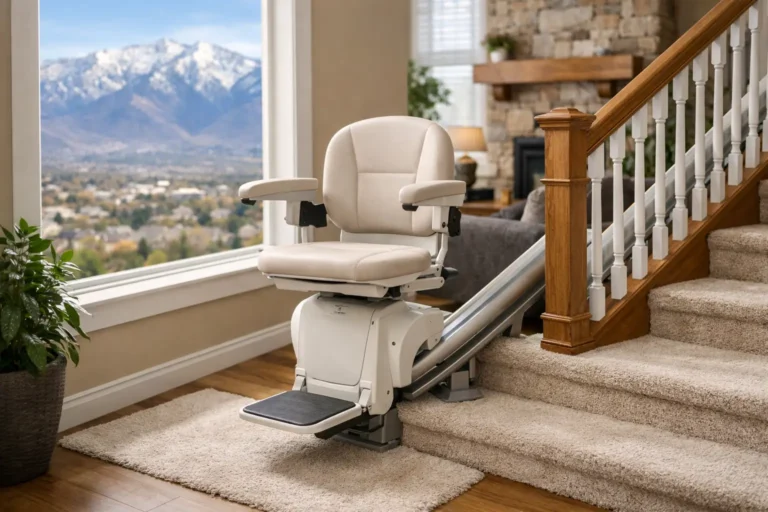
Stair Lift Repair in Utah: Common Problems and Solutions
A stair lift is easy to take for granted when it works every day. When it suddenly stops, beeps, will not charge, or moves only partway up the stairs, the problem can quickly become stressful—especially when someone depends on the lift to move safely between floors.
Olympus Stair Lifts provides local stair lift service and repair across Northern Utah. Many common problems are straightforward to diagnose once the symptoms are narrowed down.
Start With the Simple Checks
Before assuming the lift has a major mechanical failure, check the basics. Make sure the main power switch is on, the chair is parked correctly on its charging point, the seat is fully locked into its travel position, and the footrest or safety edges are not being pressed by an object.
Also check whether the charger has power. A tripped breaker, unplugged charger, switched outlet, or loose charging connection can create what looks like a battery or control problem.
The Lift Beeps but Will Not Move
Beeping is often the lift’s way of reporting a condition that prevents movement. Depending on the model, that may include a swivel seat that is not locked, an obstruction sensor being activated, the lift being off the charging point, or low battery voltage.
Do not force the chair or bypass safety switches. The safest approach is to identify which condition is preventing normal operation.
The Stair Lift Will Not Charge
Charging problems are among the most common service calls. Possible causes include worn batteries, dirty charging contacts, a failed charger, a loose power connection, or a problem with the charging strip or contact points on the rail.
If the lift still runs for a few trips but gradually becomes weaker, the batteries may no longer be holding a full charge. If the charger has no indicator light or shows an abnormal status, the charger or power source may need attention.
The Lift Stops Partway on the Rail
A lift that stops in the same location repeatedly may have a rail, charging, wiring, or obstruction issue. A lift that stops randomly may point to a battery, connection, control, or safety-sensor problem.
Inspect the rail for obvious objects, debris, or anything touching the carriage or footrest. If nothing is visible, a service inspection is usually the next step.
The Chair Moves Slowly or Unevenly
Slower movement can come from weak batteries, increased friction, a drive problem, or a component that needs adjustment. If the lift sounds different than normal, hesitates, or starts and stops, avoid repeated use until the problem is identified.
Small mechanical issues are often easier to correct before they cause additional wear.
Remote Controls Do Not Work
Many stair lifts have call/send controls at the top and bottom of the staircase. If the chair works from the armrest control but not from a remote, the issue may be as simple as the remote battery or pairing. If none of the controls work, the problem is more likely somewhere in the lift’s power, safety, or control system.
Seat or Swivel Problems
The seat generally must be fully locked in the forward-facing travel position before the lift will run. If the swivel mechanism is worn, misaligned, or not latching completely, the safety switch may prevent movement.
This is a safety feature, not a nuisance. It keeps the chair from traveling while the seat is turned toward the landing.
When Batteries Need Replacement
Stair lift batteries do not last forever. Their lifespan depends on age, use, charging conditions, and temperature. A lift that is several years old and begins losing power, beeping frequently, or stopping after a power outage may simply need fresh batteries.
Battery replacement should be done with the correct type and voltage for the specific lift. Installing the wrong battery can create charging and performance problems.
Do Not Ignore Repeated Charging Problems
If new batteries fail quickly, the real issue may not be the batteries. A weak charger, poor charging contact, or intermittent power source can shorten battery life and create repeat failures.
A proper diagnosis looks at the charging system as a whole instead of replacing the same part over and over.
Older and Reconditioned Stair Lifts
Older stair lifts can often be repaired, but parts availability matters. Some systems have readily available batteries, chargers, rollers, switches, and controls. Others may have discontinued parts that make repair less practical.
In those situations, the decision becomes whether a repair gives the homeowner dependable service or whether replacing the lift makes more sense.
When to Call for Service
Call for service when the lift will not move after basic checks, repeatedly stops on the rail, loses charge quickly, makes new grinding or clicking sounds, or has a seat, footrest, or safety switch that does not operate correctly.
If the user relies on the lift every day, it is usually better to address an intermittent problem early rather than wait for a complete failure.
Local Stair Lift Repair in Northern Utah
Olympus Stair Lifts works with homeowners throughout Northern Utah on stair lift repair, maintenance, installation, and replacement. We service mobility equipment with the goal of getting the user back to safe, dependable operation as quickly as practical.
If your stair lift is not charging, is beeping, has stopped moving, or simply does not feel right, a local evaluation can help identify the cause and the most sensible repair path.
Regular maintenance can also help reduce surprise failures. Periodic checks of batteries, charging contacts, rail condition, seat operation, fasteners, and safety sensors can catch wear before it becomes a breakdown. If the lift is used several times every day, preventive service is especially worthwhile because dependable operation matters most when the user has no easy alternative for reaching another floor.
Helping you stay independent longer.