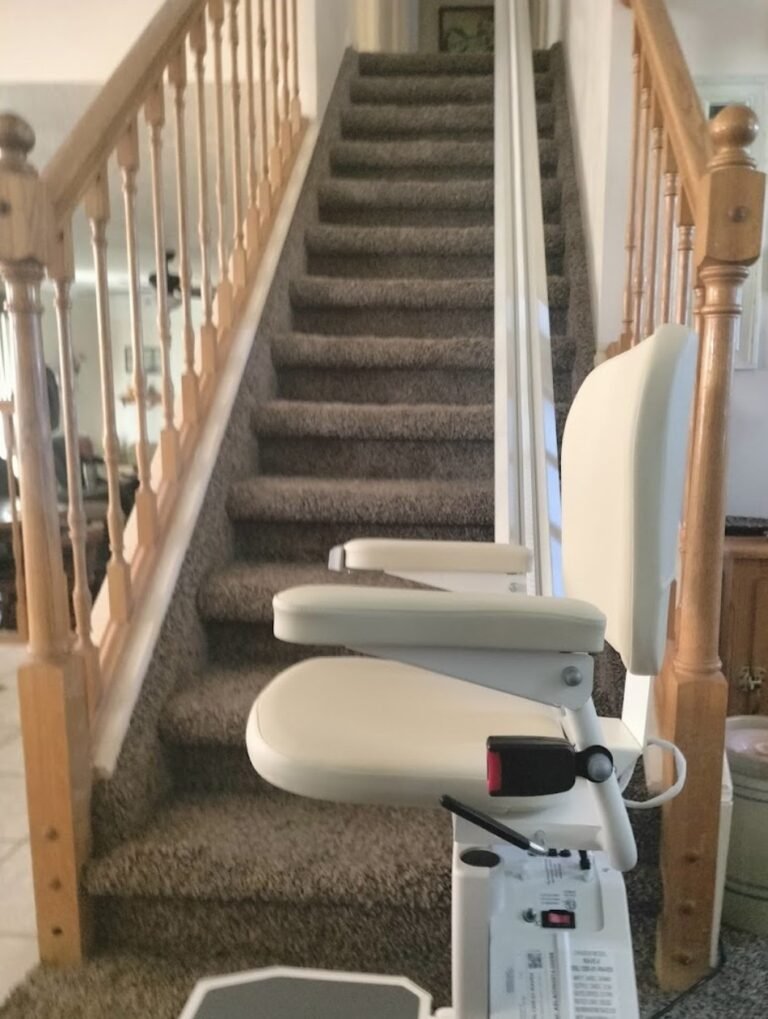
Can a stair lift be installed on either side of the stairs? Often, but not always. The correct side depends on the stairway, the particular lift model, landing space, and how the rider gets on and off. A left-hand rail may work in one home while a right-hand rail is the safer, more practical choice in another. The answer comes from an on-site assessment—not a universal rule.
Olympus Stair Lifts evaluates homes in Ogden, Layton, Syracuse, Riverdale, Farmington and throughout Utah. Here is what installers look for and what homeowners can prepare before an assessment.
What determines left- or right-side rail placement?
Installers assess the whole travel path: each tread, the top and bottom landings, nearby doors, handrails, walls, turns, and the space occupied by the chair while moving or parked. They also check the rider’s preferred transfer direction and the installation requirements for the specific model. Rail brackets on many residential stair lifts attach to the stair treads rather than the wall, but mounting details vary by system and stair construction.
Do not remove a handrail or assume a narrow staircase will fit a lift based on one measurement. The equipment and remaining walking space need to be evaluated together.
Straight staircases may offer more flexibility
On an uninterrupted straight flight, either side may be an option if the lift model supports that configuration. A wall on one side and an open railing on the other do not, by themselves, decide the answer. The technician checks whether the rail, seat, footrest and carriage will clear obstructions along the entire route.
For example, a Syracuse homeowner might prefer the wall side to keep the open balustrade unobstructed. But if that side ends beside a doorway, the opposite side may provide a better boarding area. Compare the options on our straight stair lift service page.
Curved stairs require a different decision
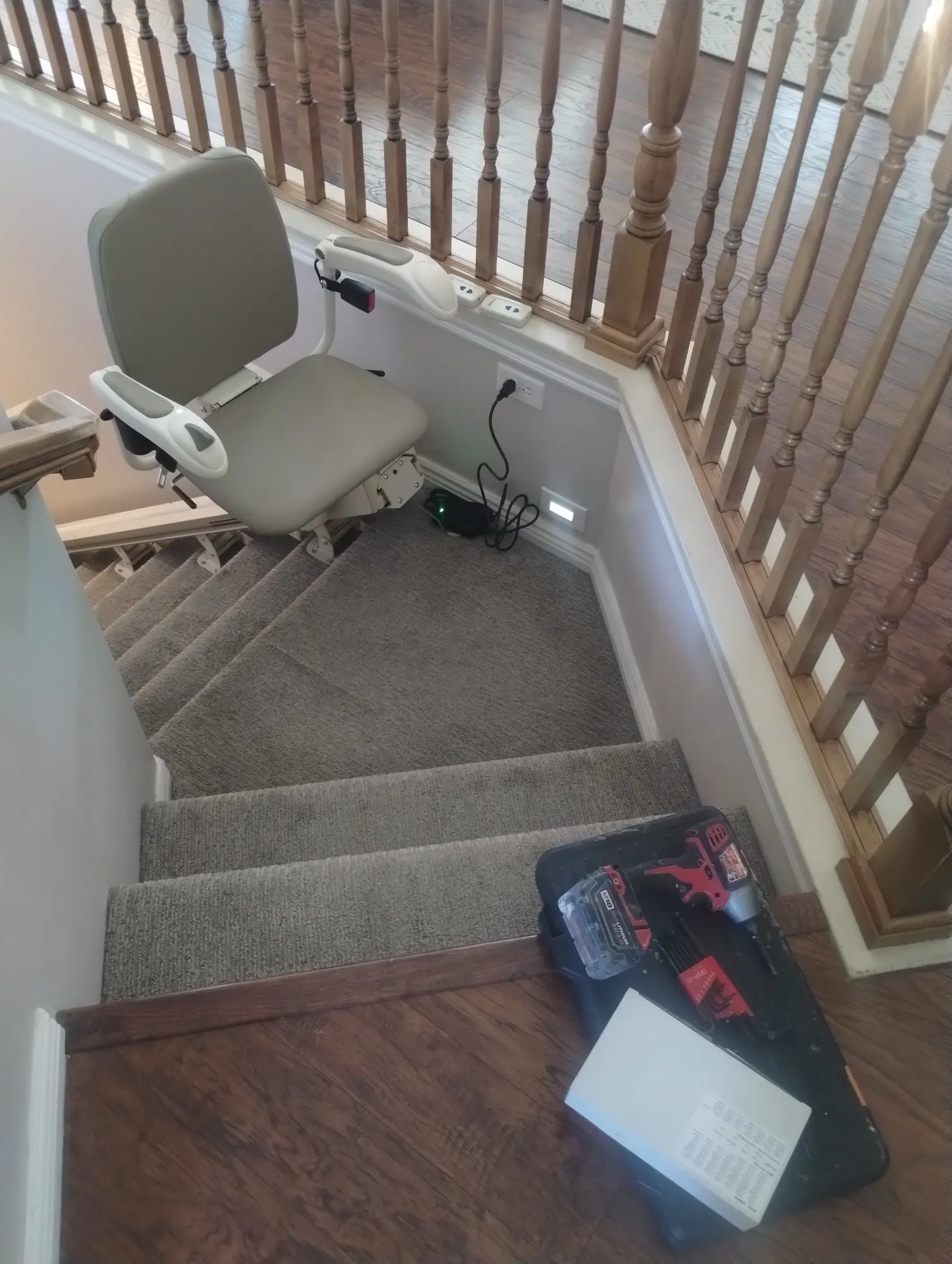
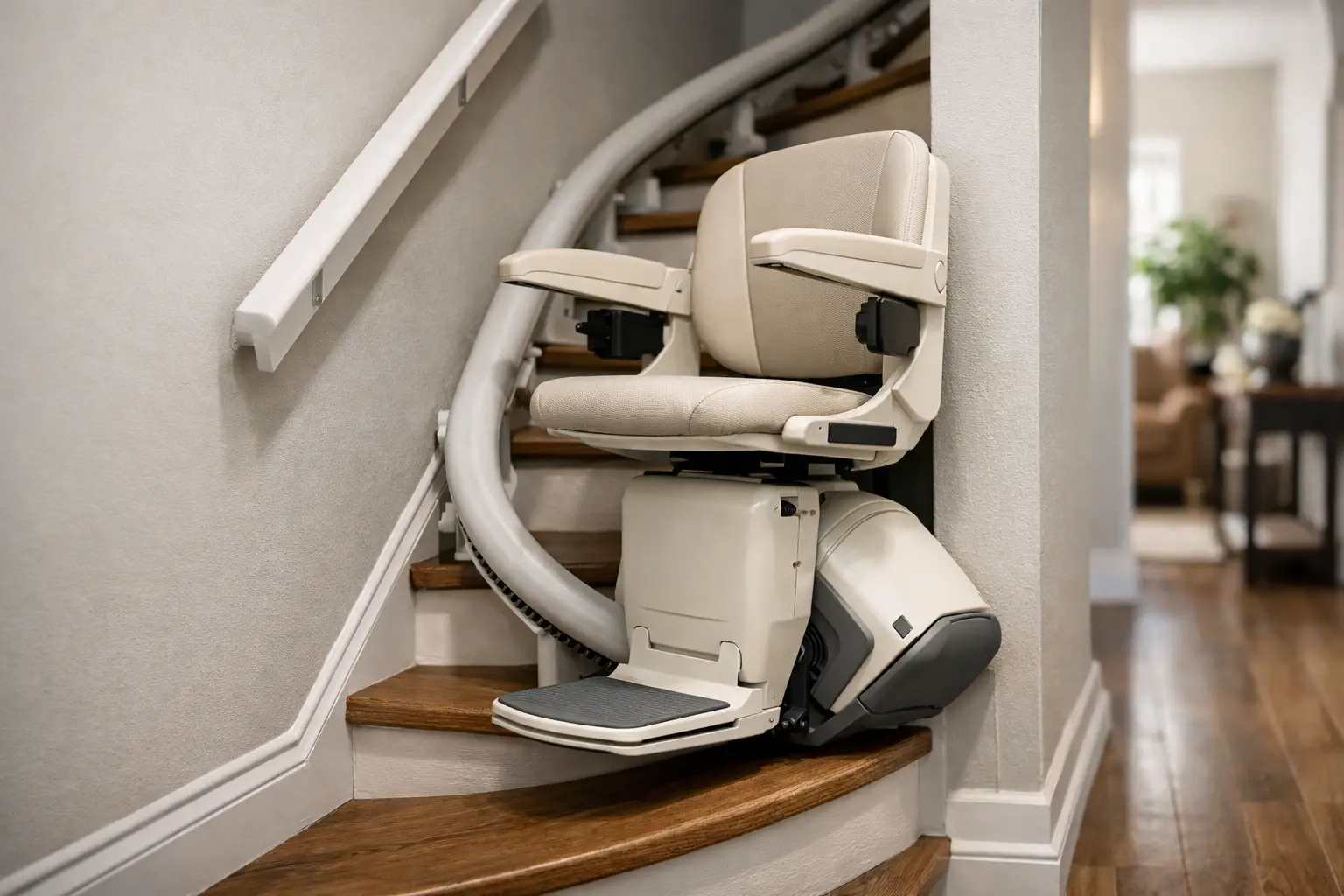
On stairs with a turn, intermediate landing or switchback, the inside and outside routes have different shapes. A curved rail is designed for the measured path; the preferred side affects turning clearance, rail geometry, parking position and where the rider exits. The inside route is not automatically better because it appears shorter.
A two-flight staircase with a 180-degree landing in an Ogden home needs special attention to the turning area and both boarding points. Once a custom rail is manufactured, changing sides may require major redesign or replacement. See our curved stair lift options for an overview.
Stair width and the walking path matter
Installers measure the clear stair width at several points, not just at the bottom. They check protruding trim, newel posts, handrails, radiators and the space occupied by a folded seat and footrest. A staircase that seems wide enough when empty can become awkward at a turn or near a door.
Other household members still need a practical way to use the stairs. Folding parts can reduce the equipment’s footprint, but they do not guarantee adequate clearance in every home. Our staircase measurement guide explains the main dimensions a technician considers.
Top and bottom landings can decide the side
A rail must allow safe boarding and exiting, not simply carry the chair from one end of the stairs to the other. Check where the rider will stand, turn, and move away from the chair. A closet door, front entry, hallway intersection or nearby bathroom door can make one side unsuitable.
Some manufacturers offer model-specific solutions such as hinged rail sections or alternate parking arrangements. Availability and suitability depend on the exact lift and layout; do not assume a powered or folding accessory will solve every doorway conflict. In Riverdale and Layton homes with compact lower hallways, the landing often deserves as much attention as the stair flight.
Handrails, outlets and existing features
An existing handrail may be able to stay, but its position can affect chair clearance and rail brackets. A professional should evaluate any proposed handrail changes so people walking the stairs retain appropriate support. Light switches, baseboard heaters, window ledges and decorative trim can also interfere with the chair’s travel.
Power arrangements vary by manufacturer and model. Many lifts use rechargeable batteries with designated charging positions, but outage performance and electrical requirements are model-specific. The installer should identify a suitable power source without routing extension cords across a walking path. Electrical modifications, if needed, belong with an appropriately licensed professional.
Choose a side that works for the rider
The best rail position also depends on the person using the equipment. A technician should discuss how the rider approaches the chair, uses the controls, turns the seat, and transfers at both landings. The rider’s preferences and mobility needs matter, but no one should assume a particular transfer direction is safe without an individualized assessment.
Ask to see how the selected seat and footrest will operate at each end of the stairs. A comfortable boarding point at the bottom is not enough if the top landing is cramped.
Homeowner checklist before a stair lift assessment
You do not need professional measurements to request a consultation. These simple preparations make the visit more productive:
- Take four photos: the full staircase from below, the view from above, the bottom landing, and the top landing.
- Show both sides: include walls, handrails, newel posts, doors and any turns in the photos.
- Note tight spots: record approximate stair width and identify places where trim or railings project into the path.
- Check door swings: note which doors open toward the staircase and how often they are used.
- Identify outlets: show nearby outlets without attempting electrical changes yourself.
- Discuss daily use: explain who else walks the stairs and where the rider would prefer to board and exit.
These notes are useful for a preliminary discussion, but they do not replace the installer’s measurements or manufacturer requirements.
Frequently asked questions
Can I move an existing stair lift to the opposite side?
Sometimes, depending on the model and installation. A straight lift may need different components or a revised layout. A curved rail is made for a specific path and generally cannot simply be reversed. Have the original manufacturer or a qualified installer assess it before making plans.
Does a stair lift attach to the wall?
Many residential systems mount to the stair treads using designed brackets, not directly to drywall. The actual mounting method depends on the model and stair construction. The installer must verify suitable support and fastening.
What if a door opens at the bottom of the stairs?
The installer checks the door swing and boarding area. An alternative rail side, parking location or model-specific accessory may help, but some layouts require a different solution.
Will everyone else still be able to walk up the stairs?
That depends on the remaining clear space, the lift’s folded dimensions and the staircase layout. The installer should demonstrate the proposed arrangement rather than promising that every stairway will remain equally usable.
Have Olympus evaluate both sides
For a home in Northern Utah—or elsewhere in the state—Olympus Stair Lifts can review the stair layout, explain the available rail positions and recommend a suitable next step. Contact Olympus Stair Lifts for an in-home assessment or call (385) 430-7420. The right answer is the one that fits the actual staircase and the person who will use it.