When stairs start shaping daily life around what is hardest instead of what is possible, many families begin looking at small residential elevator options. The goal usually is not luxury. It is being able to move between floors safely, stay in a familiar home, and make everyday routines feel manageable again.
For some homeowners, that need comes on gradually with age. For others, it follows surgery, a diagnosis, or a fall that changes how secure the stairs feel. Either way, the right elevator solution can make a multi-level home work much better without forcing a move.
What counts as a small residential elevator?
A small home elevator is designed for private residences and built to fit into tighter spaces than a commercial system. These models are often selected for existing homes where square footage matters, ceiling heights vary, and the installation has to work around the home instead of the other way around.
That does not mean every compact elevator is the same. Some need a shaft. Some do not. Some travel very quietly and feel more like a traditional elevator, while others are simpler in design and installation. The best choice depends on how much space you have, who will use it, and how long you expect the system to serve your household.
Small residential elevator options by home and lifestyle
The phrase small residential elevator options covers a few very different products. That is why families often feel stuck at the research stage. Two systems may both fit a home, but one may be much better for a wheelchair user, for a caregiver assisting someone, or for a homeowner planning ahead before mobility becomes more limited.
Shaft-style home elevators
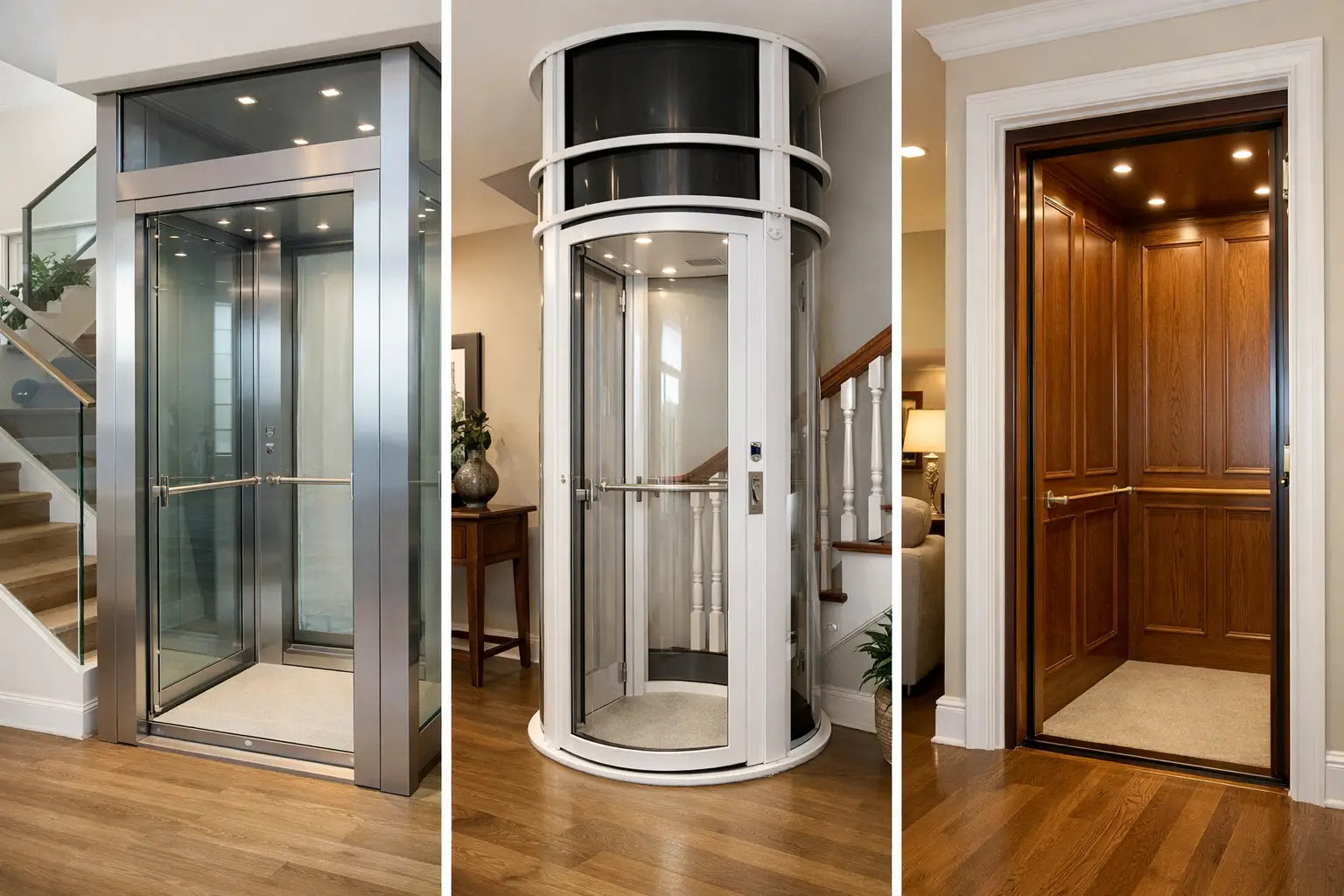
This is what many people picture first. A shaft-style residential elevator travels inside a built enclosure and typically offers the most traditional elevator experience. It can be a strong fit for homeowners who want a fully integrated look and need dependable access between two or more floors.
The trade-off is installation complexity. A shaft-style system usually requires more construction than other compact lift solutions. That can be well worth it if the elevator is meant to be a long-term part of the home, especially when comfort, ride quality, and higher weight capacity matter.
For households with a wheelchair user, this type of elevator may offer the most practical interior space, depending on the model selected. It can also be a smart choice when an adult child is helping a parent plan for aging in place and wants a solution that will continue working as needs change.
Pneumatic vacuum elevators
Pneumatic elevators are often chosen when homeowners want a smaller footprint and less structural disruption. These units move using air pressure and have a distinctive clear, cylindrical design. Because they are self-contained, they can work well in homes where building a traditional shaft would be difficult.
They appeal to many homeowners because installation can be more straightforward. The visual design is also a plus for some homes, especially when preserving openness matters. Still, style should not be the only deciding factor. Interior cab space is often tighter than with more traditional residential elevators, so comfort and usability need careful review.
If the rider uses a walker, transfers carefully, or simply wants a very compact solution for standing use, a pneumatic elevator may be worth considering. If wheelchair access is required, however, space limitations may rule it out.
Through-floor lifts
A through-floor lift travels through a cutout in the floor rather than inside a full shaft. These systems are especially useful when a home needs access between two levels and available space is limited. In the right home, they can solve a major accessibility problem with a smaller footprint than many people expect.
This category is often attractive for homeowners who want a practical answer without major remodeling throughout the house. The lift parks on one level and, when it moves, the floor opening is protected by built-in safety features. That said, layout matters a lot. The upper and lower landing areas both need to work well with the lift’s footprint and travel path.
For two-story homes where one person has limited mobility and the goal is simple, reliable floor-to-floor access, a through-floor lift can be a very sensible option.
Vertical platform lifts for residential use
A vertical platform lift is not always what people mean when they search for home elevators, but in some cases it is the better answer. These lifts are built to carry a person standing, seated, or in a wheelchair on a platform between levels. They are commonly used for porches and short rises, but certain residential applications inside the home can make sense too.
If direct wheelchair access is the top priority, a platform lift deserves consideration. It may be more practical than an elevator when the travel distance is short and functionality matters more than a fully enclosed cab. The appearance is more utilitarian, which may or may not suit the home, but for the right user, ease of access can outweigh that concern.
How to choose between small residential elevator options
The most helpful starting point is not brand or appearance. It is how the lift needs to function every day.
Think first about the user. Will the rider be standing independently, using a walker, or using a wheelchair? Will someone else regularly ride along as a caregiver? A compact elevator that looks perfect on paper can feel too cramped in real life if it does not account for turning room, transfer needs, or the extra space required for assistance.
Then consider the home itself. Ceiling heights, available corners, closet placement, traffic flow, and the relationship between the first and second floor all affect what is feasible. In some Utah homes, especially older layouts or homes with tighter framing conditions, the best option may be the one that asks for the least structural change while still meeting safety needs.
Budget matters too, but it should be viewed in context. A lower upfront price can be appealing, yet long-term value often comes from choosing the system that fits the household well enough to avoid future replacement or major modification. Installation costs, electrical work, construction needs, and ongoing service should all be part of the conversation.
What installation usually involves
Most families are relieved to learn that the process begins with evaluation, not guesswork. A professional home assessment looks at available space, travel distance, user needs, and the construction required to install the right system safely.
From there, the recommendation should be specific to the home. Not every property needs a full elevator shaft. Not every homeowner is best served by the smallest possible footprint either. The right recommendation balances safety, usability, home layout, and budget without pushing a one-size-fits-all answer.
Installation timelines vary by product. A more traditional residential elevator generally takes more planning and construction. A through-floor or self-contained unit may move faster, depending on the site conditions. What matters most is that the equipment is installed properly, tested thoroughly, and supported after the job is done.
Why service matters after installation
An elevator is not just a home improvement feature. It is an accessibility system people may rely on every day. That makes service, maintenance, and local support part of the buying decision, not an afterthought.
If a homeowner is using the lift to avoid stairs after a fall or because of a progressive mobility condition, downtime is more than an inconvenience. It can interrupt the safe use of the home. Working with a provider that handles evaluation, installation, and ongoing service can make the entire experience less stressful.
That is especially important for families making decisions under pressure. Many people researching accessibility equipment are doing so because something has already changed. Clear guidance and dependable follow-through matter just as much as the equipment itself.
The best option is the one that fits real life
There is no single winner among small residential elevator options because homes and mobility needs are not all the same. Some families need the comfort and permanence of a shaft-style elevator. Others need a compact through-floor lift that solves one urgent access problem without major remodeling. Still others are planning ahead and want to make a beloved home workable for the next decade, not just the next year.
A good decision usually comes from seeing the space, understanding how the lift will be used, and weighing the trade-offs honestly. When the solution matches both the home and the person living in it, the result is not just easier movement between floors. It is more confidence in everyday life.
Once you have a sense of which option fits your home, the next question is usually budget. Our guide to home elevator installation costs breaks down typical price ranges and what drives them, so you can budget with confidence before requesting a quote.