A staircase can feel like a fixed limitation when it is narrow, steep, or turns sharply at the landing. The good news is that can stairlifts fit tight staircases is usually a question with more options than homeowners expect. A narrow stairway does not automatically mean a stairlift is off the table. The right answer depends on the staircase measurements, its shape, who will use the lift, and how the home needs to function day to day.
For many Utah homeowners, the goal is not simply to get upstairs. It is to remain safe, comfortable, and independent in the home they know and love. A professional in-home assessment can determine whether a compact stairlift, a custom curved rail, or another accessibility solution is the safest fit.
Can Stairlifts Fit Tight Staircases?
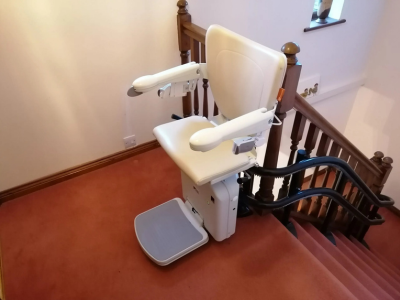
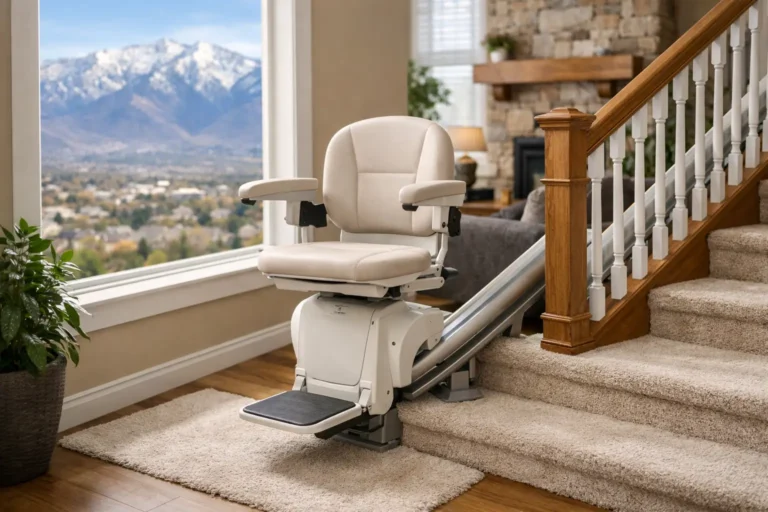
Yes, many can. Modern stairlifts are designed to work with a wider range of homes than people often assume, including older houses with narrow stairways. Straight stairlifts are especially adaptable because their rails are installed directly on the stair treads, not attached to the wall. That means wall construction, handrails, and trim are often less of a concern than homeowners initially think.
The key measurement is not just the overall width of the staircase. A stairlift professional also considers usable walking space, the depth and condition of each tread, headroom, the position of doors, and the space available at both the top and bottom landings. A staircase that looks too tight at first glance may still have enough room for a slim rail and a folding seat.
That said, “fits” should never mean forcing equipment into a space where it creates a safety concern. If other people need to use the stairs regularly, the folded lift should leave a practical path. If a doorway opens into the stairway, the rail and parking position must be planned carefully. A good recommendation balances accessibility for the rider with safe use of the home for everyone.
What Makes a Staircase Challenging?
Narrow stairs are only one part of the picture. A straight, narrow staircase can sometimes be easier to accommodate than a wider staircase with a sharp turn, uneven steps, or a very limited landing. During an evaluation, technicians look beyond a single number and examine how all parts of the stairway work together.
Stair Width and Clear Walking Space
Many compact stairlift models can be installed on staircases that are approximately 28 to 30 inches wide, though minimum requirements vary by model and configuration. The measurement must be taken at the narrowest point, which may be affected by a handrail, banister, wall projection, or trim.
When the stairlift is not in use, its seat, footrest, and armrests can fold upward. This feature matters greatly in a tight stairway because it preserves as much room as possible for walking. A slim profile is helpful, but it should be evaluated in the real home, not estimated from a photo or a general online measurement chart.
Landings at the Top and Bottom
The staircase needs safe space for a rider to get on and off the chair. On a tight lower landing, a rail may be able to extend, fold away, or park in a position that reduces obstruction near a hallway or door. At the top, the chair should stop where the rider can stand and step away from the stairs safely.
A standard rail is often appropriate for a straight staircase with open floor space at each end. When space is limited, a powered or hinged rail section may be considered. This allows part of the rail to move out of the way when the stairlift is parked, helping preserve access through a nearby doorway.
Turns, Curves, and Split-Level Stairs
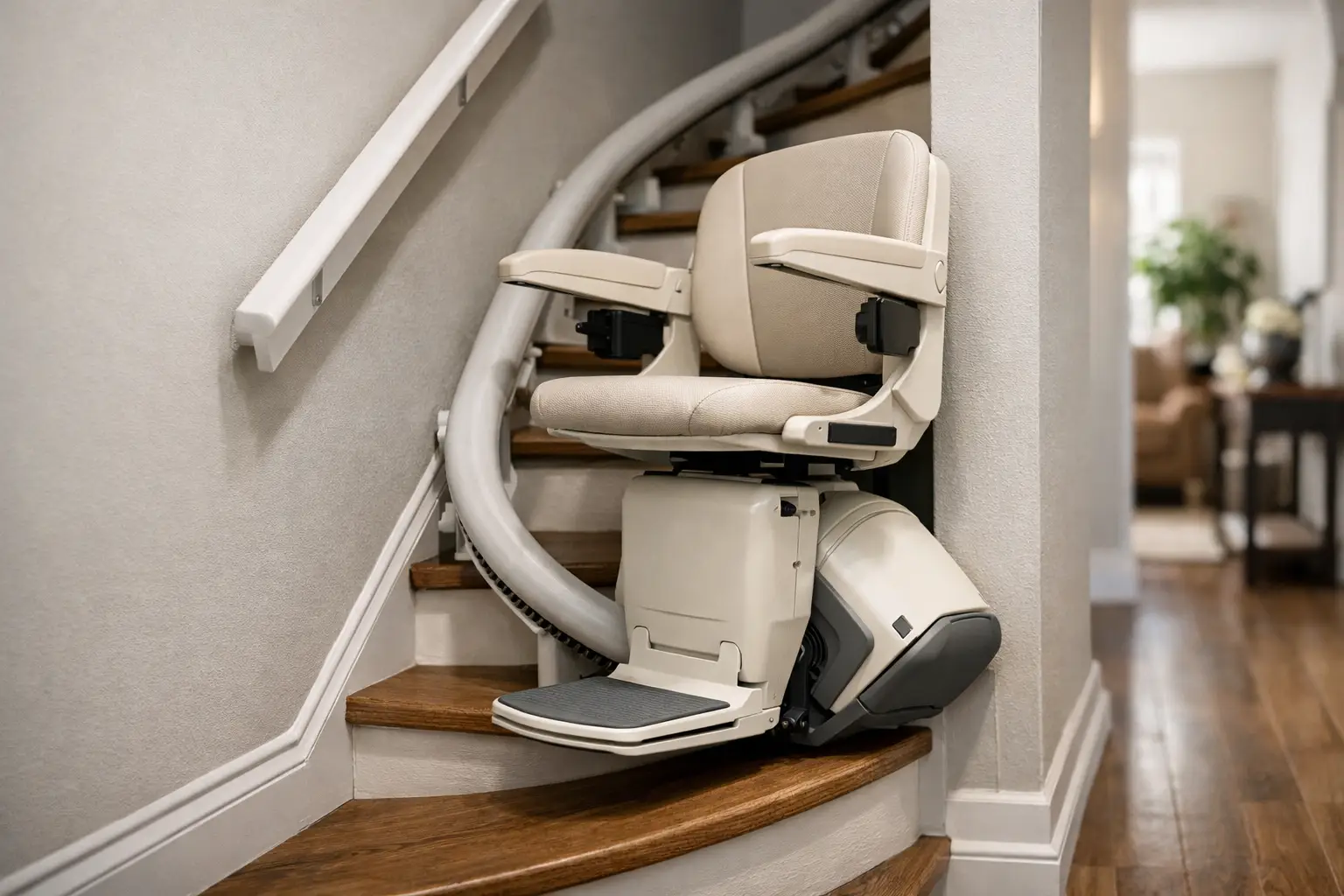
A staircase with a turn is not necessarily too tight for a stairlift, but it usually requires a custom curved rail. The rail is measured and built to follow the exact path of the stairs, including corners, intermediate landings, and changes in direction.
Curved systems are more involved than straight stairlifts, and they typically cost more because the rail is customized. However, they can be an excellent solution when a person needs continuous access between floors and a straight lift would only solve part of the problem. In some homes, two straight stairlifts may be a practical alternative to one curved system. The best choice depends on layout, budget, and the user’s comfort with transfers at a landing.
Steep, Short, or Irregular Steps
Steep staircases and steps with unusual dimensions require careful planning. A stairlift rail is installed on the treads, so the installer needs to verify that every mounting point is secure and appropriate. The chair must also provide enough clearance for the rider’s knees, feet, and head throughout the trip.
Older homes may have stairs that are slightly uneven or have distinctive trim and railings. These details do not always prevent installation, but they are exactly why an in-person assessment is more reliable than a quick estimate. A trained technician can identify workable solutions before any equipment is ordered.
Features That Help Stairlifts Work in Small Spaces
The right features can make a meaningful difference in a tight staircase. Folding seats and footrests are common because they reduce the lift’s footprint when it is parked. Swivel seats help riders turn away from the open stairwell at the upper landing, making it easier to stand safely.
A narrow rail design can also keep the lift closer to the stairs. Some systems offer parking options that allow the chair to rest farther from a doorway or high-traffic area. Battery-powered stairlifts continue operating during many power outages, which is valuable for households where stairs are the only route to a bedroom or bathroom.
Safety sensors are another important part of the decision. These sensors stop the lift if something is detected on the stairs or rail path. They are especially useful in homes with children, pets, or busy household routines. A stairlift should make the home easier to navigate, not introduce a new obstacle.
When a Stairlift May Not Be the Best Fit
There are situations where a stairlift is possible but not ideal, and an honest assessment should make that clear. If the user cannot safely transfer into and out of a seated chair, a vertical platform lift or residential elevator may better support their needs. A wheelchair user may need a platform solution rather than a standard stairlift.
Very narrow stairs can also leave too little remaining space for safe pedestrian use, even with the chair folded. In that case, alternative access options deserve consideration. The right answer may involve a different entrance, a lift serving another part of the home, or a main-floor living adjustment while a longer-term accessibility plan is explored.
The rider’s needs matter as much as the staircase. Weight capacity, balance, flexibility, vision, and the ability to use controls all affect which equipment will be comfortable and safe. Families should also consider future needs. Choosing a solution that works only for the next few months may not provide the peace of mind they are looking for.
Why an In-Home Assessment Matters
Photos and tape-measure measurements are useful starting points, but they cannot replace a professional evaluation. A technician can measure the staircase precisely, check for obstructions, review the condition of the steps, and explain how the chair and rail will sit when folded and in use.
This appointment is also a chance to talk through daily routines. Does a spouse need room to walk past the folded lift? Is there a door at the bottom of the stairs? Will the lift be used several times a day or only occasionally? Clear answers lead to a recommendation that fits the household rather than simply fitting the stairs.
Olympus Stairlifts provides personalized evaluations to help homeowners understand their options without unnecessary confusion. A local team can account for the details of the home, explain the trade-offs clearly, and provide professional installation and ongoing service when a stairlift is the right choice.
A tight staircase should not be the reason someone gives up access to the rest of their home. With accurate measurements, the right equipment, and experienced guidance, many challenging stairways can become a safer path to continued independence.