A straight staircase is often the simplest place to add safer access at home, but that does not make the decision simple. If you are trying to find the best stairlift for straight stairs, you are probably weighing more than features on a brochure. You may be thinking about a parent who has started avoiding the second floor, a spouse recovering from surgery, or your own plan to stay comfortable in the home you love.
The good news is that straight stairlifts are usually the most straightforward option to install, the most budget-friendly type of stairlift, and the fastest to put into service. The harder part is choosing the right one for your home, body, and daily routine.
What makes the best stairlift for straight stairs?
The best choice is not always the model with the longest feature list. It is the one that fits your staircase correctly, feels secure every time you ride it, and supports the person using it without adding frustration.
For most homeowners, the right straight stairlift comes down to five things: safety, comfort, ease of use, reliability, and service support after installation. A chair that looks good on paper can still be the wrong fit if the seat is too narrow, the controls are hard to use, or the folded rail still leaves the staircase feeling cramped.
That is why a stairlift should be evaluated as part of the home, not as a one-size-fits-all product.
Why straight stairlifts are often the easiest solution
A straight staircase does not have turns, intermediate landings, or curves, so the rail can be built in a standard configuration. That usually means a quicker installation and a lower cost than a custom curved lift.
It also means there are often more product options available. Homeowners can compare seat sizes, weight capacities, folding features, power options, and upholstery styles without needing a fully custom rail design.
Even so, not every straight stairlift works equally well in every home. Stair width, wall placement, doorway clearance, and the user’s mobility level still matter.
Safety features that deserve your attention
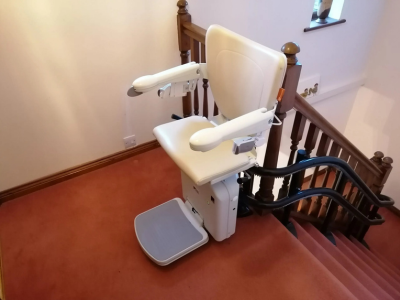
Safety should be the first filter, not an extra feature. A quality stairlift for straight stairs should include a seat belt, obstruction sensors, a swivel seat for safer entry and exit, and battery backup so the lift can still operate during a power outage.
The swivel seat matters more than many people expect. At the top landing, it lets the user turn away from the staircase before standing up. That simple movement can reduce the chance of a misstep where falls are most dangerous.
Battery backup is also important in Utah homes where weather or local outages can interrupt power. Most modern stairlifts charge continuously while parked, so the unit remains ready to use. If a lift relies too heavily on household power without practical backup, that is a weakness worth noticing.
Another detail to ask about is the start-and-stop motion. A lift that moves smoothly can be more comfortable for older adults, especially anyone with joint pain, balance issues, or recent surgery.
Comfort matters more than people think
A stairlift is not just transportation from one floor to another. It becomes part of daily living. If the seat is uncomfortable or the ride feels awkward, people may avoid using it even when they need it.
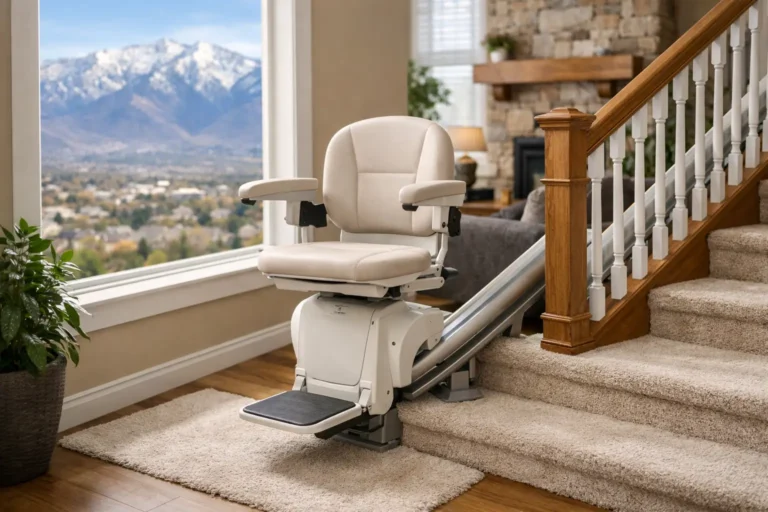
The best stairlift for straight stairs should match the user’s body size and range of motion. That includes seat height, seat width, armrest shape, footrest size, and how easy it is to sit down and stand up. For someone with limited knee flexibility or hip pain, a slightly different seat position can make a major difference.
Padding and upholstery may seem secondary, but they affect long-term satisfaction. So does the ease of folding the seat, arms, and footrest when the lift is not in use. In a shared household, a compact folded profile can help keep the stairs open for everyone else.
Weight capacity and fit are not minor details
One of the most common mistakes is assuming any straight stairlift will work for any user. Standard models often meet the needs of many households, but some people need a higher weight capacity or a roomier seat.
If the user feels squeezed, unsupported, or unstable, the lift is not the right one. A better fit improves both comfort and safety. It also tends to improve confidence, which matters when someone is already nervous about stairs.
The staircase itself also needs proper measuring. Rail placement, top and bottom landing space, and any nearby doorways all affect whether a specific unit will function smoothly. This is one reason an in-home evaluation is so valuable. It replaces guesswork with actual measurements and practical recommendations.
A straight stairlift should be easy to use every day
The best equipment is equipment people can use without stress. Controls should be simple, clearly placed, and responsive. Most straight stairlifts use a basic toggle or rocker switch on the armrest, along with call/send controls that let the chair move up or down the track when nobody is seated in it.
This is especially helpful in homes where more than one person may use the lift. It also helps when the chair is parked at the opposite end of the staircase.
Ease of use also includes how the lift parks, charges, folds, and swivels. If every step takes extra strength or coordination, the lift may feel like one more obstacle instead of a solution.
Installation speed and service support matter, too
For many families, timing is urgent. A fall, hospital discharge, or rapid change in mobility can make the staircase a problem overnight. Straight stairlifts are often the fastest type to install, which is a major advantage.
But fast installation should not come at the expense of proper setup. The rail should be fitted carefully, the user should be shown exactly how to operate the lift, and the provider should be available for maintenance and repairs later on.
That ongoing support is easy to overlook during the shopping stage. It becomes much more important after installation. If something needs adjustment, if batteries wear down over time, or if a user’s needs change, local service can make ownership much easier. For Utah homeowners, working with a provider like Olympus Stairlifts can add peace of mind because the process includes evaluation, installation, and continued support rather than just a product drop-off.
New vs. reconditioned straight stairlifts
A reconditioned unit can be a smart option for some households, especially when budget is a concern or the need may be temporary. Many people recovering from surgery or injury want a safe solution without committing to the highest upfront cost.
That said, the right choice depends on availability, warranty coverage, condition, and whether the unit is appropriate for the user and staircase. A lower price is helpful, but only if the lift is dependable and supported by qualified service.
For long-term use, many homeowners prefer a new unit for the latest features, full warranty coverage, and maximum longevity. There is no universal right answer here. It depends on timeline, budget, and how permanent the mobility need is likely to be.
How to judge value instead of just price
It is natural to compare prices first. But the cheapest stairlift is not always the best value, and the most expensive one is not automatically the best fit.
Value comes from the combination of safety, comfort, durability, warranty, and service. A lift that works well every day and is backed by responsive support often costs less in the long run than one with a lower sticker price and more headaches later.
It also helps to think about the value beyond the equipment itself. A well-chosen straight stairlift can delay or prevent a move, reduce fall risk, and restore access to bedrooms, laundry areas, or favorite living spaces. For many families, that is where the real return shows up.
Best stairlift for straight stairs – the right answer is personal
If you are searching for the best stairlift for straight stairs, the strongest answer is usually not a single brand or model name. It is the lift that fits the user, the staircase, and the household’s daily life.
For one person, that may mean a compact chair with simple controls and a narrow folded profile. For another, it may mean a higher-capacity seat with extra stability and easier transfers at the top landing. The difference matters because mobility needs are personal.
A good stairlift should help the home feel usable again, not more complicated. When the fit is right, people often feel the change immediately. They stop planning their day around the stairs. They move through the house with less worry, more comfort, and more confidence.
That is a meaningful place to start when home is exactly where you want to stay.