Following your vertical platform lift’s maintenance guidance helps identify wear, weather exposure, and unsafe operation. If you need help identifying the right service for your equipment, explore our vertical platform lift installation and service options or call Olympus at (385) 430-7420.
💡 Core Takeaway: Follow the lift manufacturer’s maintenance schedule and perform only the non-invasive checks permitted in the owner’s manual. A qualified service provider should inspect safety devices and mechanical systems at the intervals specified for the model and usage.
Why Regular Maintenance Matters for Utah Homeowners
A residential vertical platform lift is designed to provide powered access between levels for users and mobility devices permitted by its specific model, rated capacity, and operating instructions. If a lift stops working, it may restrict access and create safety concerns for residents and caregivers; arrange qualified service rather than attempting to operate faulty equipment.
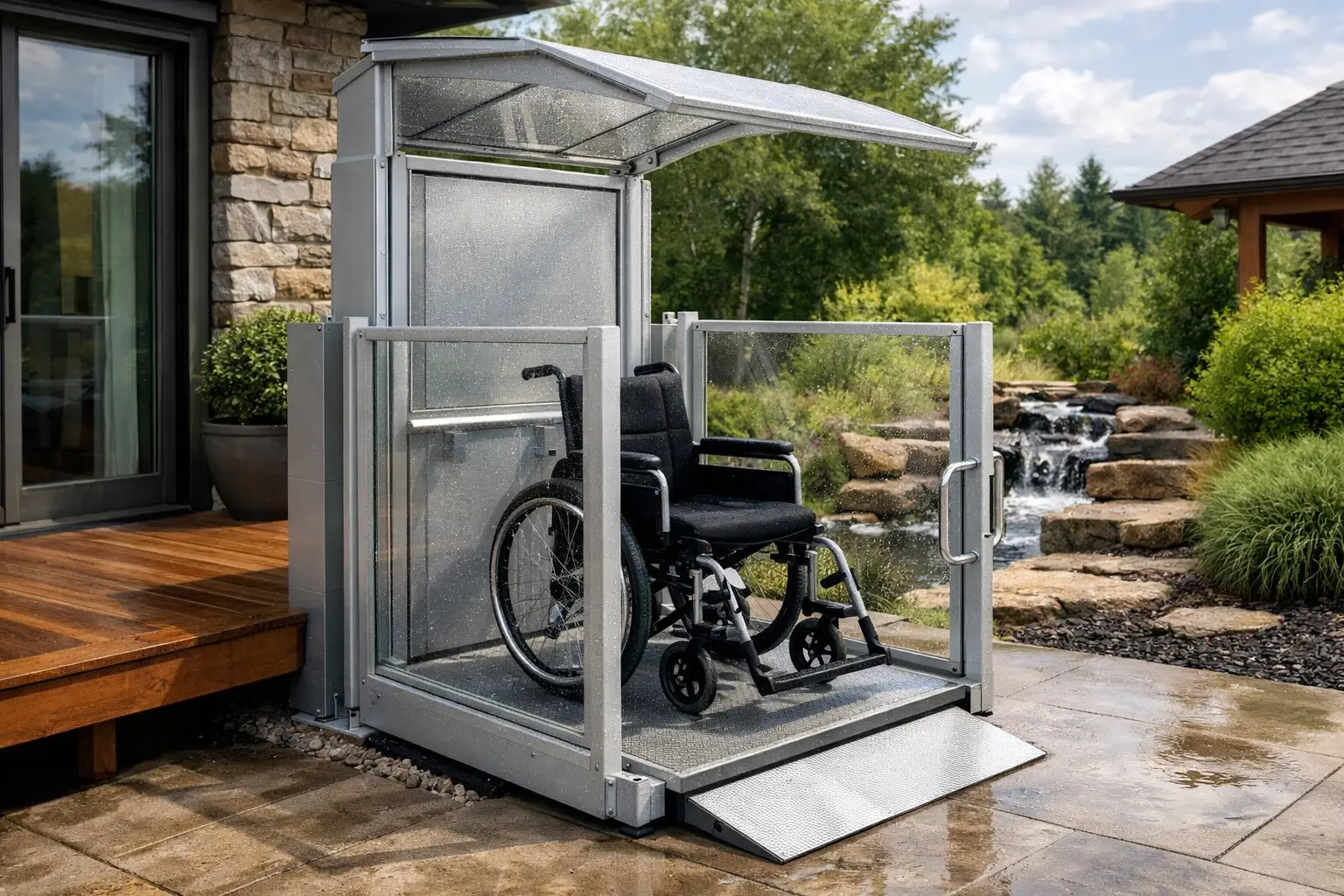
Outdoor lifts around Ogden, Riverdale, Layton, and Farmington face winter freezing, tracked-in de-icers, and summer heat. Snowier communities such as Eden and Park City may require extra attention to accessible landings. Effects vary by model and installation.
Manufacturer-recommended maintenance helps identify developing problems but cannot guarantee uninterrupted operation.
User Safety
Gate interlocks and obstruction-sensing devices, where fitted, are critical safety systems that should be inspected according to the manufacturer’s instructions.
Reliability
Spot visible obstructions and unusual operation early, and arrange service rather than attempting mechanical repairs.
Cost Control
Reporting unusual noise, movement, or visible damage promptly may help prevent additional wear; diagnosis is model-specific.
Utah Weather Factors That Impact Vertical Platform Lifts
Watch for visible changes and unusual operation.
Winter Snow, Ice, and Salt
Snow and ice can accumulate around lower landings and exposed parts of the lift’s travel area. Such buildup may obstruct operation. Never enter beneath a raised platform or attempt to clear an obstruction while the equipment can move; arrange safe assistance according to the owner’s manual. Tracked-in salt and de-icers can contribute to corrosion of susceptible metal parts and damage finishes; cleaning methods should follow the lift manufacturer’s instructions.
Dry Summers and Blowing Debris
Summers in Northern Utah bring windblown dust. Dust and debris may accumulate around exposed surfaces; internal drives and rails should be serviced only as the manufacturer specifies. Heat exposure can affect electrical components and backup batteries, where fitted; equipment ratings and protective measures vary by model.
Temperature Swings
Spring and autumn can bring substantial temperature changes. Temperature changes can affect materials and exposed components, but any suspected looseness or misalignment should be assessed by a qualified service provider rather than adjusted by the homeowner.
Homeowner Maintenance Checklist: Routine Tasks
Three Safe Steps for Homeowners
- Check the model’s manual for permitted visual checks.
- Observe accessible landings for snow, debris, or damage without entering the travel area.
- Stop use and contact qualified service for unusual operation. Never remove guards, adjust drives, or reach under a platform.
Cleaning and Washing
Clean only accessible surfaces using methods and products permitted by the specific owner’s manual. Avoid pressure washing, spraying electrical enclosures, or introducing water into controls. For tracked de-icers or stubborn contamination, follow the manufacturer’s cleaning guidance or ask the service provider.
Keeping the Pit or Landing Clear
Leaves, twigs, and other debris may accumulate around outdoor lift landings or beneath the platform. Obstructions can interfere with operation, and safety-device behavior varies by model; do not rely on a safety pan to detect every obstruction. Keep only safely accessible landing areas clear, without reaching beneath the platform, opening panels, or entering the lift’s travel path.
Common Lift Mistakes to Avoid
Avoid these common mistakes:
- Applying the Wrong Lubricant: Do not apply penetrating oils, grease, or other lubricants unless the manufacturer’s instructions specifically call for them. Lubricants, service intervals, and procedures vary by drive system; unauthorized lubrication can damage components or interfere with operation. Leave drive-system lubrication to qualified service personnel.
- Ignoring Unusual Squeaks or Vibrations: New noises or shuddering can have several causes. Stop using the lift if operation seems abnormal and arrange a qualified evaluation rather than diagnosing or adjusting drive components yourself.
- Allowing Heavy Snowpack Build-up: Snow or ice around landings and the base can obstruct travel or contribute to moisture exposure. Clear only safely accessible approach surfaces as permitted by the owner’s manual; never enter the platform’s travel area or reach beneath it.
- Bypassing Safety Switches: Never bypass, tape down, or disconnect an edge switch or gate interlock. These vital systems prevent entrapment and crush injuries.
- Overloading Weight Limits: Check the rated capacity specified on the lift’s label and in its manual. Count the combined weight of the rider, mobility device, and anything carried; never exceed the manufacturer’s limit.
What Happens During Manufacturer-Recommended Professional Service?
Qualified personnel should service mechanical and safety systems using model-specific procedures and the manufacturer’s schedule.
Depending on the model and the maintenance interval, a qualified service provider may perform checks such as:
- Drive Mechanism Service: Checking the installed drive system for wear and performing manufacturer-specified adjustments or lubrication when applicable.
- Braking and Safety Devices: Inspecting the model’s applicable braking, backup, and safety components using the manufacturer’s procedures.
- Electrical Diagnostics: Checking power, controls, wiring, batteries if fitted, and travel limits as specified for that model.
- Structural and Foundation Anchorage: Checking accessible structural supports and anchors for condition and security where applicable to the installation.
- Landing-Gate Safety Checks: Inspecting and, where the manufacturer specifies, adjusting landing-gate latches and interlocks so they operate as designed for the particular platform lift. Procedures and allowable gate operation vary by model.
Signs You Need an Immediate Professional Evaluation
If you notice any of the following operational red flags, discontinue use and schedule a professional inspection before riding the lift again:
- The platform jerks, hesitates, or stops midway without an obstruction.
- The lift travels noticeably slower going up than it used to.
- The landing gate opens freely while the lift is parked on a different level.
- You observe metal shavings or black flakes accumulating near the drive column.
- The unit makes unfamiliar beeps or displays a fault indication; the meaning depends on the model and should be checked against its manual.
- The platform does not stop flush with the landing threshold, creating a tripping hazard or wheel stop.
When Repairs May Not Be Enough
Frequent breakdowns, corrosion, or unavailable parts warrant a professional assessment.
Vertical Platform Lift Maintenance FAQs
Can I test the safety pan or landing-gate interlock myself?
Do not reach under the platform, bypass an interlock, or operate the lift to deliberately trigger a safety device. Follow only the owner checks expressly described in the manual for your model. If a safety device appears damaged or does not operate normally, stop using the lift and arrange qualified service.
How should I prepare an outdoor lift for a Northern Utah winter?
Keep accessible landings clear of snow and debris without entering the lift travel area. Use cleaning and de-icing products only if permitted by the equipment manufacturer, and have a qualified provider investigate any freezing-related obstruction or unusual operation.
How often does a residential platform lift need professional maintenance?
There is no universal interval for every model. Follow the manufacturer’s maintenance schedule and applicable local inspection requirements. For other home-entry options, see our vertical platform lift information.
Schedule Your Lift Maintenance or Evaluation in Utah
Keep your vertical platform lift operating smoothly through every season. Contact Olympus Stairlifts to discuss manufacturer-recommended maintenance, model-specific safety inspections, or an evaluation of your lift.
For an overview of lift types and installation considerations, see our vertical platform lift guide and Weber County wheelchair lift installation article. Olympus Stairlifts helps families in Northern Utah explore accessible home-entry options. From Ogden and Riverdale to Layton, Farmington, and surrounding Northern Utah communities, Olympus can discuss accessibility equipment and service options appropriate to the site. Staying independent starts with equipment that remains secure and reliable every day.