Why a Stair Lift Stops Charging: Common Causes and What to Do
When a stair lift stops charging, the symptoms can be confusing. The chair may beep, move more slowly than normal, stop after a few trips, or refuse to run at all. In many cases, the batteries are blamed first, but a charging problem can come from several different parts of the system.
Olympus Stair Lifts helps homeowners throughout Northern Utah diagnose charging issues so the actual cause can be corrected instead of replacing parts at random.
How Stair Lift Charging Works
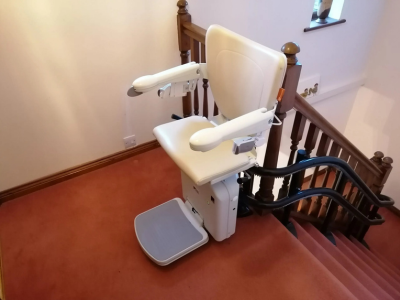
Most battery-powered stair lifts recharge when the chair is parked at a specific point on the rail. Some systems charge continuously along the rail, while others use charging contacts at the top, bottom, or both ends.
The charger connects to household power and supplies low-voltage charging current to the lift batteries. If any part of that path is interrupted, the batteries eventually discharge.
The Lift Is Not Parked on the Charging Point
One of the simplest causes is parking the chair just short of the charging position. The lift may look like it is at the end of the rail while the contacts are not actually touching.
Move the chair fully into its normal parked position and listen for the usual charging tone or indicator. If the lift routinely stops short, the parking position or charging contact may need adjustment.
The Charger Has Lost Power
A charger cannot work if the outlet has lost power. Check for a tripped breaker, a switched outlet, a loose plug, or a GFCI receptacle that has tripped.
If the charger normally has an indicator light, verify whether that light is still on. A dead outlet can look exactly like a failed charger or bad batteries.
Dirty or Worn Charging Contacts
Charging contacts can accumulate dust, oxidation, or wear over time. If the connection becomes intermittent, the chair may charge only when parked in a very specific position.
A technician can inspect the contacts, clean them appropriately, and verify that they are aligned and making reliable contact.
The Batteries Are Worn Out
Even with a working charger, batteries eventually lose their ability to store energy. A worn battery may appear to charge but discharge quickly under load.
Signs include slower travel, repeated low-battery warnings, reduced performance during a power outage, or a lift that stops after only a few trips. If the batteries are old, replacement may be appropriate after the charging system is confirmed to be working.
The Charger Itself Has Failed
Chargers can fail internally. A charger may have power at the outlet but still fail to deliver the correct output to the lift.
Testing the charger output and charging voltage helps separate a charger failure from a battery or contact problem. Replacing batteries without testing the charger can lead to another set of discharged batteries.
A Wiring or Connection Problem
Loose connectors, damaged wiring, or worn harnesses can interrupt charging. This is more likely if the lift has recently been serviced, moved, exposed to moisture, or developed intermittent problems.
Electrical troubleshooting should be done carefully because an intermittent connection can be difficult to identify by appearance alone.
The Lift Beeps While Parked
Many stair lifts use beeps or status tones to warn that the chair is not charging. If the lift beeps after it has been parked, confirm that it is fully on the charging point and that the charger has power.
If the beeping continues, the lift may be detecting low voltage or a charging fault.
Outdoor Stair Lifts Have Extra Challenges
Outdoor lifts must deal with temperature swings, moisture, dust, and debris. Charging components are designed for exterior use, but weather can still affect connections and battery performance.
Keep the rail and charging area clear of snow, ice, leaves, and dirt. Use the protective cover when the lift is not in use, and have charging concerns checked before winter weather makes access more difficult.
Do Not Keep Resetting a Charging Problem
Repeatedly switching the lift off and back on may temporarily clear a warning, but it does not fix the cause of a charging problem. If the batteries continue to lose charge, repeated resets can delay the diagnosis until the lift stops completely.
The better approach is to identify whether the problem is the power source, charger, contacts, batteries, or wiring.
What You Can Check Safely
Homeowners can safely confirm that the charger is plugged in, the outlet has power, the chair is fully parked, and nothing is obstructing the rail or safety sensors. You can also look for obvious loose plugs or damage without taking the lift apart.
If those checks do not solve the issue, service is usually the next step.
When to Call for Stair Lift Service
Call for help if the lift repeatedly loses charge, new batteries go dead quickly, the charger indicator appears abnormal, the chair stops between floors, or the system beeps even when it is correctly parked.
For someone who relies on the lift every day, it is worth fixing the charging issue before the batteries become completely discharged.
Local Stair Lift Charging Diagnosis in Northern Utah
Olympus Stair Lifts provides stair lift repair, battery replacement, charger diagnosis, maintenance, and installation across Northern Utah. We can check the full charging system and help determine whether the problem is simple or whether a component needs replacement.
The goal is dependable operation and a practical repair—not unnecessary parts.
If the charging issue began after a power outage, electrical work, battery replacement, or other service, mention that when requesting help. That timing can provide an important clue and shorten the diagnostic process. Keeping a note of when the problem started and what the lift was doing can also make intermittent faults easier to track down.
Helping you stay independent longer.