A short set of steps at the front door can turn a safe home into a daily obstacle. When families start comparing platform lift vs ramp options, they usually are not looking for theory. They want the safest, most practical way to get in and out of the house without making life harder for the person using it.
That choice is rarely as simple as picking the lower price. A ramp may seem straightforward, while a platform lift can feel more specialized. But the better option depends on the home, the user, and how the equipment will actually be used every day. If you are planning for aging in place, helping a parent return home after surgery, or making a house workable for a wheelchair user, it helps to look beyond first impressions.
Platform lift vs ramp: the basic difference
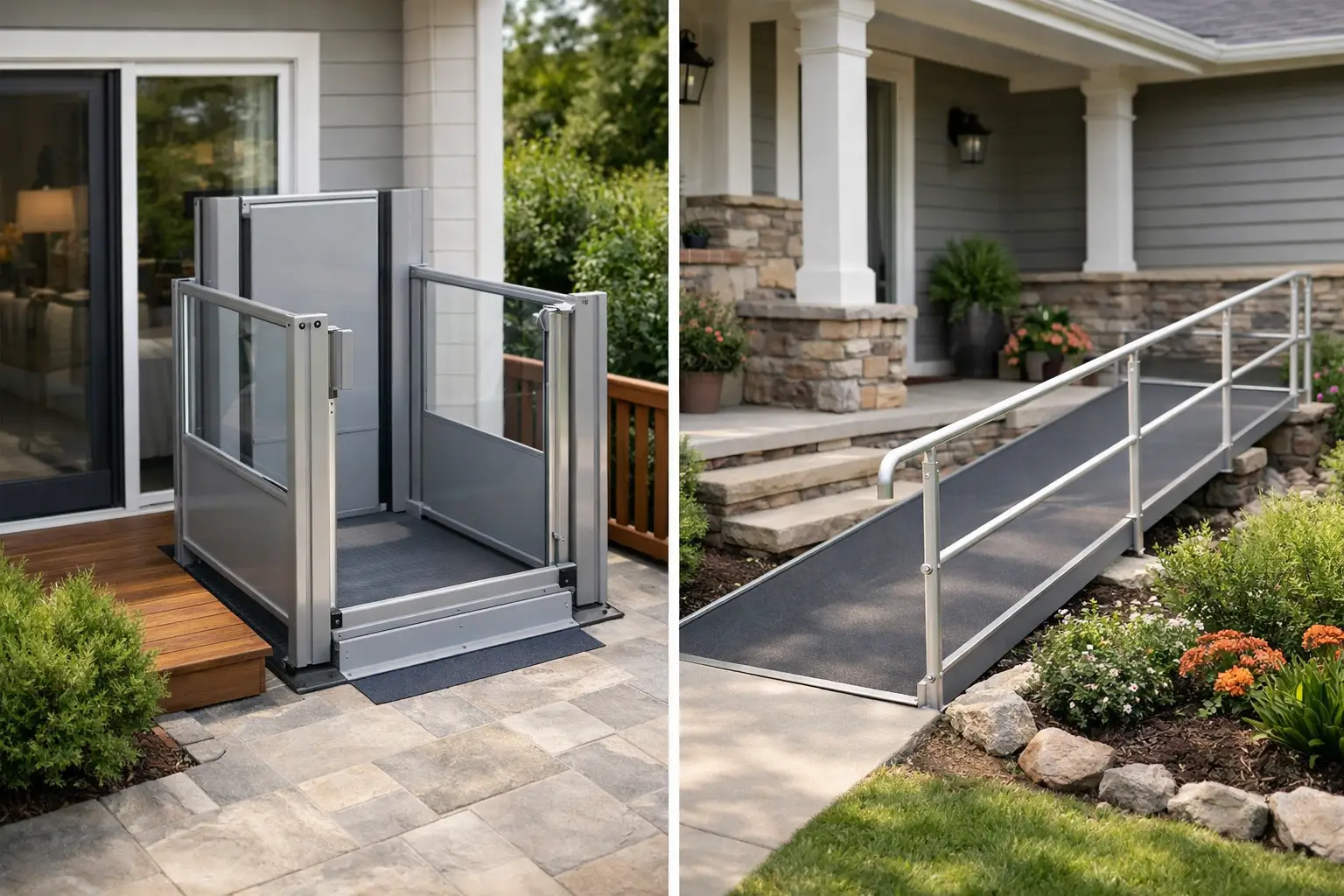
A ramp creates a gradual incline so a wheelchair, scooter, walker, or user on foot can move from one level to another. It has no motor, no controls, and no moving platform. Its simplicity is part of its appeal.
A vertical platform lift, often called a VPL, raises and lowers a person on a platform using a powered system. Instead of traveling a long horizontal distance like a ramp, it moves vertically over a shorter footprint. For homes with a porch, garage entry, or a few feet of elevation change, that difference matters.
On paper, both solve the same problem – getting past steps. In real life, they solve it in very different ways.
When a ramp makes sense
Ramps work well when there is enough space to build them at a safe slope and when the user can comfortably travel that incline. For some households, that is the cleanest answer. There are fewer mechanical parts, less technology involved, and use is immediate. You roll or walk up and down as needed.
That simplicity can be a real advantage for families who want a basic access solution and have a property layout that supports it. If the rise is low and the yard, driveway, or entry area offers plenty of room, a ramp may be practical and cost-effective.
Ramps can also be useful when several people with different mobility levels need the same entry. A person using a wheelchair, someone with a walker, and a visitor pushing a stroller can all use a properly designed ramp. That shared convenience is often overlooked.
Still, ramps ask more from the property than many homeowners expect. Even a modest elevation change can require a surprisingly long ramp run. Landings, turns, railings, and local code requirements can increase the footprint quickly.
When a platform lift makes more sense
A platform lift is often the better fit when space is limited or the height change is too great for a practical ramp. If your front porch, garage, or deck entry sits several feet above grade, a ramp may take up a large portion of the yard or create an awkward path to the door. A lift solves that same challenge with a much smaller footprint.
This can be especially helpful for homeowners who want accessibility without dramatically changing how the outside of the home functions. A long ramp may affect landscaping, parking, snow removal, and curb appeal. A platform lift is more compact and often easier to integrate into the entry area.
It also changes the physical effort required. For someone with limited strength, reduced balance, or a power chair, traveling up an incline is not always easy or safe. A platform lift reduces that strain by doing the lifting mechanically.
For many families, that ease of use is what tips the decision. The person using the equipment may be able to navigate a ramp today, but will that still be true a year from now? A lift can offer more support as mobility needs change.
Space is often the deciding factor
The biggest difference in the platform lift vs ramp conversation usually comes down to available space. A ramp needs length. The greater the rise, the more length is required to keep the slope usable and code-compliant. If there is not enough room, the design may require switchbacks or multiple landings, which adds complexity and changes the look of the property.
A platform lift needs room too, but far less of it. It is often a strong option for tighter home entrances, side doors, garage access points, and porch areas where a full ramp would feel oversized or intrusive.
This is why an in-home evaluation matters. What seems possible in theory may not work well once measurements, turning clearances, door swing, and approach angles are considered.
Safety depends on the user, not just the equipment
Families often ask which option is safer. The honest answer is that safety depends on who will use it and under what conditions.
A ramp can be very safe when it is properly designed, built to code, and kept clear. But weather matters. Rain, snow, and ice can make any ramp more challenging, especially in areas where winter conditions are common. Even with traction surfaces and handrails, some users may still feel uneasy on an incline.
A platform lift avoids the need to travel that slope, which can reduce fall risk for users with limited stamina or balance. It provides a stable platform and controlled travel between levels. That said, it is a mechanical device, so it needs professional installation and ongoing service to stay dependable.
For outdoor access, the local climate should be part of the decision. A ramp may be exposed over a larger area, while an outdoor platform lift will need the right equipment and maintenance approach for year-round performance.
Cost is more than the upfront number
Many homeowners begin with budget, and that is understandable. In some cases, a ramp may have a lower initial cost than a platform lift. But the final cost depends on the rise, layout, materials, labor, site preparation, and whether extensive ramp turns or landings are needed.
A simple ramp is one thing. A long custom ramp system wrapping around a porch or crossing part of a yard is another. Once the project becomes more involved, the price gap may narrow.
A platform lift typically has a higher equipment cost because it includes powered operation and installation requirements. But if it avoids a major ramp build or preserves usable outdoor space, it may offer better long-term value for the property and the user.
There is also the cost of daily effort. If one option is technically cheaper but leaves the user tired, dependent on assistance, or reluctant to leave the house, that lower price may not feel like a win.
Daily use matters more than first impressions
This is where many families find clarity. Instead of asking, Which one is better? ask, Which one will actually be used comfortably every day?
If the person using the entry is independent with a wheelchair or walker, has the strength for an incline, and the home has room, a ramp may be a solid long-term solution. If fatigue, balance concerns, steeper elevation changes, or limited space are part of the picture, a platform lift often becomes the more practical choice.
Think about groceries, medical equipment, bad weather, and caregivers coming in and out. Think about whether the solution works only on a good day or on the hard days too. Accessibility equipment should lower stress, not add another obstacle.
Platform lift vs ramp for aging in place
For aging in place, the best option is usually the one that still works as needs change. A ramp can serve well for many years, especially for mild mobility limitations. But if a homeowner’s condition is likely to progress, choosing a platform lift earlier may prevent another major change later.
That does not mean a lift is always the right answer. It means the decision should account for tomorrow, not just today. Recovery from surgery, a new diagnosis, or advancing age can shift mobility needs faster than families expect.
A thoughtful recommendation should consider the person’s strength, balance, mobility device, entry layout, and goals for independence. That is why a one-size-fits-all answer usually misses the mark.
How to choose with confidence
The right decision usually becomes clearer after three questions are answered. How much space does the home truly have? How much physical effort can the user manage safely? And will this solution still make sense if mobility becomes more limited?
If you are weighing platform lift vs ramp options, it helps to have the property and the person’s needs evaluated together rather than separately. The best accessibility solution is not the one that sounds simplest. It is the one that makes daily life safer, easier, and more comfortable without creating new problems around the home.
A good home access upgrade should feel like relief the first time it is used – not like a compromise you hope will be good enough.