A staircase can go from routine to risky faster than most families expect. One missed step, a dim landing, or a railing that feels a little loose can turn an ordinary trip upstairs into a serious fall. If you are wondering how to make stairs safer for elderly adults, the right answer usually is not one single fix. It is a combination of better support, better visibility, and sometimes a better way to avoid the stairs altogether.
For many older adults, the goal is not just fall prevention. It is staying comfortable at home without giving up privacy, confidence, or independence. That is why stair safety deserves a close look before a near miss becomes an emergency.
How to make stairs safer for elderly starts with the cause
Not every staircase is dangerous for the same reason. In one home, the issue may be steep steps and poor lighting. In another, it may be arthritis, reduced balance, dizziness, or fatigue that makes climbing harder than it used to be. The safest plan starts by identifying whether the problem is the stairs, the person using them, or both.
A healthy older adult with good balance may benefit from a few practical upgrades. Someone recovering from surgery or living with Parkinson’s, neuropathy, or significant joint pain may need more than new treads and brighter bulbs. Families often wait too long because they assume struggling on the stairs is just part of aging. It is not something to ignore, especially after a stumble, a handrail grab, or a growing hesitation every time the person approaches the first step.
Start with the simplest safety upgrades
The first improvements are often the most affordable and the most overlooked. Good lighting matters more than many people realize. Shadows can make stair edges harder to judge, and older eyes usually need more light to see changes in depth. Add bright, even lighting at the top and bottom of the stairs, and make sure every switch is easy to reach. Motion-sensor lights can help at night when no one wants to search for a switch in the dark.
Handrails should be secure, easy to grip, and present for the full length of the staircase. If there is only one rail, adding a second can make a real difference. Many seniors feel steadier when they can use both hands, especially on steeper staircases. The rail should not end too early or feel bulky in the hand.
Non-slip surfaces are another strong first step. Worn carpet, polished wood, and slick stair noses can all increase the chance of slipping. Depending on the staircase, that may mean replacing loose carpet, adding non-slip treads, or using secure low-profile strips that improve traction without creating a tripping edge. The key is choosing materials that stay flat and firmly attached over time.
Clutter also deserves attention. Shoes, baskets, cords, and decorative items do not belong on stairs. Even one object on a landing can become a hazard when someone has limited vision or reduced foot clearance.
Fix stair design problems that increase fall risk
Some stairs are harder to use because of the way they were built. Narrow treads, tall risers, uneven step heights, sharp turns, or slick surfaces can all raise the risk. These issues are not always easy or inexpensive to correct, but they should not be dismissed.
If the staircase has visibly uneven steps or a loose section, it is worth addressing promptly. A senior who already moves carefully has less margin for error, and inconsistent footing can be dangerous. Contrasting stair edges can help too. A subtle strip of color contrast at the front of each tread makes it easier to see where one step ends and the next begins.
In some homes, the safest choice may involve modifying more than the stairs themselves. A bathroom, bedroom, or laundry area on an upper or lower floor can force repeated stair use every day. Rearranging living spaces so the most-used rooms are on one level may reduce risk right away, even before larger accessibility changes are made.
Pay attention to the person, not just the staircase
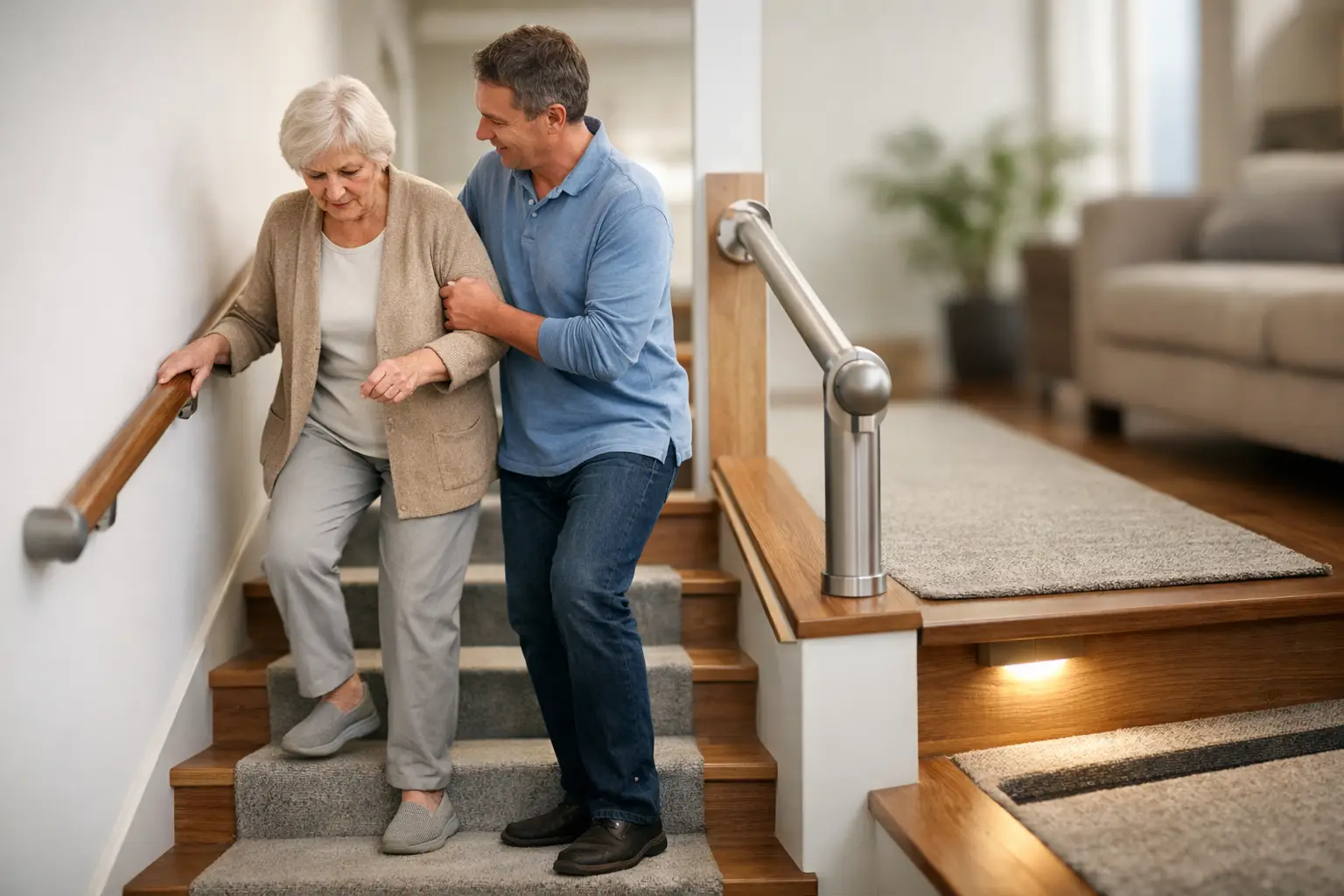
When families ask how to make stairs safer for elderly parents, they often focus on the home first. That makes sense, but physical changes matter too. If a senior has started pulling hard on the railing, pausing halfway, turning sideways to descend, or avoiding carrying items up and down, those are signs the staircase may no longer match their mobility.
Footwear is part of the equation. Backless slippers, slick socks, and shoes with poor support make stairs less predictable. Well-fitting shoes with non-slip soles are safer indoors than many people assume. Vision changes matter as well. Updated glasses and regular eye exams can improve depth perception and confidence on steps.
Medication side effects should not be overlooked. Drowsiness, lightheadedness, and slower reaction time can all increase fall risk. If stair use suddenly seems harder, it may be worth reviewing recent medication changes with a medical provider.
When basic changes are not enough
There comes a point when safer stairs are still not safe enough. That is often true for older adults with chronic pain, serious balance concerns, limited leg strength, or conditions that make climbing stairs unreliable from one day to the next. In those cases, the question shifts from making the staircase easier to use to reducing the need to use it at all.
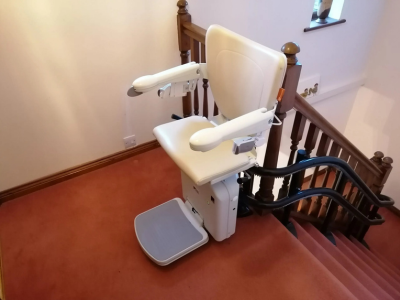
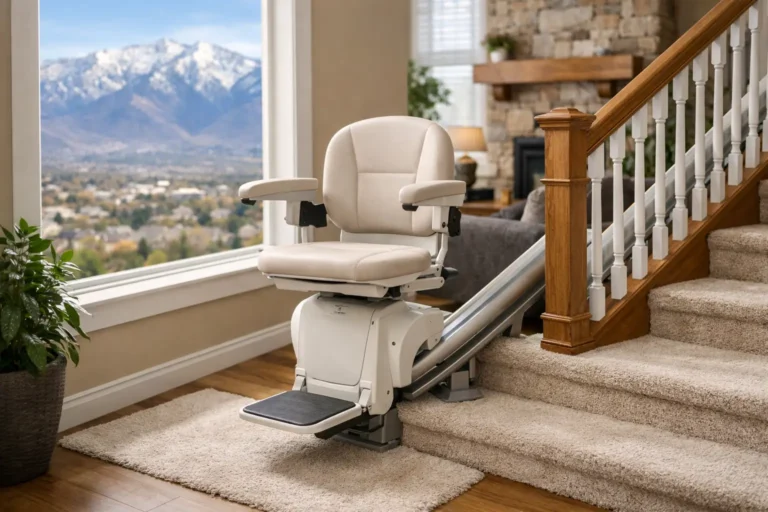
A stairlift can be one of the most practical answers. For many families, it provides a way to stay in a familiar home without treating every trip upstairs like a risk. A properly selected stairlift gives the user a stable seated ride, which can be far safer than continued climbing on painful knees or unsteady legs.
This is where personalization matters. Straight staircases and curved staircases require different solutions, and user needs vary. Some people need a compact option because of limited hallway space. Others need a higher seat height, folding footrest, or easier controls. The best outcome comes from looking at the home and the person together rather than guessing from online photos.
In homes where a wheelchair or scooter is part of daily life, a vertical platform lift or other accessibility equipment may be more appropriate than a stairlift. It depends on how the space is used, who needs access, and whether the goal is short-term recovery or long-term aging in place.
How to make stairs safer for elderly family members long term
The most effective stair safety plans are proactive. Waiting until after a fall can limit options and add urgency to every decision. If a parent or spouse has started mentioning the stairs more often, that is usually reason enough to act.
Think in stages. A family might begin with lighting, handrails, and tread improvements. If mobility continues to change, the next step may be an in-home accessibility evaluation to determine whether a stairlift or another mobility solution makes more sense. This approach gives families a clearer path forward without overcorrecting too early.
It also helps to consider how long the current setup will work. A short-term fix can still be worthwhile, but only if everyone understands its limits. For example, non-slip treads and a second handrail may help someone with mild weakness. They will not solve the problem if that person can no longer climb a full flight of stairs without pain or instability.
For Utah homeowners who want to stay in the homes they know and love, planning ahead can relieve a lot of pressure. Companies like Olympus Stairlifts often begin with a home assessment because what works safely in one house may not be the right fit in another. That local, hands-on approach matters when safety and independence are both on the line.
A safer home should still feel like home
The best stair safety improvements do not make a house feel clinical or restrictive. They make daily life feel manageable again. A brighter staircase, a better rail, a more stable step surface, or the right lift can restore confidence in a part of the home that may have started to feel off-limits.
If the stairs have become a source of worry, treat that concern as useful information. Small upgrades can help, and larger accessibility solutions can be life-changing when the time is right. The real goal is not just getting up and down the stairs. It is keeping home safe, comfortable, and livable for the years ahead.