A few steps at the front door can change the entire feel of a home. What used to be a simple entrance can become a daily obstacle for someone using a wheelchair, recovering from surgery, or trying to avoid a dangerous fall. A wheelchair lift for home entrance access can restore that path in a way that feels safe, practical, and far less disruptive than moving.
For many families, the question is not whether accessibility matters. It is which solution will work best with the home, the user, and the budget. That is where a little clarity helps. The right lift should match the actual entrance conditions, support long-term independence, and give everyone more confidence coming and going.
When a wheelchair lift for home entrance access makes sense
A home entrance lift is often the right fit when a ramp would be too long, too steep, or too difficult to navigate comfortably. This is common with porches, garage entries, and raised front doors where even a small change in height creates a major access issue.
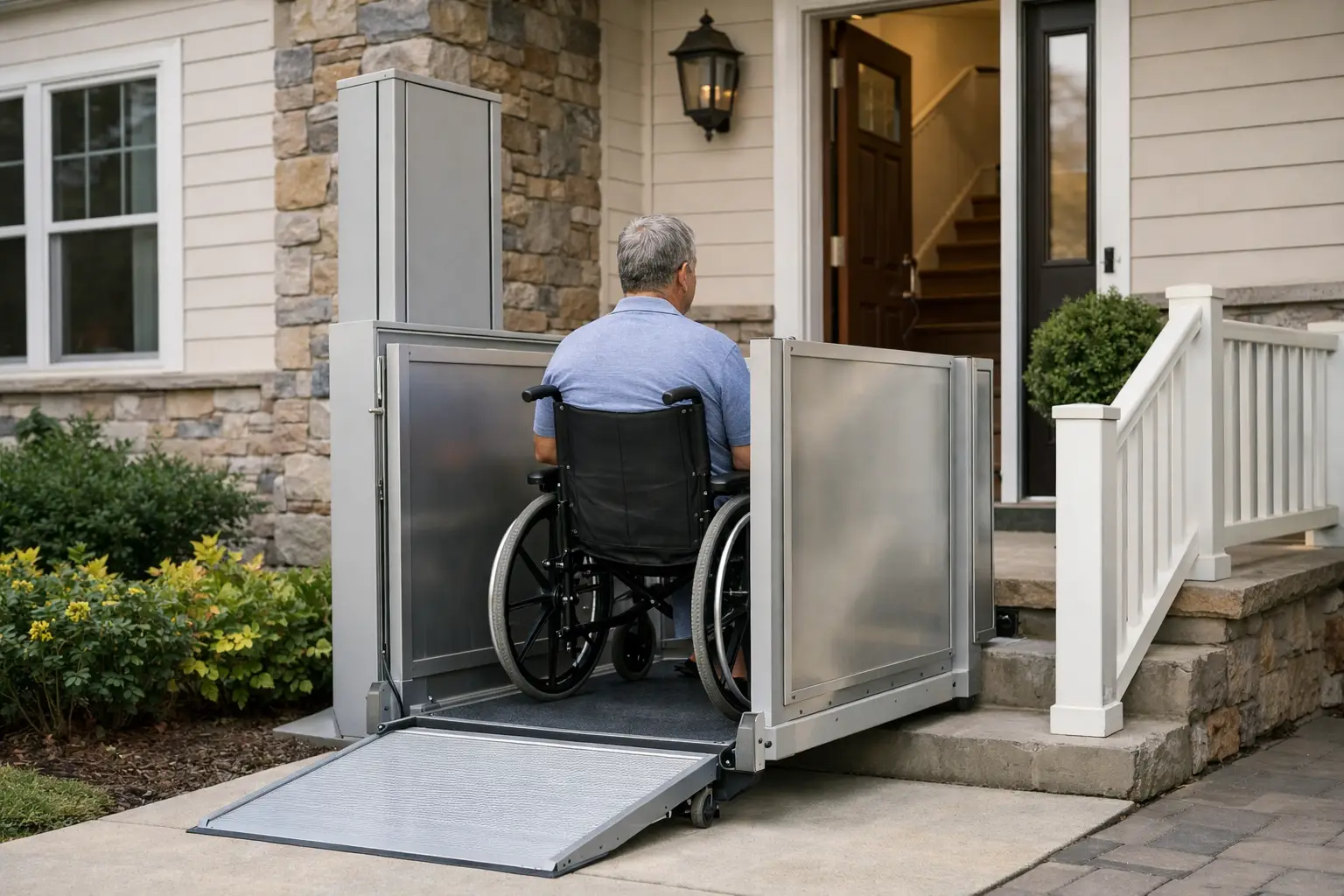
A vertical platform lift is usually the product people mean when they ask about a wheelchair lift for home entrance use. It raises and lowers a person while they remain in a wheelchair or on another mobility device. Instead of asking the user to transfer out of the chair, it keeps the process simple and direct.
That matters more than many people expect. Transfers can be tiring, unsafe, or impossible depending on strength, balance, and medical condition. A platform lift reduces that strain and can make the entrance usable again without requiring major structural changes inside the home.
Why many homeowners choose a lift instead of a ramp
Ramps are valuable in the right setting, but they are not always the best answer. To meet safe slope requirements, a ramp may need to be much longer than homeowners expect. A rise of just a few feet can require a large footprint, switchbacks, railings, and enough clear space in the yard or driveway.
That can create practical problems. The ramp may take over the front of the home, limit parking, affect landscaping, or feel difficult to use during snow and ice. In Utah, weather is a real part of the decision. Long outdoor ramps can become more demanding in winter, especially for users with limited upper-body strength or caregivers pushing a wheelchair.
A lift offers a more compact solution. It typically takes up less room, can provide a more controlled ride, and may preserve the look and flow of the property better than an extended ramp. The trade-off is that lifts involve mechanical equipment, power, and professional installation, so they usually come with a higher upfront investment.
What to look for in a home entrance lift
The best lift is not just the one that fits the height. It also needs to fit the user, the location, and the way the household actually lives.
Travel height and entry conditions
Start with the vertical rise from ground level to the landing. A short rise at a garage step may call for a different setup than a taller porch or deck entrance. The landing size matters too. There should be enough room for safe approach, entry, exit, and door clearance.
It is also important to look at the path leading to the lift. If the walkway is narrow, sloped, or uneven, that can affect how well the equipment works in daily use. A lift should solve the access problem, not move it a few feet to the side.
Platform size and weight capacity
Not every wheelchair or scooter has the same footprint. The platform must comfortably fit the mobility device and allow the user to position safely. Capacity matters as well, especially for heavier power chairs or situations where a caregiver may assist closely.
This is one reason an in-home or on-site evaluation is so helpful. Measurements on paper only tell part of the story. Real-world turning space, thresholds, gates, and approach angles often shape the final recommendation.
Safety features
A quality entrance lift should include basic safety protections such as non-slip platform surfaces, guard panels or side walls where appropriate, gate interlocks, emergency stop controls, and sensors designed to stop the lift if something blocks travel.
Ease of use is part of safety too. Controls should be simple and dependable. If a user has reduced hand strength, vision limitations, or slower reaction time, that should be part of the selection process. The safest lift is one the person can use with confidence.
Indoor versus outdoor installation
Many entrance lifts are installed outdoors, but not every outdoor setup is the same. Exposure to rain, snow, direct sun, and freezing temperatures can affect equipment performance over time. Outdoor-rated units are built for these conditions, but they still need proper installation and ongoing service.
In Utah, this is especially important. Snow accumulation, ice around the base, and freeze-thaw cycles can all influence how the lift area should be prepared. Good drainage, stable footings, and the right placement can help protect both the equipment and the user.
Some homes have an enclosed porch, garage entry, or covered side entrance that offers more protection from the weather. In those cases, the installation may allow for easier year-round use and potentially less exposure-related wear. The best location is not always the front door. It is the entrance that provides the safest, most practical daily access.
How installation usually works
Homeowners sometimes worry that adding a lift will turn into a major construction project. In many cases, it is more straightforward than expected, especially when the right product is chosen for the site.
The process usually starts with a home assessment to confirm rise, space, access path, electrical needs, and any site preparation requirements. Some homes need a concrete pad, landing adjustments, or minor modifications around the doorway. Others are fairly simple installations.
Professional installation matters because entrance lifts are safety equipment. Proper anchoring, electrical setup, adjustment, and testing all affect long-term reliability. Ongoing service matters too. Like any mechanical system, a lift should be inspected and maintained so it continues to operate the way it should.
Cost depends on more than the lift itself
One of the most common questions is cost, and the honest answer is that it depends. The lift model is part of the price, but so are travel height, platform size, outdoor rating, site conditions, and any prep work needed before installation.
A basic setup at a simple entrance will not cost the same as a taller outdoor installation with challenging access or structural modifications. Power supply needs, gate configurations, and finish options can also affect the total.
That is why general online price ranges can be misleading. They rarely account for the actual conditions at the home. A personalized quote provides a much clearer picture and helps families compare the cost against the value of staying safely in the home they already love.
Planning for today and for what comes next
Sometimes a family is shopping for an immediate need after an injury or hospital discharge. Other times, they are planning ahead so the home remains workable as mobility changes. Both are valid reasons to install a lift, but the timeline can affect the decision.
If the mobility limitation may be temporary, the focus may be on fast installation and practical function. If the goal is aging in place, it makes sense to think a little further ahead. Will the user likely transition to a larger wheelchair later? Will another entrance become more convenient over time? Could other accessibility upgrades be needed in the future?
A good recommendation accounts for those possibilities without overcomplicating the purchase. Families do not need every feature available. They do need a solution that will still make sense after the first few months of use.
Choosing a provider you can trust
The equipment matters, but the support behind it matters just as much. Homeowners should work with a provider that offers site-specific recommendations, professional installation, and service after the sale. That local support can make a real difference if adjustments, maintenance, or repairs are needed later.
For families in Utah, working with an experienced local company such as Olympus Stairlifts can also make the process feel less overwhelming. A knowledgeable team can evaluate the entrance, explain the options in plain language, and help you choose a lift that fits your home instead of forcing your home to fit the lift.
The right entrance solution does more than get someone over a few steps. It gives back an ordinary part of daily life – leaving home, coming back, and doing both with greater safety and dignity.