A stairlift usually works quietly in the background until the day someone depends on it for every trip upstairs. That is why so many families ask, how often do stairlifts need maintenance? The short answer is usually once a year for routine service, but the real answer depends on how often the lift is used, where it is installed, and how well it has been cared for.
For most homeowners, annual maintenance is the right baseline. A professional technician can inspect the rail, charging system, batteries, seat, footrest, safety sensors, and moving parts to make sure everything is operating as it should. If the stairlift gets heavy daily use or is installed outdoors, it may need attention more often.
How often do stairlifts need maintenance in a typical home?
In a typical home, a stairlift should be professionally serviced once every 12 months. That schedule works well for many households because it gives a technician the chance to catch normal wear before it turns into a breakdown. It also helps confirm that safety features are responding properly and the ride remains smooth and reliable.
That said, not every home uses a stairlift the same way. A lift used several times a day by one person may wear differently than a lift used occasionally by two or three family members. If the stairlift is the primary way someone reaches a bedroom or bathroom, more frequent checkups can make sense because the system is carrying a bigger responsibility in daily life.
Many families choose routine service not because something is wrong, but because they do not want to wait for a problem to appear. That approach is especially helpful when a user has limited mobility and cannot easily do without the lift for even a day.
What affects stairlift maintenance frequency?
Usage is the biggest factor. A stairlift that runs up and down multiple times every day will naturally experience more wear than one used only a few times a week. Batteries cycle more often, moving components get more use, and small adjustments may be needed sooner.
Installation location also matters. Indoor stairlifts generally have a more controlled environment, while outdoor stairlifts face temperature swings, moisture, dust, and debris. Even weather-resistant models benefit from closer monitoring because the elements are harder on equipment over time.
The age of the unit plays a role as well. Newer stairlifts may go through long stretches with very few issues, but older units often benefit from more proactive service. That does not mean an older stairlift is unreliable. It simply means regular inspection becomes more valuable as parts age and usage history adds up.
A home’s conditions can make a difference too. Pet hair, dust buildup, and small obstructions on the rail can affect performance. In Utah, seasonal dryness and tracked-in dirt can also contribute to buildup around moving parts, especially in busy households.
Indoor vs. outdoor stairlifts
An indoor stairlift often stays on an annual maintenance schedule unless it sees unusually heavy use. An outdoor stairlift may need service more frequently because exposure creates more opportunities for wear. Rain, snow, sunlight, and debris can affect the rail, seat materials, charging contacts, and electrical components.
If you have an outdoor unit, it is wise to pay closer attention between service visits. Routine cleaning and prompt attention to changes in performance can help prevent a small issue from growing into a bigger one.
Straight vs. curved stairlifts
Straight and curved stairlifts both need regular maintenance, but curved systems can involve more customized rail design and more complex travel along turns or landings. That does not mean they are harder to own, only that precision matters. Keeping them properly adjusted and inspected helps preserve a smooth ride.
What happens during stairlift maintenance?
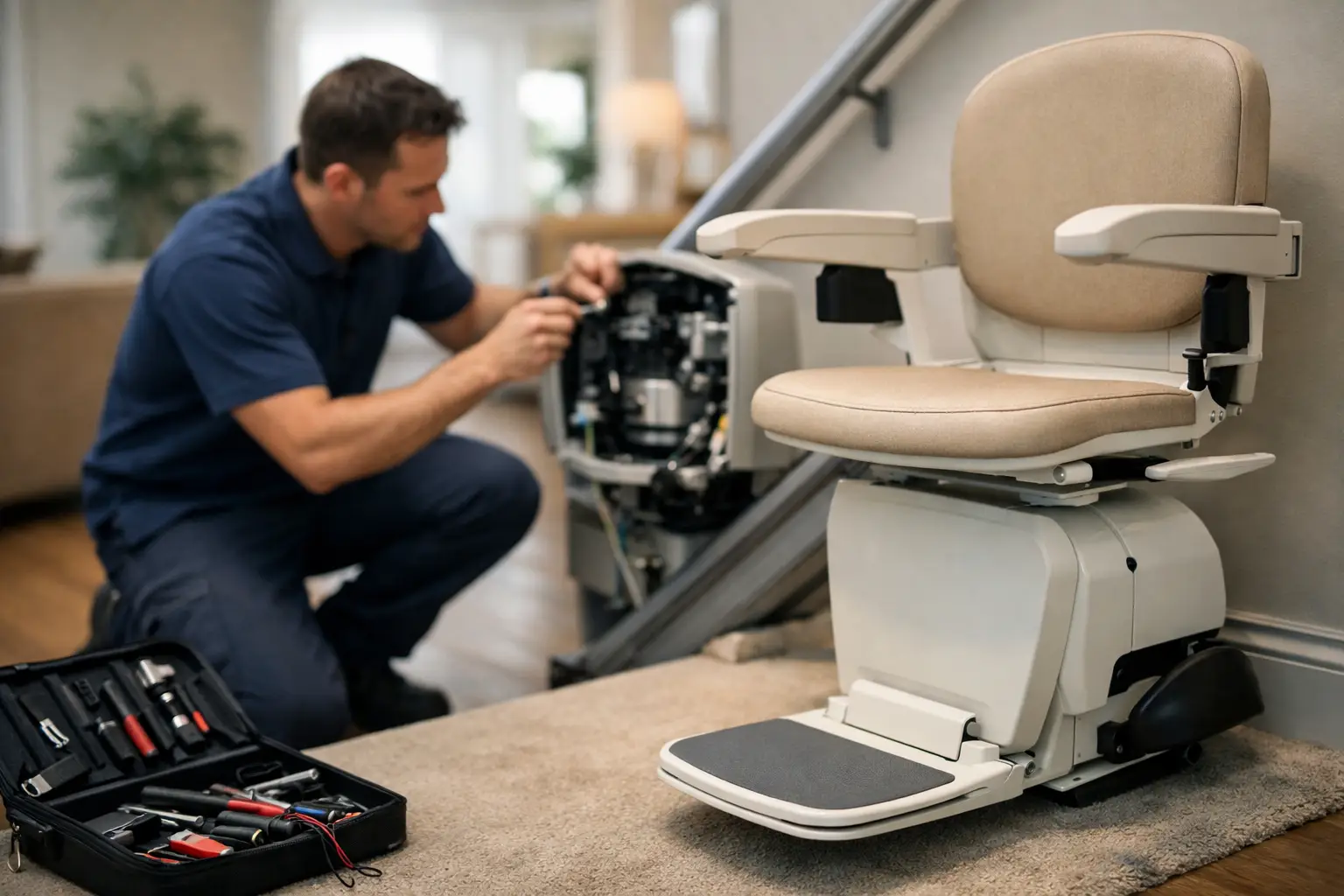
A proper service visit is more than a quick look at the chair. A technician typically checks the unit’s operation from start to finish, looking for anything that could affect safety, comfort, or reliability. That includes the seat and swivel function, seat belt, armrests, footrest, call-send controls, sensors, track condition, charging points, and battery performance.
The technician may also clean key areas, test safety stop functions, listen for unusual sounds, and confirm the lift parks and charges correctly. If any parts are loose, worn, or out of adjustment, they can often be corrected before they cause a shutdown.
This is one of the main reasons maintenance matters. Many stairlift problems start small. A rough ride, slow start, charging issue, or sensor problem may not seem urgent at first, but these issues can become disruptive if ignored.
Signs your stairlift may need service sooner
Even if your annual maintenance appointment is still months away, some warning signs should not wait. If the stairlift stops unexpectedly, moves less smoothly than usual, makes new noises, or struggles to charge, it is time to schedule service.
Other signs can be subtler. The seat may feel loose, the footrest safety edges may seem overly sensitive or not responsive enough, or the lift may hesitate before moving. Sometimes a user simply notices that the ride feels different. That instinct is worth taking seriously, especially when safety is involved.
If the stairlift displays an error code or alarm, do not guess at the cause. Some issues are simple, like an obstruction on the stairway or the seat not fully locked into position. Others need professional diagnosis.
Common issues homeowners notice first
The first clue is often practical rather than mechanical. The stairlift may not park where it usually does, may stop partway, or may not respond to the call-send control. In other cases, the battery may not be holding a charge like it once did.
None of those automatically mean major repairs are needed. But they are good reasons to have the unit checked before reliability drops further.
Can homeowners do any stairlift maintenance themselves?
Homeowners can help keep a stairlift in good condition, but routine care is not the same as professional maintenance. The most helpful step is to keep the rail clean and free of dust, pet hair, and objects that could interfere with travel. It also helps to make sure the stairway itself stays clear.
You can also watch for obvious changes in performance, check that the unit is parking on its charging points, and follow the manufacturer’s guidance for normal cleaning. If the stairlift has folding parts, use them gently and consistently so they stay aligned.
What homeowners should not do is attempt internal repairs, electrical work, or part adjustments without proper training. Because stairlifts are safety equipment, guesswork can create more risk than benefit.
Is maintenance really necessary if the stairlift seems fine?
Yes. A stairlift can appear to be working well and still have wear that is not obvious to the user. Batteries can weaken gradually. Charging contacts can become dirty or misaligned. Sensors and moving parts can drift out of adjustment over time.
Routine maintenance is similar to servicing other equipment your household depends on. The goal is not just to fix visible problems. It is to reduce the chance of interruption and help the lift remain dependable when it is needed most.
For families caring for an older parent or a loved one recovering from surgery, that peace of mind matters. A stairlift is not a convenience item for many households. It is part of how someone moves safely through their home.
How to plan a realistic maintenance schedule
The best maintenance schedule is the one that matches how the stairlift is actually used. For most households, yearly service is a smart standard. If the unit gets constant daily use, is installed outdoors, or is older, ask about a more frequent schedule.
It also helps to avoid waiting until the busiest or most stressful time of year. Setting a recurring service appointment can make upkeep easier to remember and easier to manage. A local provider familiar with residential accessibility equipment can also give guidance based on the model, installation type, and the user’s needs.
For homeowners in Utah, working with a company that installs and services the equipment can be especially helpful because support is closer at hand if anything changes between scheduled visits.
A stairlift is there to make home life safer, easier, and more comfortable. Giving it regular attention is one of the simplest ways to protect that independence and keep the home working for the person who lives there.