Choosing to install a stair lift in your home is a major decision that can dramatically improve independence, accessibility, and safety for loved ones with mobility challenges. When families begin researching options for their homes across Utah, the sheer volume of technical terms, models, and options can feel overwhelming. Beyond comfort and upholstery choices, the absolute priority must always be safety. Understanding what safeguards are built into modern mobility equipment ensures peace of mind for both the primary user and everyone else sharing the household.
At Olympus Stair Lifts, we believe that an educated family makes the best purchasing decisions. Because every home layout and user requirement is unique, understanding the anatomy of a safe, reliable stair lift is essential. In this comprehensive guide, we will explore the critical safety features, mechanical components, installation processes, maintenance best practices, and lifestyle considerations that will help you transform your living space into a secure and accessible environment.
The Evolution of Stair Lift Safety: Modern Standards and Engineering
Stair lifts have evolved significantly over the past few decades. Gone are the days of clunky, noisy, and intimidating mechanical chairs. Today’s mobility solutions are marvels of modern engineering, combining sleek aesthetic design with rigorous safety certifications. When evaluating options in Utah, ask which applicable safety standards and local requirements the proposed equipment meets. ASME A18.1 covers platform lifts and stairway chairlifts; a CE mark alone does not establish compliance with Utah installation requirements.
Manufacturers now integrate redundant safety systems into their devices. Some models include multiple protective mechanisms, but their operation and limitations vary by manufacturer and model. Ask the installer to demonstrate the specific safety features on your lift. From advanced microprocessor controls to heavy-duty braking systems, every element of a modern stair lift is designed with the user’s well-being in mind. Understanding these components helps demystify the technology and empowers you to ask the right questions during your consultation.
Core Safety Features Every Stair Lift Must Have
When you are shopping for a stair lift, a dazzling array of features and optional accessories can distract from the fundamentals. To ensure maximum protection, your chosen model must include the following essential safety features:
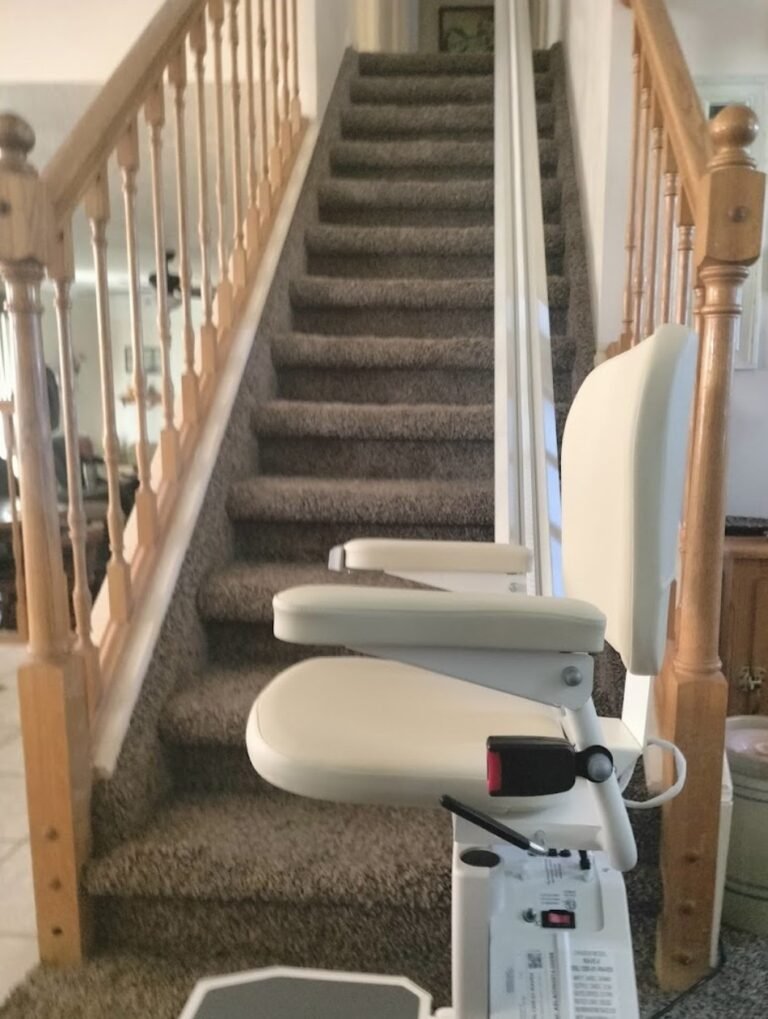
- Obstruction Sensors: Modern stair lifts are equipped with sensitive safety edges on the carriage and footrest. If the lift encounters any object—a stray toy, a pet, or a piece of clothing—on the stairs, the sensors immediately detect the resistance and bring the chair to a smooth, gentle stop.
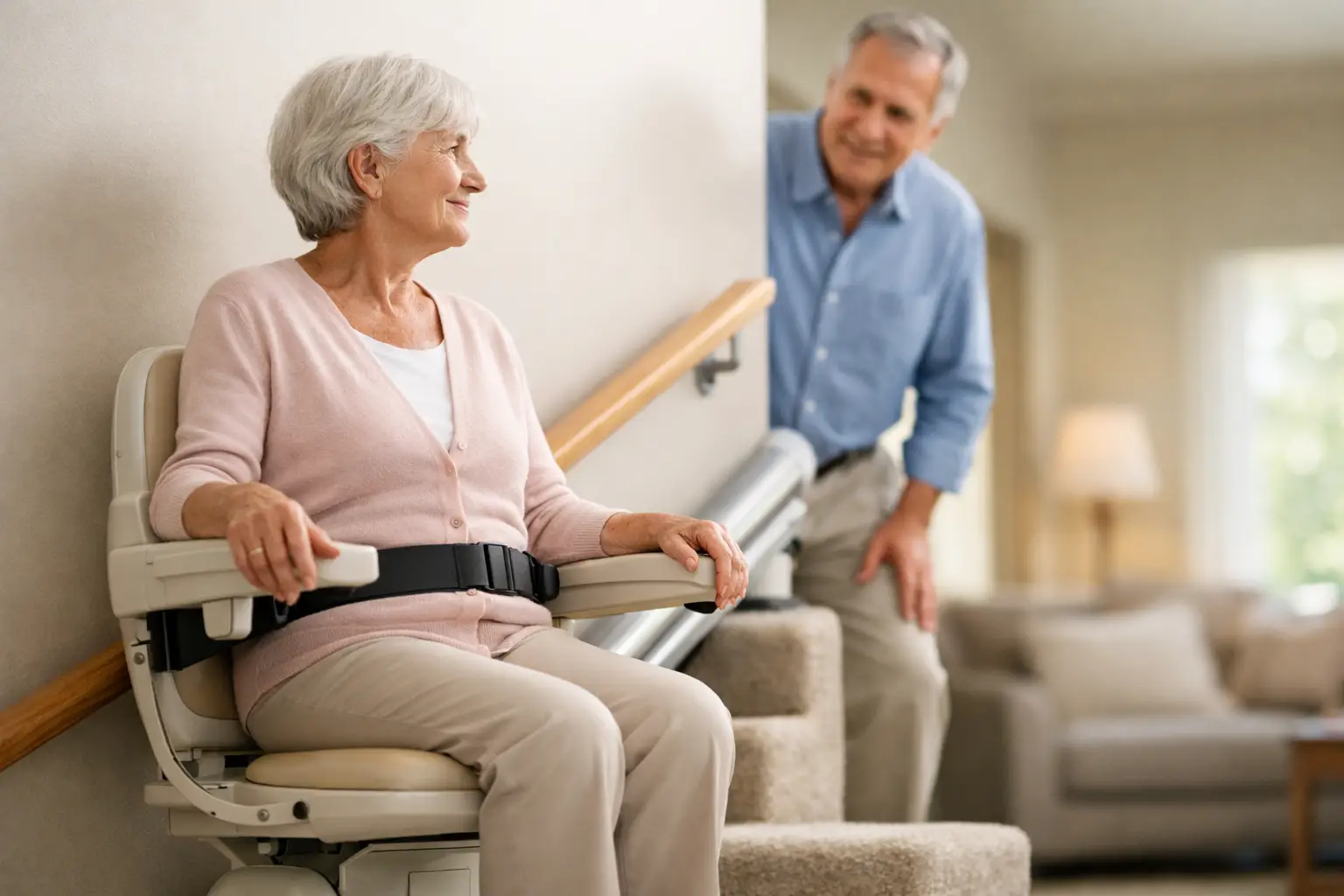
- Seat Belts and Harnesses: A secure seating arrangement is non-negotiable. Retractable seat belts are available on many models, but families can also opt for cross-chest harnesses or specialized buckles for users with severe balance impairments. Seat-belt interlocks are model-dependent.
- Swivel Seats and Lock Mechanisms: At the top of the stairs, getting out of the chair can be precarious. A swivel seat allows the user to rotate the chair away from the stairs, locking securely into a position that lets them step safely onto the landing. The lift is engineered not to move unless the seat is locked back in its forward-facing traveling position.
- Constant-Pressure Controls: Stair lifts operate on a “dead man’s switch” principle, meaning the user must continuously hold down the rocker switch or joystick on the armrest to keep the chair moving. The moment the user lets go, the lift stops instantly.
- Emergency Battery Backup: Power outages can happen without warning. Quality stair lifts run on rechargeable DC batteries housed within the unit. During a household power outage, a stair lift with charged batteries may continue operating for a limited number of trips; the number depends on the model, battery condition, load, and other factors.
Straight vs. Custom Curved Stair Lifts: Assessing Your Utah Home’s Layout
Every home in Utah has its own architectural character, from historic Victorian homes in Salt Lake City to modern ramblers in Sandy and multi-level mountain properties in Park City. The layout of your staircase dictates the type of rail system required, which in turn influences the complexity of the installation and safety protocols.
Straight Stair Lifts
If your staircase runs in a single, uninterrupted straight line from the bottom floor to the top landing, a straight stair lift is the most economical and straightforward option. These lifts use standardized aluminum rails that are mounted directly to the stair treads—not the wall. Because the rail is pre-manufactured, installation can often be completed in just a few hours. Safety checks on straight lifts focus primarily on ensuring proper clearance, correct weight capacity distribution, and secure anchoring to the wooden or concrete steps.
Custom Curved Stair Lifts
If your staircase features a bend, an intermediate landing, or a spiral configuration, a curved stair lift may be appropriate. The best configuration depends on the staircase measurements and the user’s needs. Designing a curved rail is akin to tailoring a bespoke suit. Technicians use advanced 3D photogrammetry and laser measuring tools to map the exact geometry of your staircase. The rail is then custom-fabricated in a factory to match every twist and turn with millimeter precision.
Because curved lifts navigate complex trajectories, safety engineering is even more critical. The chair must maintain a stable, level orientation throughout the entire ride, smoothly transitioning from incline to flat curves without lurching. Furthermore, the electronic control systems must communicate seamlessly to regulate speed as the chair negotiates bends.
Illustrative Examples of Stair Lift Needs
To truly understand the impact of a stair lift, it helps to look at real-world scenarios where mobility equipment has changed lives. The following hypothetical examples illustrate common situations, not actual customer accounts:
Case Study 1: Regaining Independence After Surgery
An elderly couple living in a split-level home in Bountiful faced a crisis when the husband underwent major knee replacement surgery. Their bedroom and primary bathroom were located on the upper floor, while the kitchen and living areas were downstairs. Climbing the 14-step staircase became an excruciating and dangerous daily ordeal. By installing a temporary straight stair lift, the husband was able to navigate between floors safely during his four-month recovery period without risking re-injury or falling. Once he fully recovered, the unit was easily removed, restoring the staircase to its original condition.
Case Study 2: Aging in Place in a Historic Home
A lifelong resident of Salt Lake City wanted to remain in her cherished multi-story Victorian home rather than move into an assisted living facility. However, a winding staircase with a tight intermediate landing made standard mobility solutions impossible. A provider could design a custom curved rail that hugged the interior wall of the staircase, allowing her to access her second-floor art studio daily. Enhanced safety sensors were integrated to account for the tighter turning radius, giving her children immense peace of mind knowing their mother could safely age in place.
A Step-by-Step Guide to the Installation Process
Many homeowners feel anxious about having construction work done in their homes. Fortunately, installing a stair lift is a clean, non-invasive process that typically does not require structural remodeling. Here is what you can expect when you partner with professionals like Olympus Stair Lifts:
- Initial Consultation and Assessment: A mobility equipment specialist visits your home to evaluate the user’s physical needs, measure the staircase, check electrical outlet availability, and discuss aesthetic preferences.
- Proposal and Customization: You receive a transparent, detailed quote outlining the equipment model, rail type, warranty terms, and total cost. For curved stairs, engineering designs are finalized at this stage.
- Professional Installation: Factory-trained technicians arrive with all necessary tools and components. The rail is secured directly to the stair treads using robust brackets, preserving your walls and baseboards. The motor, carriage, and seat are then assembled and calibrated.
- Rigorous Safety Testing: Before handing over the controls, technicians perform model-appropriate safety checks. They test obstruction sensors, weight limits, battery backup functionality, limit switches, and emergency stops.
- User Training and Demonstration: The technician spends time with both the primary user and family caregivers, demonstrating how to operate the controls, fasten the seat belt, swivel the chair, and charge the unit correctly. You are encouraged to practice riding the lift under supervision until you feel 100% confident.
Maintenance Best Practices and Troubleshooting
Like any sophisticated mechanical device, a stair lift requires basic routine maintenance to ensure optimal performance and longevity. By following a few simple best practices, you can prevent unexpected breakdowns and keep your equipment running smoothly for years.
Regular Cleaning: Dust, pet hair, and debris can accumulate on the rail and mechanical gears over time. Use a soft, dry microfiber cloth to wipe down the rail weekly. Avoid using harsh chemical sprays or abrasive scouring pads, which can damage the finish and gum up the lubrication.
Battery Care: The most common maintenance issue with modern stair lifts is battery degradation caused by improper charging. Always ensure the chair is parked correctly on its designated charge point (usually at the top or bottom of the stairs) when not in use. Leaving the chair parked midway on the stairs will drain the battery completely and shorten its lifespan.
Annual Professional Service: Even with meticulous home care, schedule an annual maintenance inspection with a certified technician. Professionals will lubricate moving parts, test electrical circuits, check gear alignment, and assess battery health.
Common Troubleshooting Tips: If your lift refuses to move, check the following before calling for service: Is the power switch turned on? Is the chair parked correctly on the charge contacts? Are the safety edges blocked by an obstruction? Is the seat belt securely buckled? In many cases, these simple checks resolve temporary operational pauses.
Financial Considerations and Funding Options in Utah
Investing in a stair lift is a significant financial commitment, but when weighed against the alternative costs of moving to a single-story home or paying for full-time assisted living, a stair lift is remarkably cost-effective. Families in Utah have several avenues to explore for financial assistance:
- Private Pay and Financing: Many manufacturers and local dealers offer flexible financing plans with low monthly payments, making accessibility upgrades accessible to a wider range of household budgets.
- Medicaid and State Waivers: Certain Utah Medicaid programs and home- and community-based services (HCBS) waivers may cover home modification expenses for eligible individuals with qualifying disabilities.
- Veterans Benefits: The U.S. Department of Veterans Affairs (VA) provides grants and assistance programs, such as the HISA (Home Improvements and Structural Alterations) grant, which helps disabled veterans fund necessary home modifications including stair lifts.
- Long-Term Care Insurance: Check your policy details; some long-term care insurance providers cover durable medical equipment and home accessibility installations.
Choosing the Right Partner for Your Mobility Needs
Selecting the right equipment is only half the battle; partnering with a reputable, experienced local provider is equally crucial. Look for companies that offer end-to-end services, including in-home consultations, custom design, professional installation, comprehensive warranties, and responsive local repair services.
At Olympus Stair Lifts, we pride ourselves on putting safety, transparency, and customer care first. We understand that inviting technicians into your home requires trust, and we are dedicated to treating every client like family. Whether you need a simple straight lift for a temporary recovery or an intricate custom curved solution for lifelong accessibility, our team is here to guide you every step of the way.
Transforming your home into a safe, accessible sanctuary opens up new horizons of freedom and dignity. By prioritizing safety features, understanding your home’s layout, and investing in professional installation and maintenance, you can ensure that your stair lift provides reliable, worry-free service for years to come. Contact Olympus Stair Lifts today to schedule your personalized in-home consultation and take the first step toward a safer, more independent home environment.