
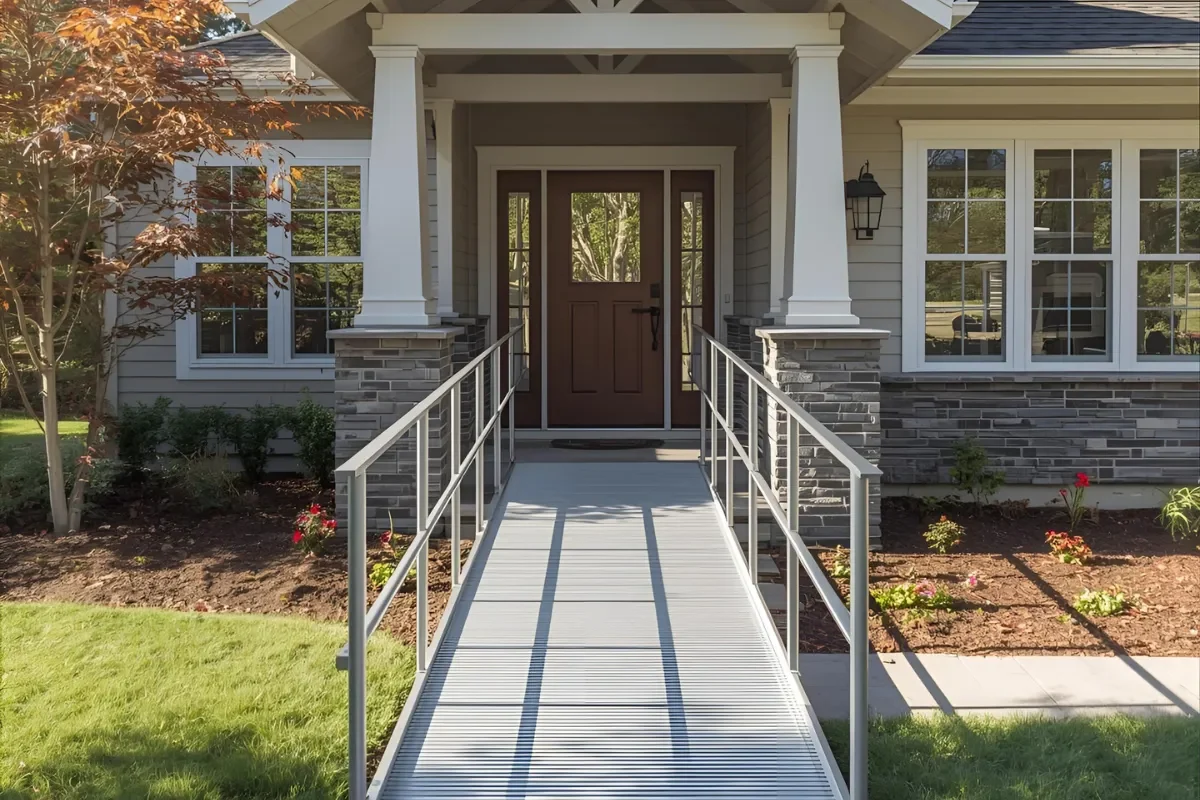
Wheelchair ramps are essential for creating safe and reliable access to entrances, porches, and raised living spaces. They help prevent falls, improve independence, and make daily life easier for individuals and families living with mobility challenges.
When the time comes to install a ramp, many people wonder whether a prefabricated ramp or a custom-built one is the better choice. Each option has its own strengths, and the best fit depends on your home, your budget, and how long you need it.
What is a Prefabricated Ramp?
A prefab ramp for wheelchairs is manufactured in standard sections and delivered ready to be installed. These ramps are most often made from aluminum or steel and can be assembled quickly on site. Because they are modular, they are adjustable and portable, which makes them a popular choice when speed and flexibility are important.
Pros
Quick installation: Many prefab ramps can be set up the same day, making them practical when immediate access is needed.
Affordable pricing: They are mass-produced and require less labor, which usually makes them more budget-friendly than custom options.
Portability: These mobility products can be reconfigured or even moved to a new home, which is helpful for temporary use or rental properties.
Durability: Aluminum prefab wheelchair ramps are resistant to rust and weather, so they can withstand outdoor conditions with little maintenance.
Cons:
Prefabricated ramps are not always the right fit for every situation. They may not work well with complex entryways, uneven yards, or staircases that have turns. Design choices are limited, which means they may not blend seamlessly with your home. While they are durable, they may not last as long as permanent structures built from wood or concrete.
Understanding Custom-Built Ramps
A custom-built ramp is created specifically for your home. Every measurement is tailored to your space, including slope, width, and landings. These units can be built from materials such as wood, aluminum, or concrete, and they are